
Japanese cars are losing market share in Southeast Asia, and the supply chain is in turmoil.
Japanese automakers' market share is rapidly declining in Thailand and Indonesia as Chinese electric vehicle manufacturers expand production and lower prices. The risk is spreading to the supply chain, which includes 2,792 component suppliers.
Japanese car market share in Southeast Asia is slowing sharply, particularly in Thailand and Indonesia, as Chinese manufacturers ramp up local production and enter the market with competitively priced electric vehicles. This development raises concerns about a potential chain reaction shock to the regional supply chain, where more than 2,700 Japanese component companies operate.
In Thailand, the combined market share of nine Japanese car manufacturers in the first 10 months of this year reached 69.8%, down 6.6% year-on-year. After maintaining 85–90% in the 2010s, this figure fell to 77.8% in 2023 and faces the risk of dropping below 70% by the end of 2025. In Indonesia – the region's largest market – the market share of Japanese cars has already fallen below 90% since 2024 and continued to decline to 82.9% in the first 10 months of this year.
| Region/Market | Key indicator | Developments |
|---|---|---|
| Thailand | Market share of 9 Japanese brands (first 10 months of this year) | 69.8% (down 6.6% year-on-year); 2010s: 85–90%; 2023: 77.8% |
| Indonesia | Japanese car market share | The 90% mark will be missed in 2024; 82.9% in the first 10 months of this year. |
| Thailand | Chinese car market share | Over 20% |
| Southeast Asia | Japanese component manufacturers | 2,792 companies; nearly half in Thailand. |
Pressure from the wave of Chinese electric vehicles.
Since 2022, Chinese manufacturers like BYD have significantly increased their presence in Thailand and Indonesia, combining deep discounts on electric vehicles with investments in local factories. In Thailand, Chinese car market share has exceeded 20%, demonstrating rapid penetration into the mass market. This trend has led to direct competition in terms of price, technology, and product launch speed, undermining the previously dominant position of Japanese cars in the region.
Japanese factories are downsizing, risk spilling over to suppliers.
Under market pressure, Japanese manufacturers are beginning to restructure their production capacity in Thailand. Honda will merge two factories into one after 2026. Mitsubishi Motors plans to cease production at one of its three factories by 2027. According to MarkLines, Southeast Asia currently has 2,792 Japanese automotive parts companies, nearly half of which are concentrated in Thailand – a central hub for exports to neighboring countries.
A representative from a Japanese bank commented that the declining operating rates of assembly plants will lead to a drop in orders, putting subcontractors in a difficult position to maintain local production facilities. If the decline continues, the impact could be concentrated on secondary and tertiary links in the supply chain, which are heavily dependent on stable production from assembly companies.
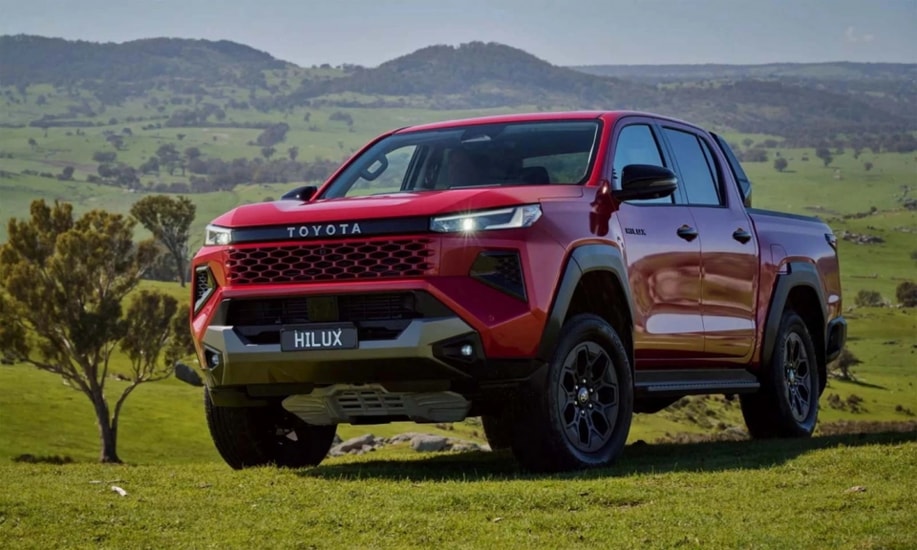
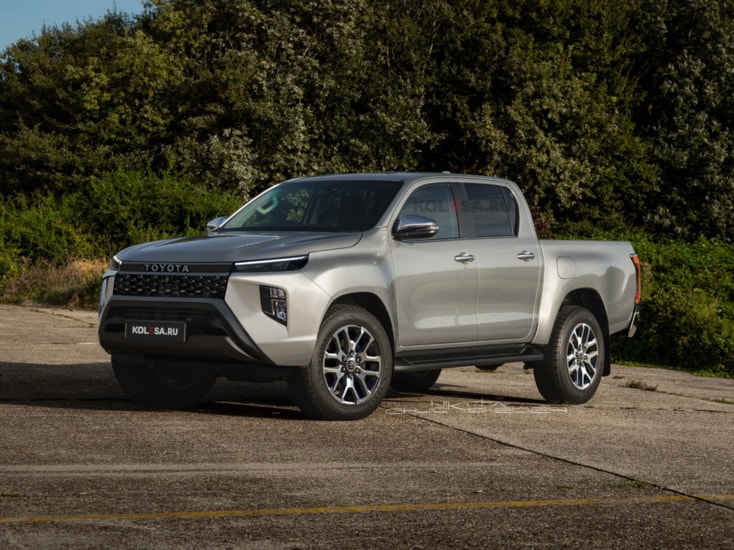
The new generation Hilux and its message of protecting the supply chain.
At the Thai International Motor Expo 2025, which opened on November 29th in Bangkok, Toyota launched the next-generation Hilux after 10 years, improving fuel efficiency for the diesel engine and adding a fully electric version, while also beginning to accept orders. In Thailand – where pickup trucks are considered the "national vehicle" and the Hilux is a flagship product – this launch carries strategic significance in the new competitive landscape.
Toyota Thailand President Noriaki Yamashita stated, “We want to increase sales to protect our supply chain.” This statement reflects a priority on stabilizing the supplier network as market share fluctuations have had a broader impact on the capacity of the entire ecosystem.
The response: promoting hybrid vehicles and retaining core customers.
Japanese manufacturers are adding hybrid models – a traditional strength – to improve fuel efficiency and maintain appeal to pragmatic customers. However, if the wave of EVs from China continues to expand, price pressures and the pace of new product launches could erode this advantage.
Short-term impact and monitoring scenarios
- Market share in Thailand and Indonesia is a sensitive indicator of the effectiveness of the Japanese company's stimulus measures over the next 12 months.
- The progress of Honda and Mitsubishi Motors' capacity restructuring in Thailand will directly impact orders from local suppliers.
- The penetration rate of Chinese EV manufacturers in Thailand (already over 20%) is a key variable determining the pace of price and technology competition.
In the short term, maintaining stable production – through flagship models like the Hilux and its hybrid variants – is seen as key to mitigating supply chain shocks. However, if the onslaught of Chinese vehicles continues, widespread negative impacts on thousands of supporting component businesses are inevitable.


