
Luxury cars are entering Vietnam through unofficial routes.
Many cars worth tens of billions of dong are legitimately imported into Vietnam under the guise of gifts from foreign partners to organizations in Vietnam.
Although new cars imported still need to meet official authorization requirements, this hasn't prevented new cars from flowing into Vietnam through unofficial channels.
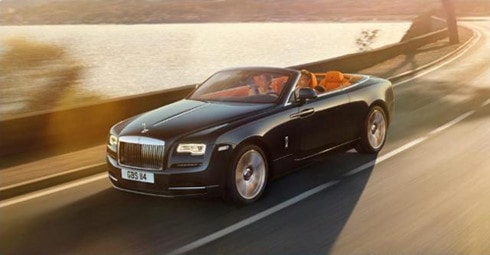 |
| Image of a 2016 Rolls-Royce Dawn. (Illustrative photo: KT) |
Genuine product, stunning!
The case of the 2016 Rolls-Royce Dawn, manufactured in the UK in 2016 with a 6.6L engine, brand new, and on the verge of arriving at Hai Phong port, is a prime example.
This car was not imported by Rolls-Royce Motor Cars Hanoi - the authorized importer and distributor of Rolls-Royce vehicles in Vietnam. Mr. Doan Hieu Minh, Chairman of Rolls-Royce Motor Cars Hanoi, also confirmed that no Rolls-Royce Dawn has been officially imported into Vietnam.
Globally, the Rolls-Royce Dawn was first launched in Germany in September 2015 and has only been produced for a few key markets, so bringing the official Rolls-Royce Dawn to Vietnam has not yet happened.
The way this Rolls-Royce Dawn, worth tens of billions of Vietnamese dong, entered Vietnam so easily and legitimately without going through the official importer was under the guise of a gift from a foreign partner to an organization in Vietnam.
Not only have brand-new Rolls-Royce Dawn cars been legitimately imported into Vietnam, but hundreds of import permits for new cars gifted to organizations in Vietnam have been issued in the past three months. Prior to this, the trend of gifting luxury new cars surged in 2014, after difficulties arose in bringing cars owned by overseas Vietnamese back home.
The localities with the highest number of import permits for vehicles as gifts are Hai Phong, Da Nang, and Hanoi. However, in June 2016, the first permits for importing vehicles as gifts were also issued in some localities such as Ca Mau and Nghe An based on requests from businesses.
Mr. QH, the owner of an automobile business, said that gifted cars are not scrutinized like cars brought back by overseas Vietnamese (due to tax incentives), and are not subject to the "official authorization" requirement set by the Ministry of Industry and Trade, while paying taxes that are no less high than regular imports, as only a portion of the value, about 30 million VND, is exempted.
Of course, the market for gift cars thrives because the cost of buying a car from an authorized dealer is quite high, not to mention the long waiting times. Currently, ordering some high-end car brands from Germany and Japan means waiting until the end of 2016 to receive the vehicle. Therefore, those with money to buy a car have been rushing to find other sources, especially given the significant changes in excise tax from July 1st.
Another route through which new vehicles continue to enter Vietnam is via businesses that still have outstanding payments from the time Circular 20/2011/TT-BCT was issued five years ago. Despite numerous attempts to resolve the issue, the reality is that they keep requesting extensions because they "haven't imported all the goods" compared to the amount of money already transferred by the relevant trading companies.
Maintain the original manufacturer's regulations.
Prior to the expiration of Circular 20 on July 1st (according to Investment Law No. 67/2014/QH13), the Vietnam Automobile Manufacturers Association (VAMA), Euro Cham, and the Vietnam Business Forum (VBF) proposed maintaining the current conditions for importing new, officially imported automobiles.
According to VAMA, ensuring vehicle quality and customer service, recall campaigns, and handling discarded products could be neglected if Circular 20 expires, but there will be no replacement document, and unofficial importers could cease operations at any time.
VAMA is also concerned that unofficial importers are evading taxes by declaring lower purchase/sale prices than the actual value of vehicles and making illegal payments abroad, as happened before Circular 20 came into effect.
"Small businesses importing through unofficial channels have to pay high prices and high costs, so they have to declare a lower value on contracts and customs declarations than the actual purchase price to pay lower taxes. The difference is then transferred illegally, or they have to buy foreign currency from the black market, causing trade fraud and destabilizing the foreign exchange market. Not to mention they also have to comply with all the standards applied by genuine manufacturers in the global market, putting them at a disadvantage when competing in the market," said an automobile assembly company.
Representing the Vietnam Association of Genuine Automobile Importers (VIVA), Mr. Doan Hieu Trung, CEO of Rolls-Royce Motor Cars Hanoi, stated that over the past five years, Circular 20 has contributed to ensuring seven important issues related to the import and market of complete automobiles: genuine warranty and maintenance; genuine components and spare parts and ensuring technical standards; adopting and updating advanced technologies worldwide; ensuring product recalls; ensuring infrastructure, facilities, and equipment meet genuine standards; attracting sustainable and long-term investment in the automotive business and production sector; limiting commercial fraud; and contributing to ensuring tax revenue related to imported automobiles.
According to VOV


