
Xiaomi Auto: 'Intelligent density' is the key to autonomous driving technology.
Instead of chasing terms like VLA or WA, Xiaomi Auto focuses on maximizing the 'intelligent density' of the model, integrating world modeling and reinforcement learning to make a difference.
In the context of a highly competitive smart car market with various technological approaches such as VLA, VA, and WA, Xiaomi Auto has set its own development direction, focusing on the core concept of "intelligent density".
According to Tran Quang, head of end-to-end technology at Xiaomi Auto, the ultimate goal of any technological roadmap is to maximize the "intelligence density" of the autonomous driving model. He believes that manufacturers' attempts to differentiate themselves through technological jargon only reflect market competition.
Rapid technological development roadmap
Xiaomi has demonstrated its commitment through the continuous upgrading of its end-to-end autonomous driving (HAD) system. Starting with a version that launched with 3 million clips in February, the company quickly upgraded to a version with 10 million clips in July of the same year.
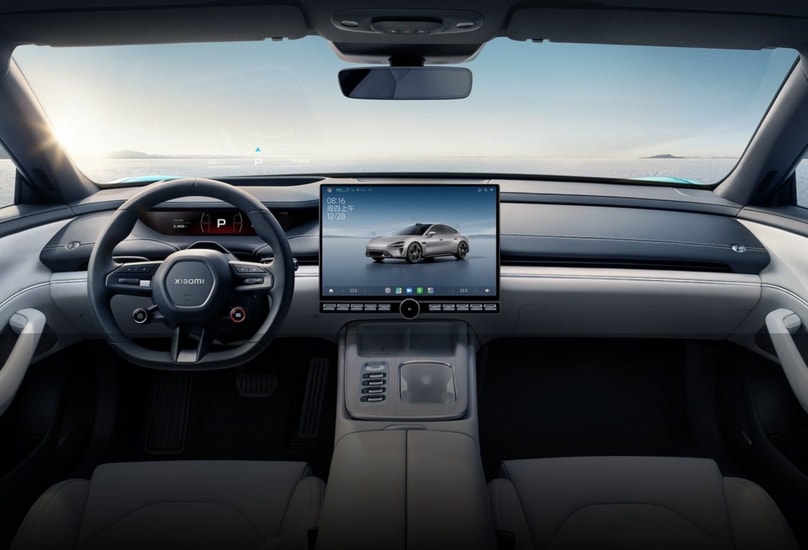
The highlight was at the Guangzhou Auto Show in November, where Xiaomi Auto officially introduced an enhanced version of the Xiaomi HAD system, marking a significant step forward in the company's technology.
Integrating world models and reinforcement learning
The biggest difference in the enhanced Xiaomi HAD version is the integration of a "world model" and "reinforcement learning." This technology allows the system to not only simulate how an experienced driver handles situations but also understand the reasoning behind each decision.
From a cognitive perspective, the model is capable of acquiring knowledge from the open environment and inferring causality in complex traffic scenarios, functioning similarly to a human brain.
Challenges in application
Mr. Tran Quang also pointed out the challenges of applying reinforcement learning in practice. Firstly, building a world model with absolute realism is very difficult, requiring a large amount of editable digital assets. Secondly, the efficiency of parallel exploration and the allocation of computing power is also a major problem that needs to be solved.
Comprehensive technology strategy
While adhering to its end-to-end strategy, Xiaomi is not overlooking other potential approaches. The company's smart driving team is divided into three main divisions. In addition to the end-to-end segment, headed by Mr. Tran Quang, Mr. Tran Long is responsible for developing VLA technology. Other directions, such as WA and VA, are also being studied in advance by internal teams under Mr. Tran Quang's management. This strategy demonstrates Xiaomi's commitment to building a diverse and robust technology platform to compete in the smart vehicle market.


