
Xiaomi OpenWear Stereo and AirPods 4: Technical Differences
This analysis compares the open-wear design of the Xiaomi OpenWear Stereo and the non-sealed design of the AirPods 4, delving into sound transmission, signal processing, ANC, battery life, applications, and price points.
This article analyzes two different technical approaches to true wireless earbuds: the Xiaomi OpenWear Stereo with its open-back design and speakers positioned a few millimeters from the ear canal; and the Apple AirPods 4 with a design that doesn't seal the ear canal. From sound transmission principles to signal processing, noise cancellation, connectivity, and battery life, these differences directly determine the user experience and real-world usage scenarios.
Sound transmission through the air and unsealed design: the foundation that makes the difference.
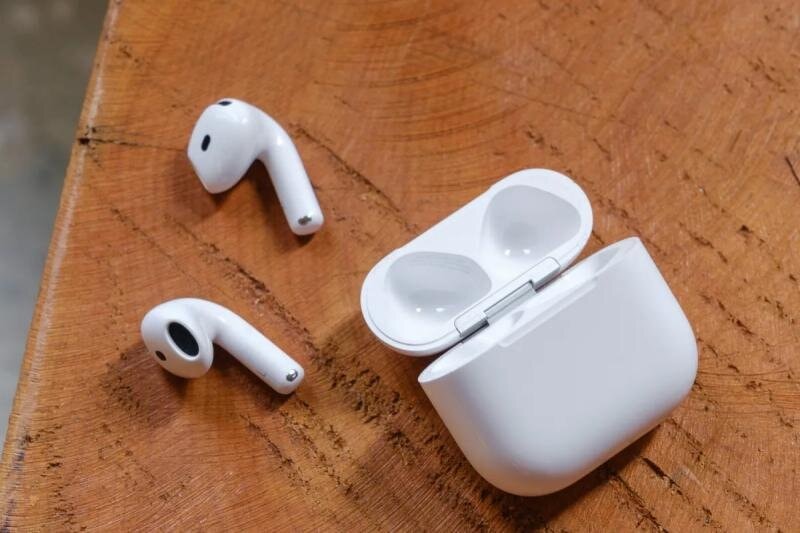
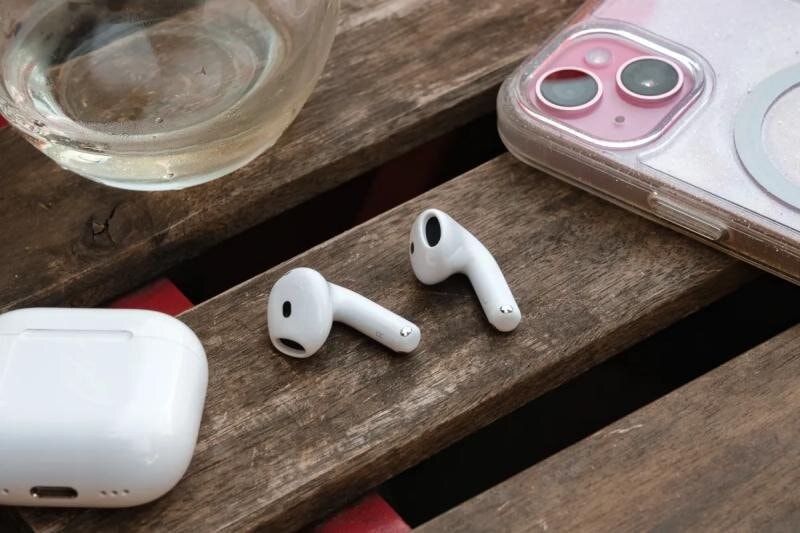
AirPods 4 eliminate silicone ear tips, prioritizing comfort and breathability for users who dislike the feeling of a sealed ear canal. Each earbud weighs 4.3g, doesn't seal the ear canal, thus minimizing pressure. They also feature water and dust resistance (IP54), a glossy plastic casing, and a magnetic charging case that securely holds the lid. While comfort levels may vary depending on individual ear shape, these are among the most comfortable and popular models available.
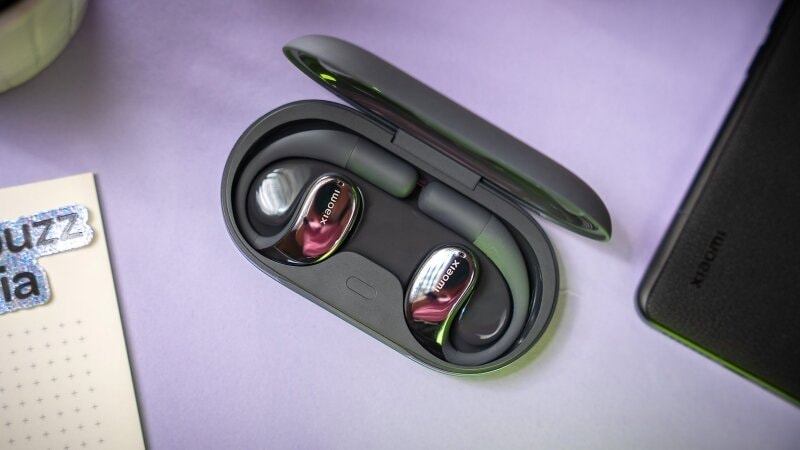
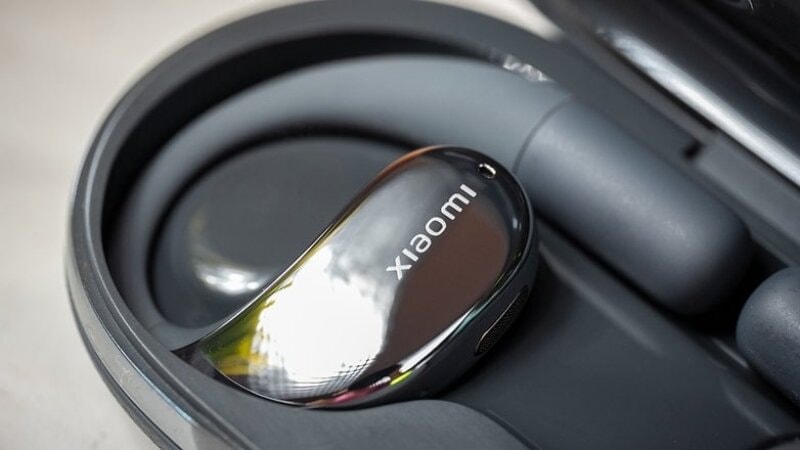
The Xiaomi OpenWear Stereo uses an ear hook design, with the speaker positioned just a few millimeters from the ear canal, almost completely reducing pressure and staying securely in place during activities like walking or running. Each ear hook weighs 9.6g, and the nickel-titanium alloy hooks can withstand 5,000 bends. The product is water and dust resistant (level not specified), the charging case uses strong magnets; the chrome-plated surface is modern but prone to fingerprints.
In principle, OpenWear Stereo transmits sound through the air over a short distance to the ear canal, making it difficult for the bass to maintain its energy. In return, the midrange is clear and the ability to hear in a natural environment is enhanced. AirPods 4 are not sealed, so they also prioritize airflow, but still allow for reinforced bass thanks to larger drivers and signal processing.
Audio and signal processing: drivers, frequency range, spatial arrangement.
AirPods 4 use 11mm drivers, have a claimed frequency range of 20Hz – 20kHz, and integrate the H2 chip and continuously operating adaptive equalizer. The bass is deep and clear at various volume levels even without ear tips, but vocals tend to be thin and slightly muffled. Spatial sound is available when used with Apple devices and can be fixed or automatically adjusted according to head movement.
The Xiaomi OpenWear Stereo uses 10mm drivers, with a frequency range of 20Hz – 40kHz. It has a slight bass bias but isn't harsh; vocals and instruments sound bright and clear. In addition to A2DP, the headphones support the LHDC codec for high-quality music playback. Due to air transmission, the bass range is almost non-existent, while the midrange is clear. The headphones also feature technology to reduce sound leakage, making it difficult for people nearby to hear the music.
Connectivity, software, and control
AirPods 4 connect to both iOS and Android. On Android, there is no automatic device switching and the sound quality is inferior compared to iOS. On iOS, no separate app is needed; users can fine-tune spatial sound, touch controls, sensor and microphone sensitivity, left/right balance, EQ with presets, and a feature to boost volume for small signals.
OpenWear Stereo is multi-platform compatible and controlled via the Xiaomi Earbuds app (available on the App Store). The app allows switching sound profiles (by pressing treble or vocal), customizing touch controls, controlling the camera within the Xiaomi ecosystem, and connecting two earbuds to one phone simultaneously. The app does not display battery level and does not have EQ.
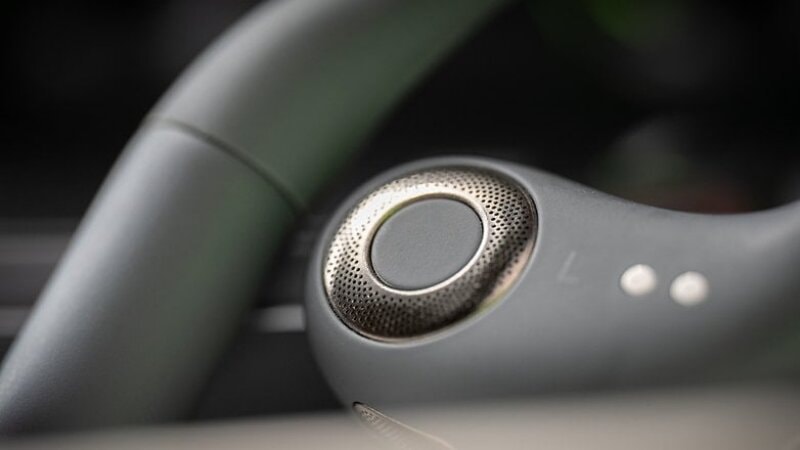
In terms of controls: AirPods 4 have responsive sensors, integrated microphones, and an accelerometer for Siri interaction. Default actions include one tap to play/pause or answer a call; two taps to end a call or skip a track; three taps to go back to the previous track; hold-down to activate Siri; and a nod to confirm, shake-down to decline, or reject a call. OpenWear Stereo uses a chrome-plated touch surface: two taps to play/pause or end a call; three taps to skip a track; hold-down to activate the virtual assistant; and customizable actions within the app.
Noise cancellation and voice communication.
The standard AirPods 4 do not support active noise cancellation (ANC). Users can hear their surroundings clearly, making them suitable for those who don't want to be isolated and prefer content like podcasts.
OpenWear Stereo combines an open design with partially active ANC, primarily reducing wind noise from cycling and industrial fan noise by about 10–15%, while still allowing you to hear ambient sounds. For calls, AirPods 4 use dual beamforming microphones, producing clear voices but with a somewhat muffled sound; suitable for quiet environments. OpenWear Stereo has two microphones with AI noise cancellation, handling ambient noise better than AirPods 4.
Battery, charging, and durability.
AirPods 4 offer up to 5 hours of use without the charging case; a total of 30 hours with the case. A full charge takes 50–60 minutes via USB-C. OpenWear Stereo achieves 7.5 hours per charge and a total of 38.5 hours with the case; a 10-minute quick charge adds a few more hours of use, with a full charge taking approximately 90 minutes. In terms of mechanical durability, the OpenWear Stereo's nickel-titanium alloy ear hooks have been tested for 5,000 bends. Both are water and dust resistant; AirPods 4 state IP54, while OpenWear Stereo does not specify a rating.
Key specifications table
| Criteria | Apple AirPods 4 | Xiaomi OpenWear Stereo |
|---|---|---|
| Wearable design | Do not block the ear canal. | The ear hook and speaker are positioned a few millimeters from the ear canal. |
| Weight on each side | 4.3 g | 9.6 g |
| Car | 11 mm | 10 mm |
| frequency range | 20 Hz – 20 kHz | 20 Hz – 40 kHz |
| Water/dust resistant | IP54 | Yes (amount not specified) |
| ANC | No (standard version) | Yes, it's partially operational. |
| Characteristic sound | Deep bass, slightly thin vocals. | The midrange is clear, but the bass is almost nonexistent. |
| Codec/standard | — | A2DP, LHDC |
| Spatial sound | Available on Apple devices | — |
| Application | iOS integration; Android integration is limited. | Xiaomi Earbuds; no battery indicator, no EQ. |
| Control | Touch + head gesture with Siri | Chrome-plated touch screen; customizable in the app. |
| Playtime without box | ~5 hours | ~7.5 hours |
| Total duration with box | ~30 hours | ~38.5 hours |
| Battery | USB-C box 50–60 minutes | Full charge takes approximately 90 minutes; fast charging takes 10 minutes. |
| Reference price | 3,290,000 VND | 1,990,000 VND |
Advantages and disadvantages based on usage scenarios.
Apple AirPods 4
- Advantages: Lightweight and comfortable to wear; good bass compared to open-back earbuds; deep integration with iOS, supporting spatial audio; touch and head gesture controls with Siri.
- Limitations: No ANC in the standard version; vocals are a bit thin; Android experience is more limited than iOS.
- Suitable for: Apple ecosystem users who prioritize comfort, listen to podcasts/voice content, and those who appreciate fashion accessories.
Xiaomi OpenWear Stereo
- Advantages: Comfortable to wear without pressure, stays securely in the ear during activity; clear midrange; supports LHDC; partial ANC useful outdoors; long battery life.
- Cons: Bass is almost nonexistent; the app lacks battery and EQ display; the chrome surface is prone to fingerprints.
- Suitable for: Active individuals who need to hear ambient sounds while commuting or cycling; battery life and ventilation are prioritized.
Compare and choose according to your needs.
AirPods 4 prioritize comfort and good bass within an open-back design, integrating with the Apple ecosystem. OpenWear Stereo prioritizes safety on the go thanks to its open design, clear midrange, long battery life, and partial active ANC. In terms of cost, the AirPods 4 are priced at approximately 3,290,000 VND; OpenWear Stereo at 1,990,000 VND. The best choice depends on your current device ecosystem, the type of content you listen to, and your daily environment.


