
Xiaomi SU7 Pro 2026: CEO Lei Jun livestreams disassembling the car to demonstrate material quality.
Xiaomi's CEO personally disassembled the SU7 Pro 2026 model for 3.5 hours to demonstrate the quality of its chassis and materials. The event affirmed the superior durability and safety standards of this electric vehicle.
Xiaomi has just taken a bold step to reaffirm customer trust with a live stream showing the complete disassembly of the 2026 version of the SU7 Pro. For 3.5 hours, CEO Lei Jun and automotive safety expert Zhu Xichan personally inspected every component, from the chassis structure to the battery system, in front of millions of online viewers.
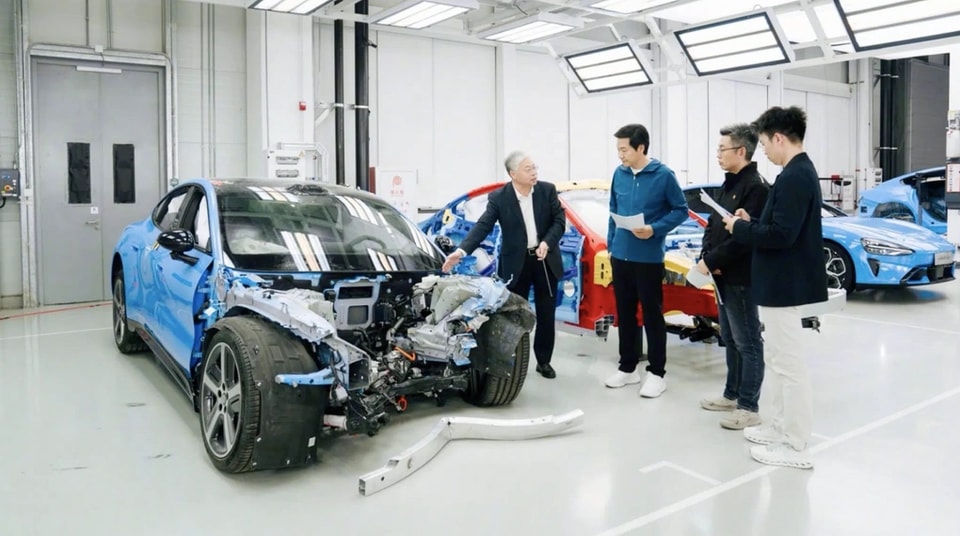
Materials technology and surface finishing processes
Instead of traditional advertising campaigns, Xiaomi chooses to transparently demonstrate product quality through detailed hardware testing. The SU7 Pro 2026's body is constructed from high-grade corrosion-resistant galvanized steel, undergoing a rigorous electrophoretic treatment process and coated with three layers of protective paint. Notably, the car's glossy paint is baked at 140 degrees Celsius for 20 minutes, optimizing durability and scratch resistance under real-world conditions.
In terms of engineering design, the radiator system is cleverly angled. This arrangement not only optimizes engine compartment space but also allows for the neat integration of auxiliary components, increasing the cooling efficiency of the powertrain.
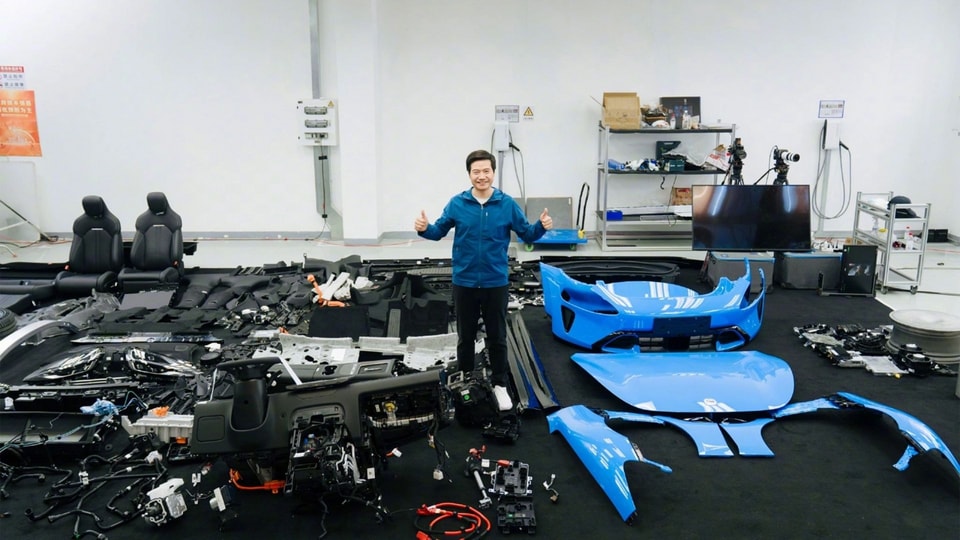
High-strength chassis structure and battery protection.
The most impressive aspect of the teardown was the high proportion of premium materials used in the chassis. The Xiaomi SU7 Pro boasts a high-strength steel and aluminum alloy ratio of up to 90.3%. In critical impact-resistant areas such as the door frames, A-pillars, and C-pillars, the manufacturer used steel with a tensile strength of up to 2,200 MPa.
The 96.3 kWh LFP battery system is protected by a robust "armor." This structure includes two 1,500 MPa steel crossbeams and two 2,000 MPa floor beams, ensuring maximum safety for the battery pack against external impacts. Additionally, the rear floor is designed in three separate sections, a technical solution that reduces repair costs and time in the event of a rear-end collision.
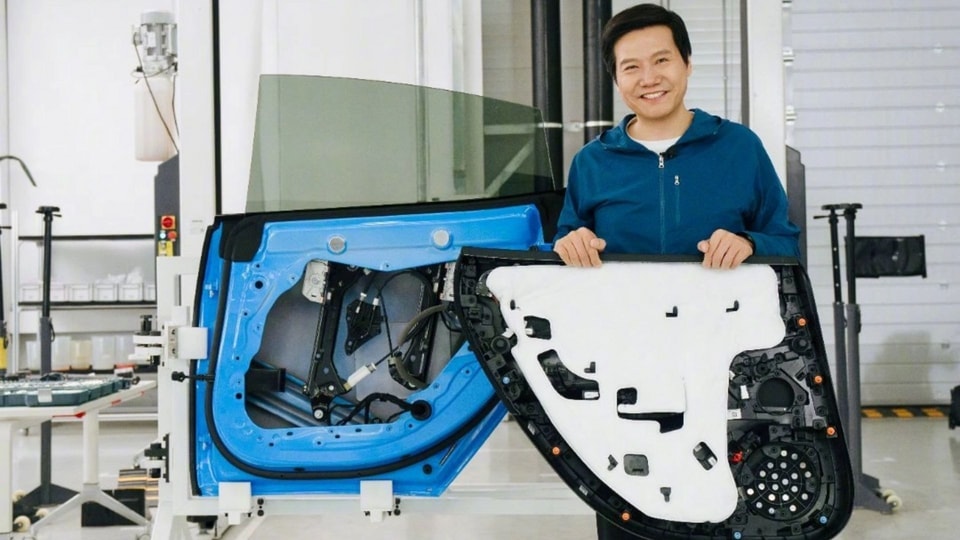
Safety protection capabilities and operational performance
During the livestream, the results of a 50% offset crash test at 60 km/h were announced. The front bumper, made of aircraft-grade 7 series aluminum and nearly 1.5 meters wide (covering 79% of the vehicle's width), effectively absorbed the intended deformation force. The results showed that the cabin and A-pillars maintained their structural integrity, ensuring the safety of the occupants. The vehicle comes standard with 9 airbags, including rear side airbags and comprehensive curtain airbags.
| Specifications | Details on the SU7 Pro version |
|---|---|
| Engine power | 315 horsepower (rear single motor) |
| Battery capacity | 96.3 kWh (LFP) |
| Operating Range (CLTC) | 720 – 900 km |
| High-strength steel ratio | 90.3% |
| Number of airbags | 9 standard airbags |
Despite being a mid-range model priced at 249,900 yuan, the SU7 Pro has proven its strong appeal, receiving over 40,000 pre-orders in just two weeks since its launch (March 19th). CEO Lei Jun's transparency in showcasing technical details is seen as a key strategy for Xiaomi to build trust in the highly competitive electric vehicle market.


