
How to deal with foggy car windows?
Foggy car windshields due to condensation are a common problem for drivers, so how can you handle it to ensure safe driving?
Causes of foggy car windows.
Vietnam is located in a tropical monsoon region, experiencing high temperatures and high humidity year-round. This is why many drivers encounter the problem of foggy windshields due to condensation.
If you own a car or have simply ever sat in one, you've probably experienced the phenomenon of foggy windshields and windows. You might also encounter condensation on the glass, with tiny droplets of water forming. This happens when hot air comes into contact with cooler air. Typically, hot air from outside meets cooler air from the air-conditioned car, but it can also occur when cooler outside air meets warmer air inside the car, causing the windshield to fog up.
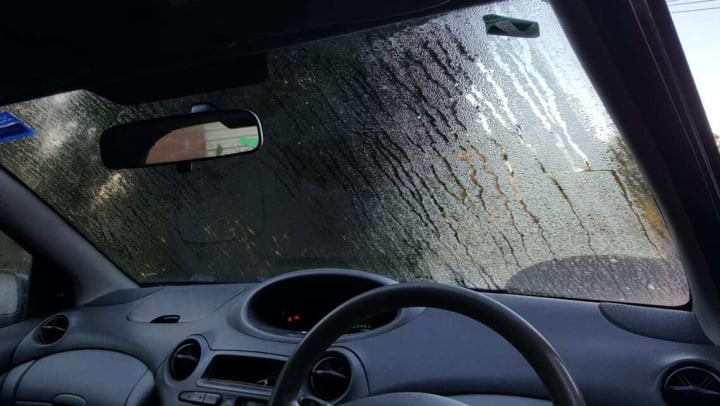
Foggy car windows cause light refraction, blurring the driver's vision and hindering visibility when driving at night, in the rain, or in bad weather such as humidity or fog.
Whether fog is inside or outside the car windows, any time when you can't see clearly in all directions can be dangerous. Therefore, it's important to know how to ensure your windshield remains clear and unobstructed, regardless of the weather.
How to deal with foggy car windows.
Use a glass drying system.
Most modern cars are equipped with a defroster function. Therefore, when you notice signs of fogging on the car windows due to condensation, you should activate the defroster function using the button usually integrated into the center console.
When activated, the indicator light on the control button will illuminate to let the driver know that the defroster function is active. Note that when using this function, all car windows should be closed, because if even one window is open, the defroster system will not work effectively and will have difficulty removing condensation from the windows. This is considered the quickest and simplest way to fix foggy car windows when driving in the rain.
Use the air conditioning system.
Some older car models are not equipped with a defroster function; users can also remove condensation on the windshield by adjusting the air conditioning system.
The first thing to note is that you shouldn't use the hot air setting on the air conditioner to deal with condensation on the windshield, as this is caused by the temperature difference between the inside of the car and the outside environment. Use the cold air setting and the appropriate airflow mode.
Choose the airflow mode that directs air towards the windshield (the airflow mode control button is located directly on the car's air conditioning system), and use an appropriate fan speed and temperature because if it's too cold, it's easy for condensation to form on the outside of the windshield.
Balance the temperature inside and outside the car.
Slightly open the windows (about 10-15cm): This is a simple and fuel-efficient way to balance the temperature inside and outside the car, preventing condensation. However, this method should only be used in mild, not excessively cold weather to avoid affecting your health and the car's interior.
Turn on the fan and set it to outside air intake mode. This is also a way to balance the temperature inside and outside the car, preventing condensation on the windows. However, the drawback of this method is that it is not very effective.
Use shaving foam or an anti-foaming additive.
Besides using the air conditioning system and the defroster function equipped on the car, some drivers also apply methods such as using a dry cloth, shaving foam, or anti-fogging additives to wipe small areas on the car's windshield and side windows. This method is quite elaborate but is effective in preventing condensation on the car's windows.


