
Nghe An province during the Le Dynasty's restoration period
(Baonghean.vn) - The Later Le Dynasty consisted of two periods: the Early Le (1428 – 1527) and the Restoration Le (1533 – 1789), interrupted by the Mac Dynasty's usurpation of the throne from 1527 to 1593. This was a turbulent period in Vietnamese history. Nghe An province became a battleground for various powers at that time.
Customs, places, and government
April 15th, Mau Than year (1428),Le LoiHe ascended the throne as Emperor (Le Thai To), changed the reign name to Thuan Thien, established the national name as Dai Viet, and renamed the capital Thang Long as Dong Kinh.
In the year Mau Than (1428), the Le dynasty divided the whole country into 5 provinces: East, West, South, North, and Hai Tay (the southern region from Thanh Hoa onwards). Below the province were towns, districts, prefectures, counties, and communes. Nghe An and Dien Chau belonged to the Hai Tay province.
In the year Bính Dần (1446), Lê Thánh Tông divided the country into 12 provinces. In the year Kỷ Sửu (1469), it was divided into 12 provinces, with prefectures, districts, counties, communes, villages, hamlets, settlements, and settlements below. Hoan Châu and Diễn Châu merged to form Nghệ An province, comprising the prefectures of Đức Quang, Anh Đô, Diễn Châu, Hà Hoa, Trà Lân, Quỳ Châu, and Lâm An.
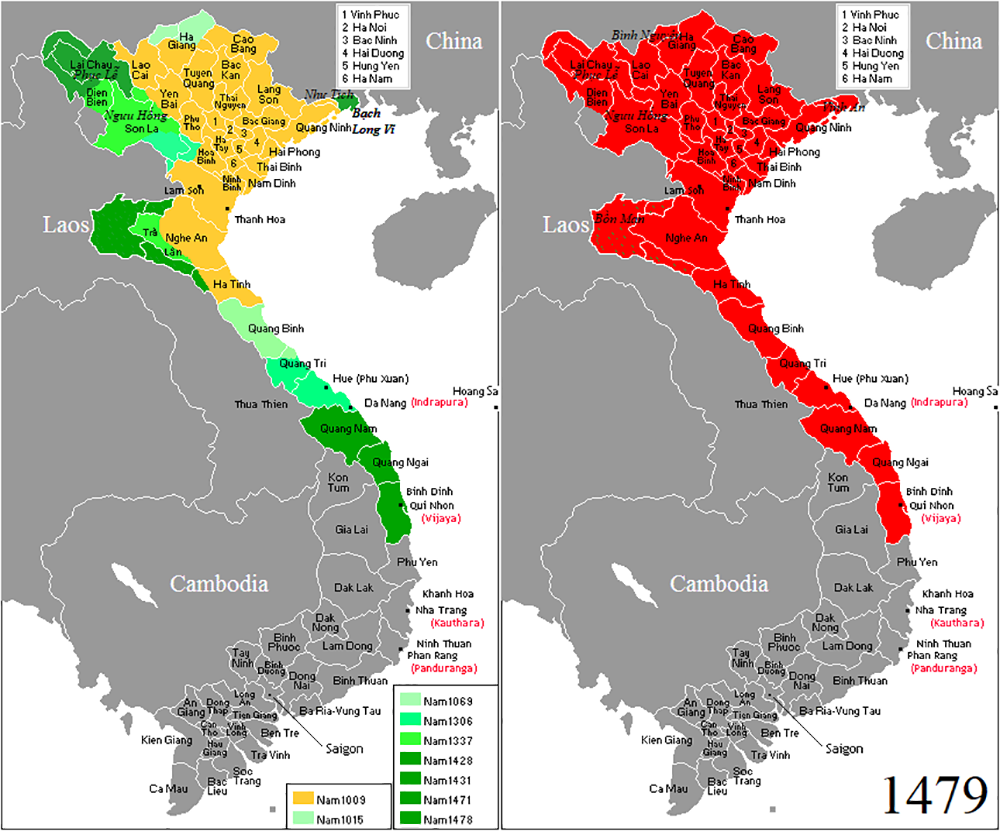 |
| Territory of Vietnam during the early Le Dynasty (1428-1527). Photo: Wikipedia |
At the beginning of the Le Dynasty, each province had a Chief Administrator in charge of administration, justice, and military affairs, alongside a Commander-in-Chief in charge of the army. During the reign of Le Thanh Tong, each province had two offices: the Administrative Office, headed by the Chief Administrator, overseeing administration and justice; and the Military Office, headed by the Commander-in-Chief. In the year Tan Mao (1471), the Judicial Office was added, headed by the Judicial Commissioner.
During the early Le Dynasty, the administrative center of Nghe An was located in Lam Thanh. During the later Le Dynasty, the Thua Ti and Hien Ti remained in Lam Thanh, while the Tran Ti moved to Dinh Cau (Ky Anh) and later to Dung Quyet (Hung Nguyen).
In the power structure
From 1469 to 1831, Nghe An was an administrative unit. Throughout the Later Le Dynasty and up to the Tay Son Dynasty, Nghe An was almost always the site of the extremely complex and harsh power dynamics of Dai Viet politics at that time.
During the early Le Dynasty (1428-1527), talented kings such as Le Thai To, Le Thai Tong, Le Thanh Tong, and Le Hien Tong, with their progressive state and social organization and superior policies in economics, culture, and foreign relations, led Dai Viet to rapid development in all aspects. By the end of the 15th century, Dai Viet was one of the most powerful nations in Southeast Asia, its territory extending to present-day Phu Yen province. It had suppressed Bon Man, Lan Xang, Lao Qua, and Xaiyna Chakhaphat, expanding its territory westward.
But then, from the reign of King Le Uy Muc, the Le dynasty gradually weakened. In the year Dinh Hoi (1527), Mac Dang Dung forced King Le Cung Hoang to abdicate, establishing the Mac dynasty. The Mac dynasty ruled the country for 6 years before the political landscape of Dai Viet changed.
In the year of Ky Suu (1529), Nguyen Kim fled to the mountainous region of Thanh Hoa and then to Laos. In the year of Quy Ty (1533), he found a descendant of the Le dynasty, Le Duy Ninh, and enthroned him, who became King Le Trang Tong. Many scholars and generals began to rally around Nguyen Kim to fight against the Mac dynasty. At this time, Nguyen Kim served as Grand Tutor Hung Quoc Cong, overseeing all affairs. This situation is known in historical records as the North-South Dynasties.
By the year of Ky Hoi (1539), Nguyen Kim had captured Loi Duong district in Thanh Hoa. In the year of Canh Ty (1540), he advanced into Nghe An, beginning to re-establish his foothold on the territory of Dai Viet.
In the year of Ất Tỵ (1545), Nguyễn Kim was poisoned to death by the surrendered general Dương Chấp Nhất. His son-in-law, Trịnh Kiểm, took over power.
The period from 1545 to 1580 was a time of stalemate between the two sides, with fighting mainly taking place in Thanh Hoa, Nghe An, Ninh Binh, and Son Nam.
After Trịnh Kiểm's death, his son Trịnh Tùng rebelled and seized military power from his older brother, Trịnh Cối. In 1573, he overthrew King Lê Anh Tông and installed King Lê Thế Tông as a puppet, taking complete control of military and national affairs. At the end of the year Nhâm Thìn (1592), Trịnh Tùng attacked Thăng Long and destroyed the Mạc dynasty. The remnants of the Mạc dynasty fled to Cao Bằng and ruled independently until 1677.
In November 1558, Nguyen Hoang was ordered to govern Thuan Hoa with extensive authority, "allowing him to handle all local matters, regardless of size, at his discretion." Nguyen Hoang left both to save his life and to plan for the long-term development of his dynasty. During his time governing Thuan Quang (1558-1613), Nguyen Hoang devoted himself to consolidating his power and winning the hearts of the people through a gentle style of governance, laying the foundation for building a separate kingdom for his family. And Thuan Hoa became the land where the Nguyen dynasty established its power.
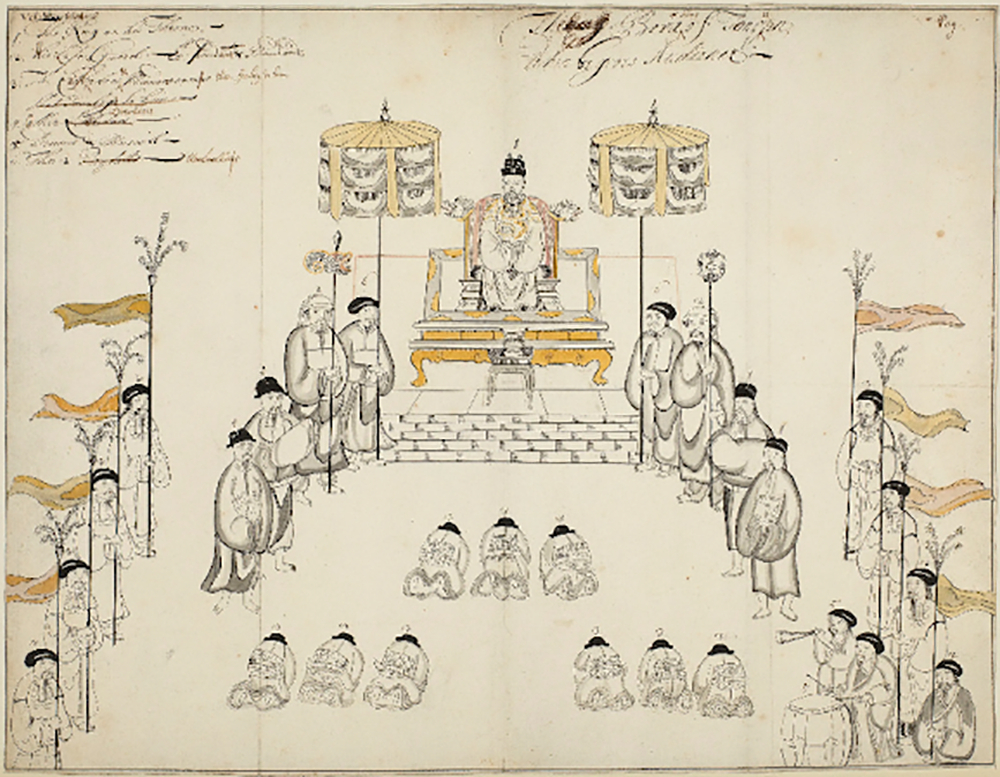 |
| A scene depicting the restored Le Dynasty court in 1684-1685, painted by Samuel Baron. |
After defeating the Mạc dynasty, Lord Trịnh Tùng began to consider eliminating the Nguyễn family's power in the South, which was governed by Nguyễn Hoàng, the governor of Thuận Hóa and Quảng Nam. The political situation changed.Northern Vietnam - Southern VietnamFormation took place between 1627 and 1672, during which seven wars occurred. Civil war raged incessantly, turning Nghe An into a battlefield. The country was divided.
 |
| The banks of the Lam River. Photo: Nguyen's book. |
The battlefield was brutal, and the people suffered greatly.
From the time Nguyen Kim opposed the Mac dynasty (1533) until the Tay Son rebellion and finally the Nguyen dynasty unifying the country (1802), the political situation in Dai Viet was complex, with various forces constantly vying for power, creating complex and tense political and security situations.
Throughout that historical process, Nghe An has always been a crucial area that all sides have used, exploited, and aimed for.
During the period of the Southern and Northern Dynasties (1533-1592), the Le-Trinh dynasty primarily established its foothold in the Thanh-Nghe region. Military battles mainly took place in this area. From 1570 to 1583, the Mac dynasty launched 13 attacks on Thanh-Nghe. Many major battles occurred at Hoi Thong, Cuong Gian (Nha Nghi, Nghi Xuan); Quy Hop, Trinh Cao (Huong Khe), Cua Sot (Thach Ha)...
During the war between Dang Trong and Dang Ngoai, Nghe An province was a battleground, especially the area south of the Lam River to the Ngang Pass, which was the most fiercely contested. At one point, the Nguyen army occupied all seven districts of Nghe An (1655).
Amidst constant warfare and widespread hardship, peasant uprisings against tyranny emerged in the early 16th century. In the year of Nhâm Thân (1512), a major uprising led by Lê Hi, Trịnh Hưng, and Lê Minh Triệt took place in Nghệ An. In the 18th century, Nghệ An was not the initial location of these uprisings, but due to its strategically important and vulnerable position, coupled with the people's tradition of patriotism and tenacious struggle, many leaders retreated to this region to establish bases or build their forces, such as Nguyễn Hữu Cầu (Quận He), Lê Duy Mật, and others.
The uprisings in Nghe An, as well as throughout the country, were ultimately suppressed and failed, but they shook the harsh rule of the Le-Trinh feudal regime, signaling the beginning of larger-scale uprisings to meet the people's needs for liberation from brutal oppression, escape from centuries of civil war, and national reunification.


