
Spring arrives in Piêng Lâng
(Baonghean) - After 12 years of struggling with difficulties and harsh conditions, the lives of the people of Pieng Lang have shown signs of improvement, especially as the New Year is approaching.
The old road has been opened.
Located at the headwaters of the Nam Giai River, bordering the Vietnam-Laos border, Pieng Lang village in Nam Giai commune (Que Phong district) is a resettlement site for households from Puc and Meo villages who were severely affected by the historic flash flood of 2007.
Previously, every time the topic of traveling came up...Pieng LangEveryone expressed concern. The village was located more than 30 km from the district center and more than 10 km from the commune center, and most importantly, the roads were extremely difficult to travel on. Initially, the road running along the Nam Giai stream was a narrow path only wide enough for one motorbike, but it was later widened slightly.
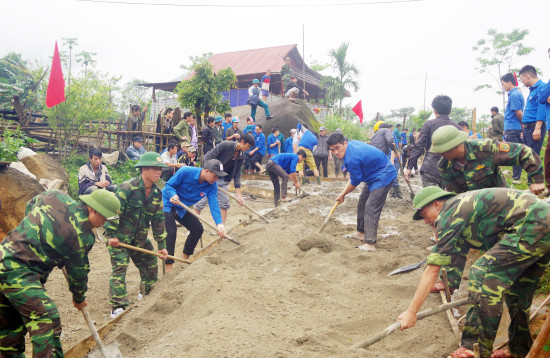 |
| Border guards and youth union members help the people of Piêng Lâng village, Nậm Giải commune (Quế Phong district) build rural roads. Photo: Phong Cầm |
The road is rough, rocky, with many steep slopes and hairpin bends; only locals dare to ride on their motorbikes. The difficulties and hardships are unimaginable during rainy seasons. Only those with absolutely necessary reasons consider going to Piêng Lâng; otherwise, just thinking about it is daunting.
Things are different now; the Chau Kim - Nam Giai road has been upgraded, and traffic flows much more easily. The section from the center...Nam Giai communeThe road to Piêng Lâng has mostly been paved with concrete, with only short sections from Pục village remaining unfinished. Traffic is still difficult, but it's much better than before.
Mr. Lo Van Thanh, a resident of Pieng Lang, shared: “In the early days, the roads were very difficult to travel. Whenever we needed to go back to our old village or to the commune, we had to walk. Few people dared to ride motorbikes, and sometimes it took a whole day. The government has increasingly invested in expanding and upgrading the roads to make travel more convenient for the people, and with the help of the military units, we are now in the same condition…”
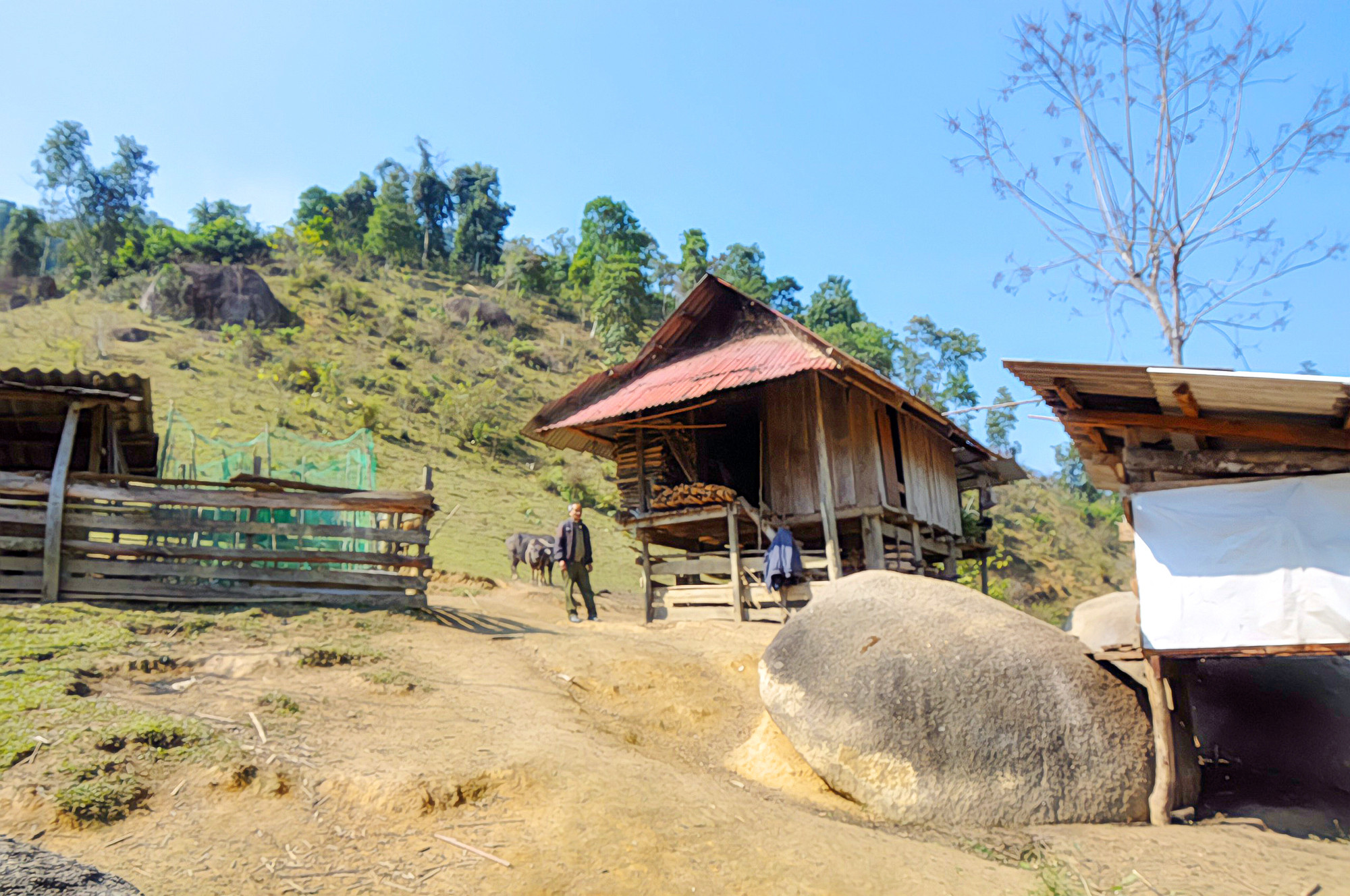 |
| The people of Piêng Lâng cling to the hills and mountains to build family farms, develop livestock breeding, and gradually escape poverty. (Photo: Công Kiên) |
Starting from the center of the commune, in less than 30 minutes, our motorbike brought us to Piêng Lâng. Over 10 years have passed, the trees have turned green, the corrugated iron roofs of the houses have faded, and the lives of the people have changed considerably. Poverty hasn't completely disappeared, but no one worries about the lean season anymore, nor do they see the days of "struggling to make ends meet."
Mr. Lo Van Thuong, the Party Secretary, greeted us at the top of the village slope with a bright smile and a firm handshake. He said, "Compared to other villages, Pieng Lang is still poor. But compared to the past, life has progressed significantly; we no longer worry about hunger, and many households now have a decent income. Soon, we will surely become wealthy. This is largely thanks to the increasingly easy and convenient roads."
Piêng Lâng currently has 56 households (329 people), of which 24 are poor. Initially, the residents were from Pục and Méo villages, their houses located along the banks of the Nậm Giải stream, constantly facing danger during the rainy season and floods. The flash flood of 2007 claimed the lives of 13 people and caused significant property damage, leaving behind immense trauma. High-risk households were relocated to the Piêng Lâng resettlement area, where they received initial support for housing construction, land reclamation for rice paddies, and fruit tree seedlings to begin building a new life.
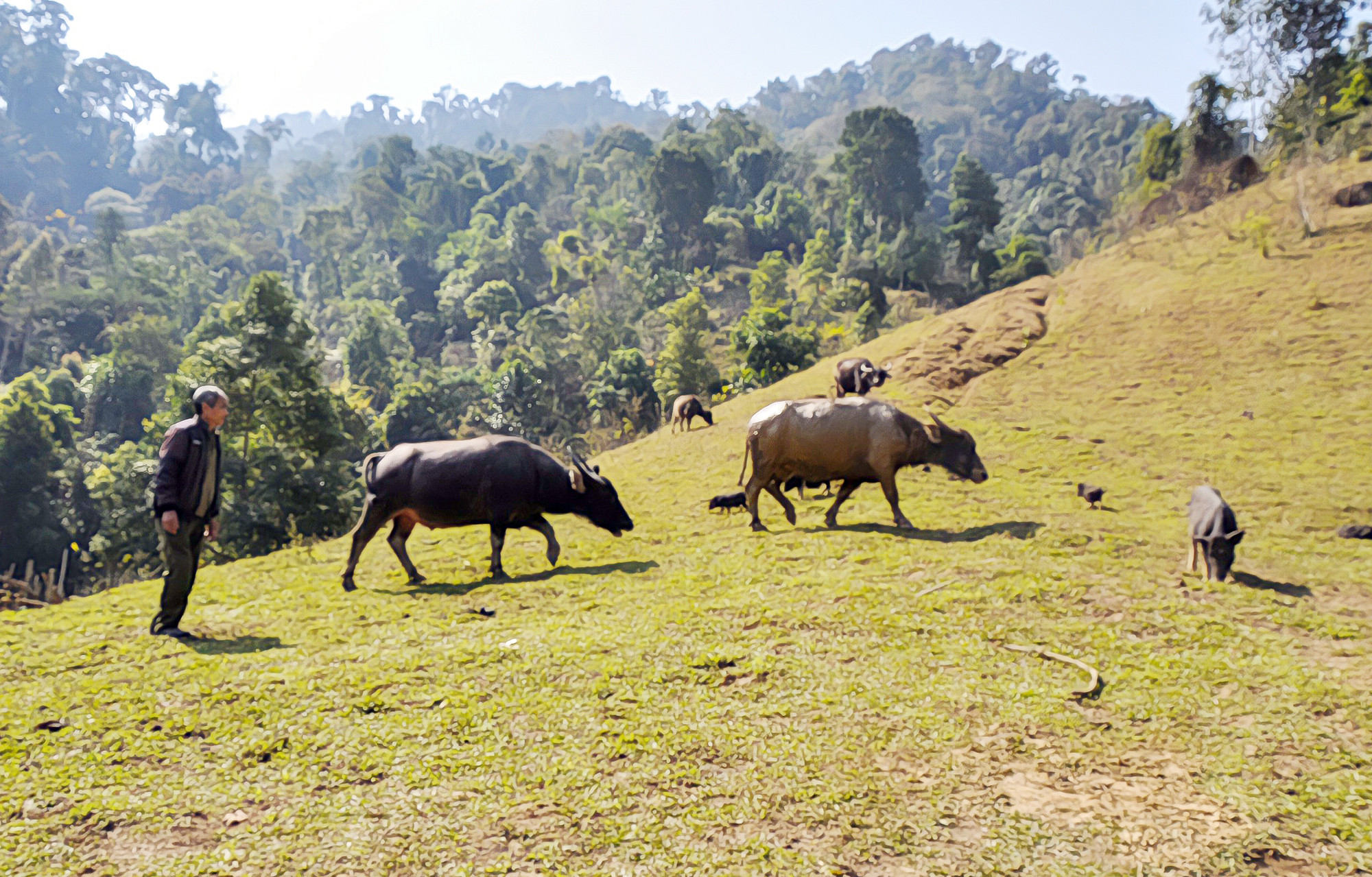 |
| Mr. Lo Van Thuong, Secretary of the Party Branch of Pieng Lang village, is a pioneer in developing family farms and raising livestock and poultry, bringing in a large income. Photo: Cong Kien |
“This place is high and safe, but the land is not fertile; in some places it’s all rocky, unsuitable for cultivation. Many people were worried, even panicked, about the difficulties in transportation, production conditions, and the harsh climate, and considered moving elsewhere. That was in the past; things are different now. Even if you chased them away, no one would intend to leave the village,” Mr. Lo Van Thuong confided.
Turning rocks to find gold
After initial anxieties, the people of Piêng Lâng encouraged each other to find ways to settle in this land. Besides cultivating rice paddies and growing fruit trees to ensure food security, they also sought other sources of sustenance.sources of incometo improve our lives and gradually escape from hunger and poverty.
For those born and raised amidst mountains, valleys, and streams, there is now no other way than to cling to the land and the forest to make a living. Each person has their own way, and today, many households, thanks to their diligence and creativity in business and production, have accumulated wealth, their lives are becoming increasingly prosperous, and their annual income is approaching hundreds of millions of dong.
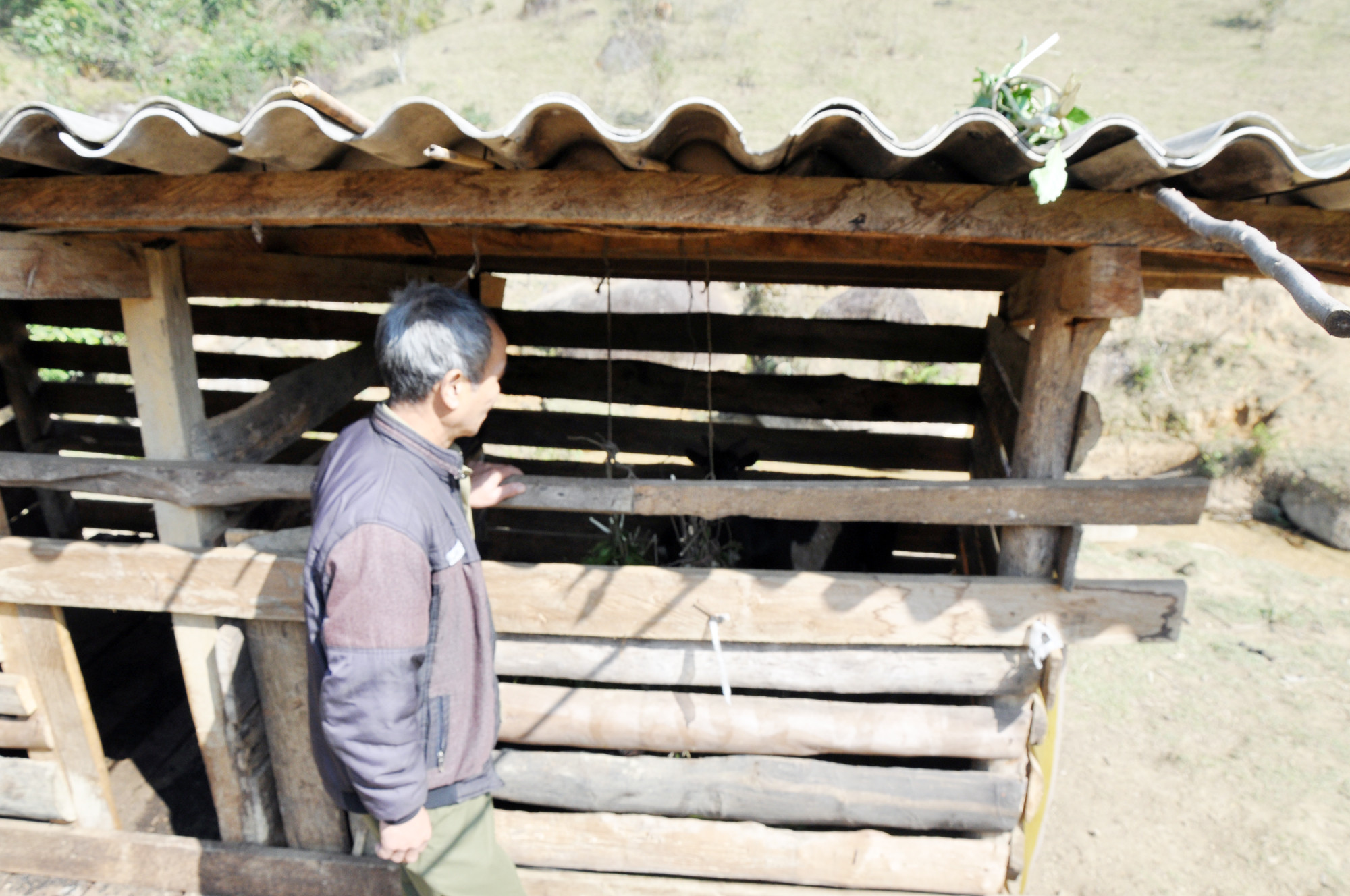 |
| For Mr. Lo Van Thuong, developing his family farm in Pieng Lang is like "searching for gold in a rough stone." Photo: Cong Kien |
Typical examples include the family farm model of Mr. Ngan Van Thi, who both cultivates timber forests and raises 7 buffaloes, 6 cows, and 23 free-range pigs. Also cultivating timber forests and developing livestock, Mr. Ngan Van Luong and Mr. Le Van Son own several hectares of hybrid acacia trees and dozens of livestock. Mr. Lo Van Thanh, Mr. Ngan Van Thoai, and Party Secretary Lo Van Thuong are also involved in livestock development, each owning over 20 buffaloes and cows. The fish farming model implemented by Mr. Ngan Van Thu and Mr. Le Dinh Xuyen generates tens of millions of dong in income annually…
Following Mr. Lo Van Thuong to the livestock farming planning area, crossing the Nam Giai river, we were truly impressed by the seemingly endless stretches of rocks. If it were near an eco-tourism area, this would be an ideal spot for taking photos, but as it's a livestock farming planning area, it's a real challenge for the farmers. Heavy rains and floods wash rocks of all sizes into the rice fields. Then there are the isolated rocks scattered and jutting out in the land, making cultivation impossible.
"Necessity is the mother of invention." When farming became impossible, the people of Piêng Lâng divided up the land to raise buffalo, cattle, goats, pigs, and chickens, generating a considerable income. Farms sprang up one after another; large and small stones were overturned and piled into blocks to create space; small streams were dammed and widened into fish ponds. Over the years, the people of Piêng Lâng have transformed the barren, desolate land into a productive area that generates a substantial income.
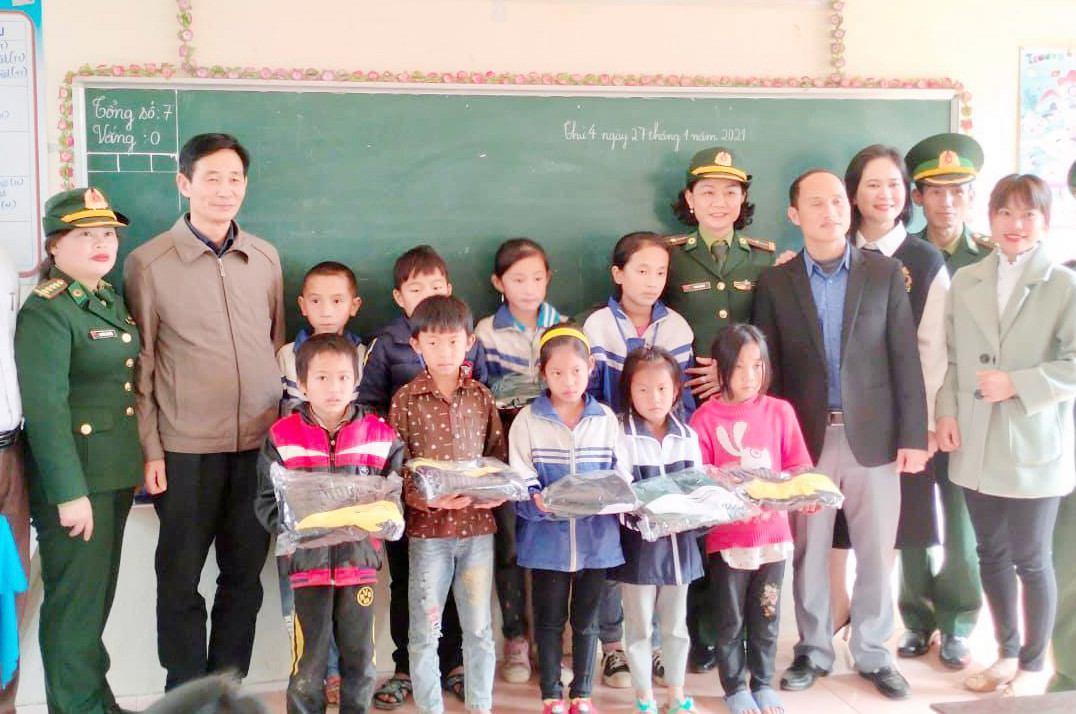 |
| The Women's Association of the Logistics Department, Border Guard Command of the province, in coordination with philanthropists and leaders of Que Phong district, presented Tet gifts to the people of Pieng Lang village (Nam Giai). Photo: Le Thach |
Secretary Lo Van Thuong's farm is situated on the edge of a mountain, with a watchtower perched precariously beside a small stream, surrounded by countless rocks that seem to enclose it. His children have their own families, and every day Mr. and Mrs. Thuong take turns caring for and looking after their 9 buffaloes, 8 cows, 17 goats, and hundreds of chickens, not to mention a fish pond covering more than 2 acres.
“Initially, we had to borrow capital to invest in building barns, enclosures, buying breeding stock, and painstakingly turning over every single stone. There were times when we thought about giving up because of losses due to floods, cold weather, and diseases. But later on, we received technical training and gained more experience, so our income became more stable. The villagers often joke, ‘In the past, we turned over stones; now we are finding gold,’ and that’s why.”
We left Pieng Lang whenLunar New Year of the Ox2021 is just around the corner, and excitement and anticipation are evident on everyone's faces. Perhaps this Tet (Lunar New Year) will be the happiest since we resettled here, now that we have pigs and chickens in the pens and transportation is much easier.
Mr. Lo Minh Tuong, Chairman of the People's Committee of Nam Giai commune, said: "Thanks to the attention and investment from all levels and sectors, as well as the efforts of the people to adapt to the new circumstances, life in Pieng Lang is gradually improving. Although poverty has not yet completely disappeared, many households have begun to accumulate savings, and we hope that the new year will bring favorable weather so that the people can have an increasingly prosperous life."


