
Spring arrives in the flood-affected area of Nhon Mai.
As Tet approaches, returning to Nhon Mai border commune, a "flood epicenter" that suffered severe floods in 2025, life is gradually stabilizing.
.png)
Thanh Phuc - Khanh Ly/Present:Nhat Anh• January 25, 2026
---------------o0o---------------
As Tet approaches, returning to Nhon Mai border commune – the "epicenter" of the devastating floods in 2025 – life is gradually stabilizing. Amidst houses still smelling of plaster, newly leveled rice fields, and flocks of chickens and pigs being repopulated from the few remaining offspring, life is being rebuilt day by day. With the close involvement of the Party committee and government, and the support of local officials, despite many difficulties, the people of Nhon Mai are entering the new spring with hope for a warmer Tet after the natural disaster...

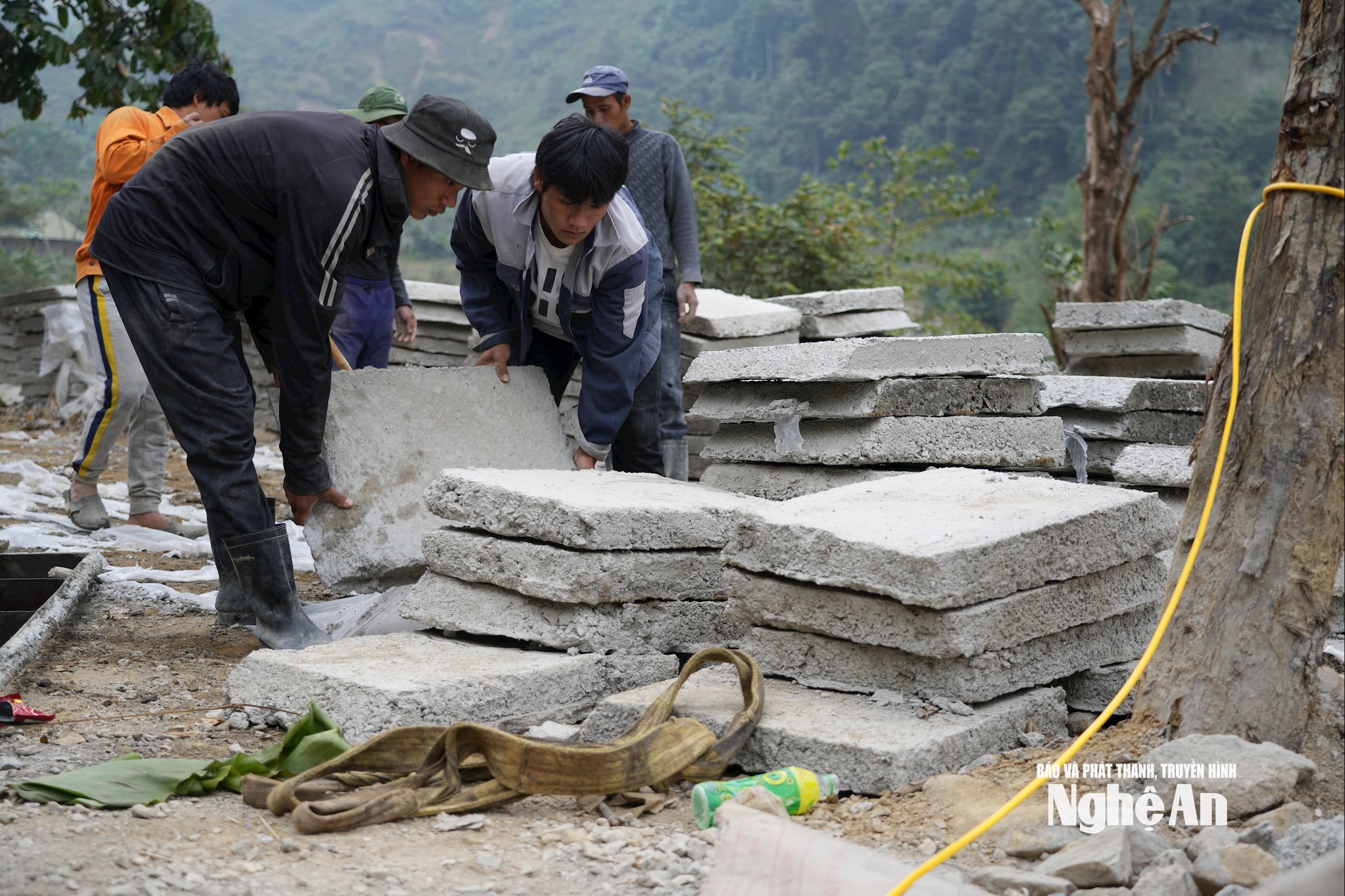
In December, the road leading to the center of Nhon Mai commune still had sections that were crumbling and muddy, not yet completely dry. On National Highway 16, machinery and workers were working day and night to repair severely damaged sections and reopen traffic to the border region. In the cold rain, concrete slabs were poured to reinforce the road, and every meter of road was patched up, not only to allow vehicles to pass, but also to ensure that people could travel safely as Tet (Lunar New Year) approached.
Mr. Tran Cong Chinh, a worker constructing the road embankment, said briefly but sincerely: "It's very cold and rainy, but we're still trying to work quickly. With the road, the people will suffer less, and they'll have less to worry about during Tet."
.jpg)
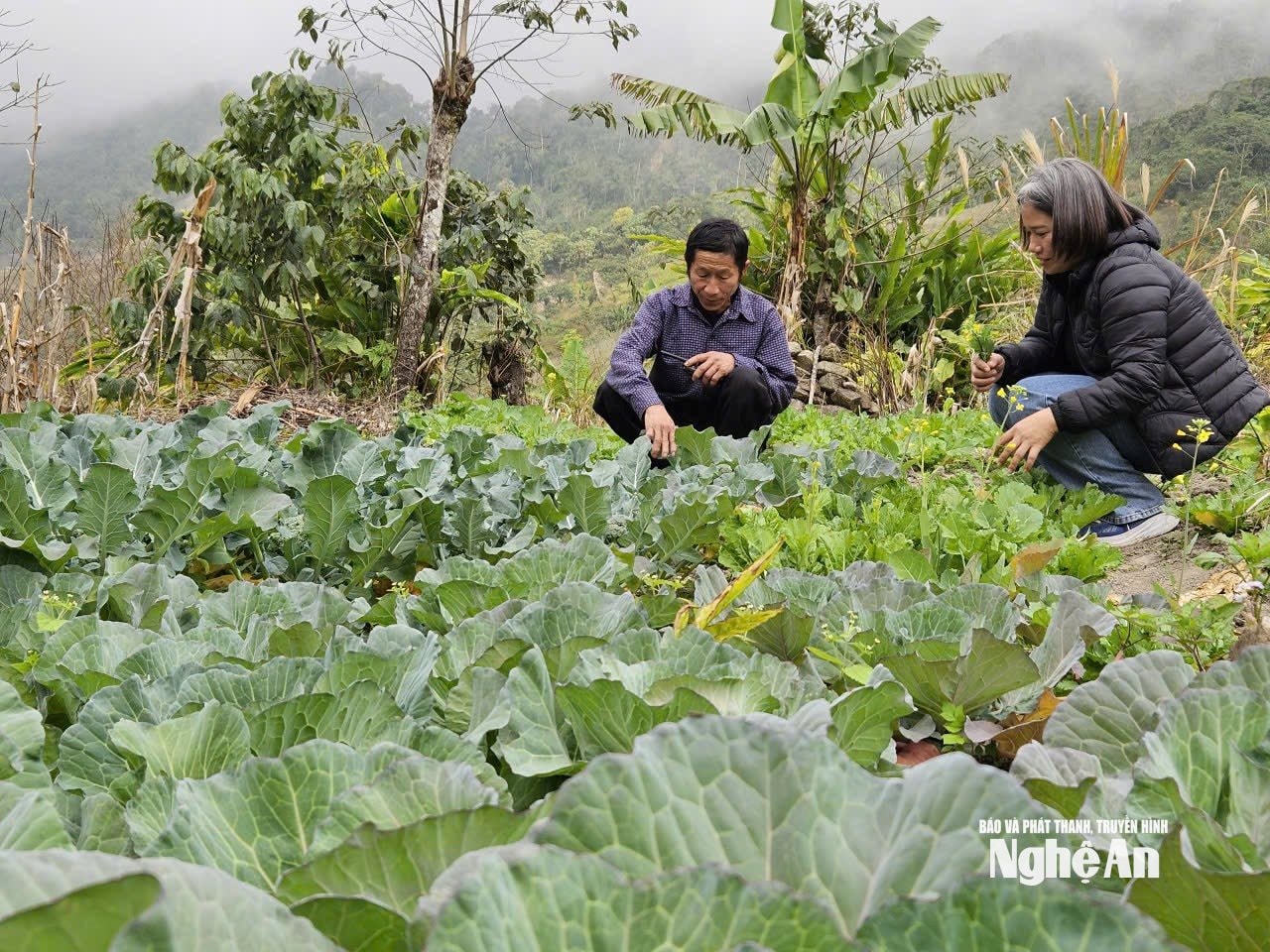
In the villages, life is being rebuilt starting from the smallest things. In Pha Mut, after the floods, many households were forced to urgently relocate to Na Hy to build temporary houses. The houses, roofed with corrugated iron, are still simple, but around them, rows of fresh green vegetables have begun to appear. Mr. Xong Ba Tong, head of Pha Mut village, said: “Five households have relocated to Na Hy. The houses are still temporary, but the villagers are taking advantage of the time to sow vegetables like cabbage, green beans, and other greens to have something to eat during Tet (Lunar New Year). After the floods, with support from various sources, the villagers are gradually restoring their livestock and farming activities.”
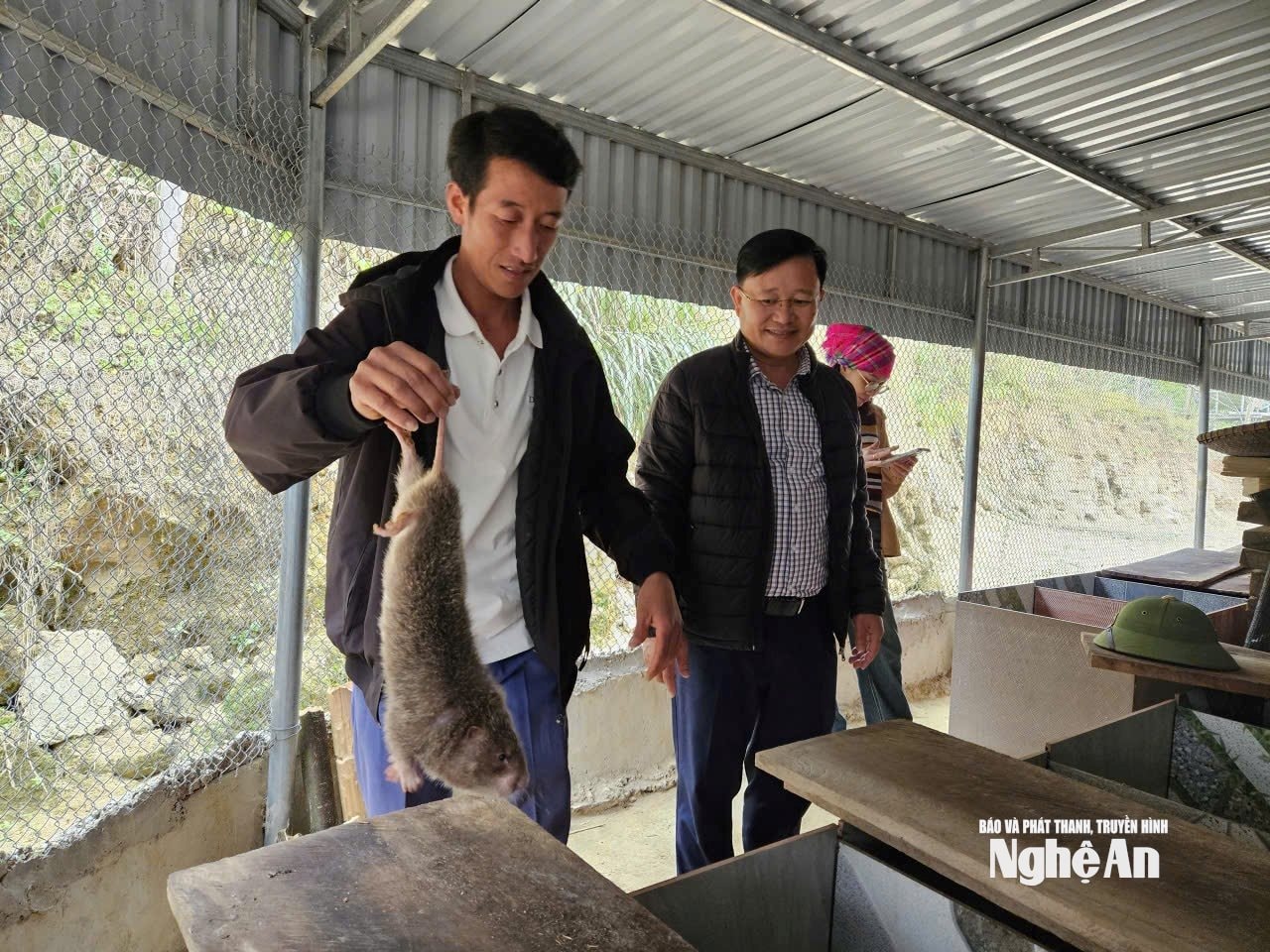
Standing in front of his newly built house, Xong Cha Xia pointed to his flock of black chickens, counting them softly as he boasted, "As soon as I built this house and settled down, I bought chickens to raise. I only have 10 so far, enough for the Lunar New Year and to keep the breed. I also raised a few native black pigs at my old place. This Lunar New Year, I feel somewhat at ease."
.jpg)
In Na Lot village, the epicenter of the floods, the scars of the 2025 flash floods are still visible. Seven households in the village have had to rebuild their homes on scattered plots of land. The new houses are not yet fully completed: some are still under construction, others have only just finished plastering their perimeter walls, with building materials still scattered in the yards.
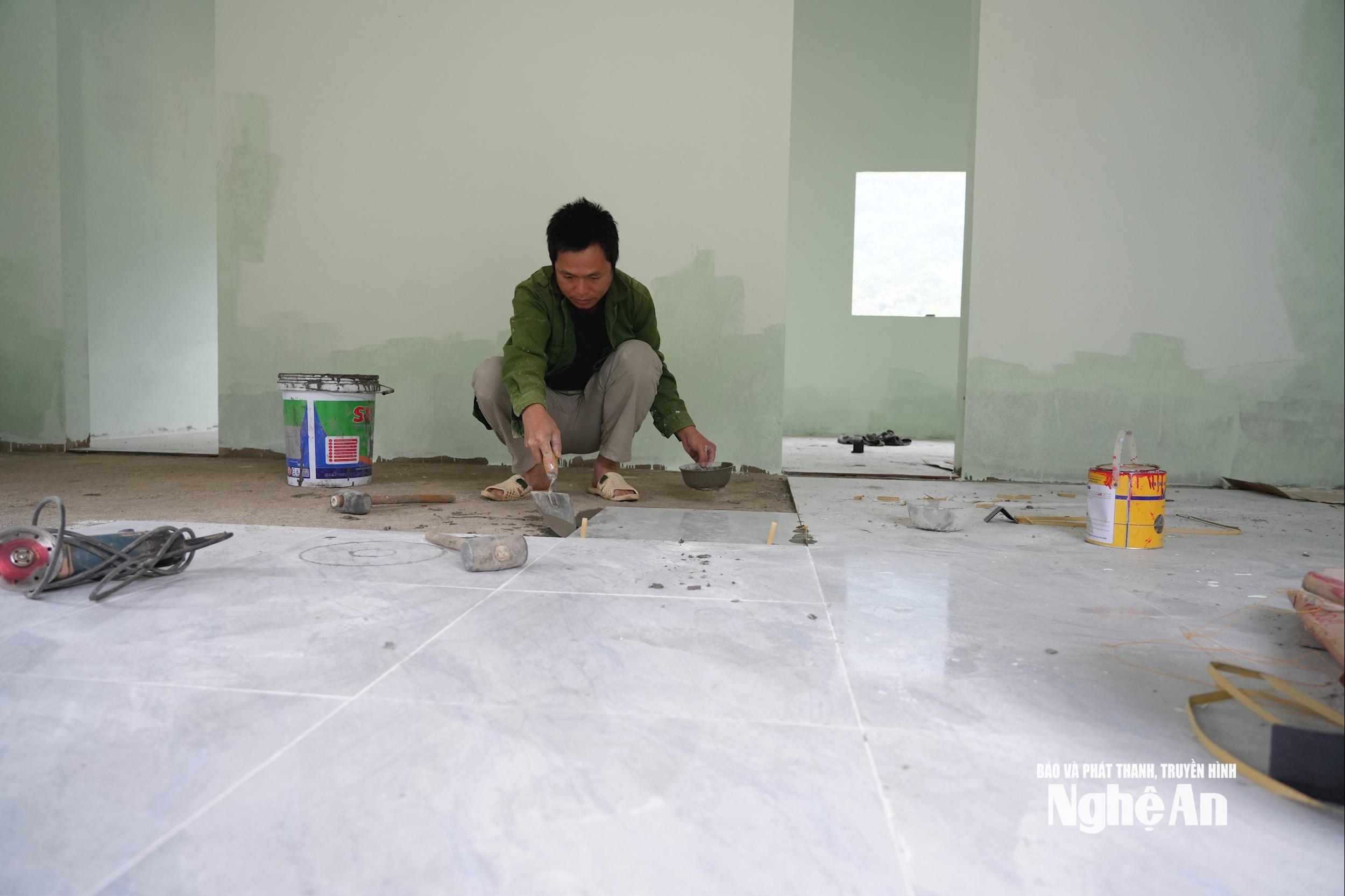
Mr. Luong Van Hong's family was one of the hardest hit. Their old house was completely swept away, and for months, the family of four had to live temporarily in the school grounds. At the beginning of January, thanks to his brother donating land and a 250 million VND grant, Mr. Hong was finally able to rebuild a two-room, single-story house.
“It should be finished in about a week. We have a new house to celebrate Tet in, even though it's still simple, but we're very happy about that. During the construction, the commune officials occasionally came down to check on us and offer encouragement. That care has become a source of moral support, helping our family to overcome the most difficult period,” Mr. Hong shared.
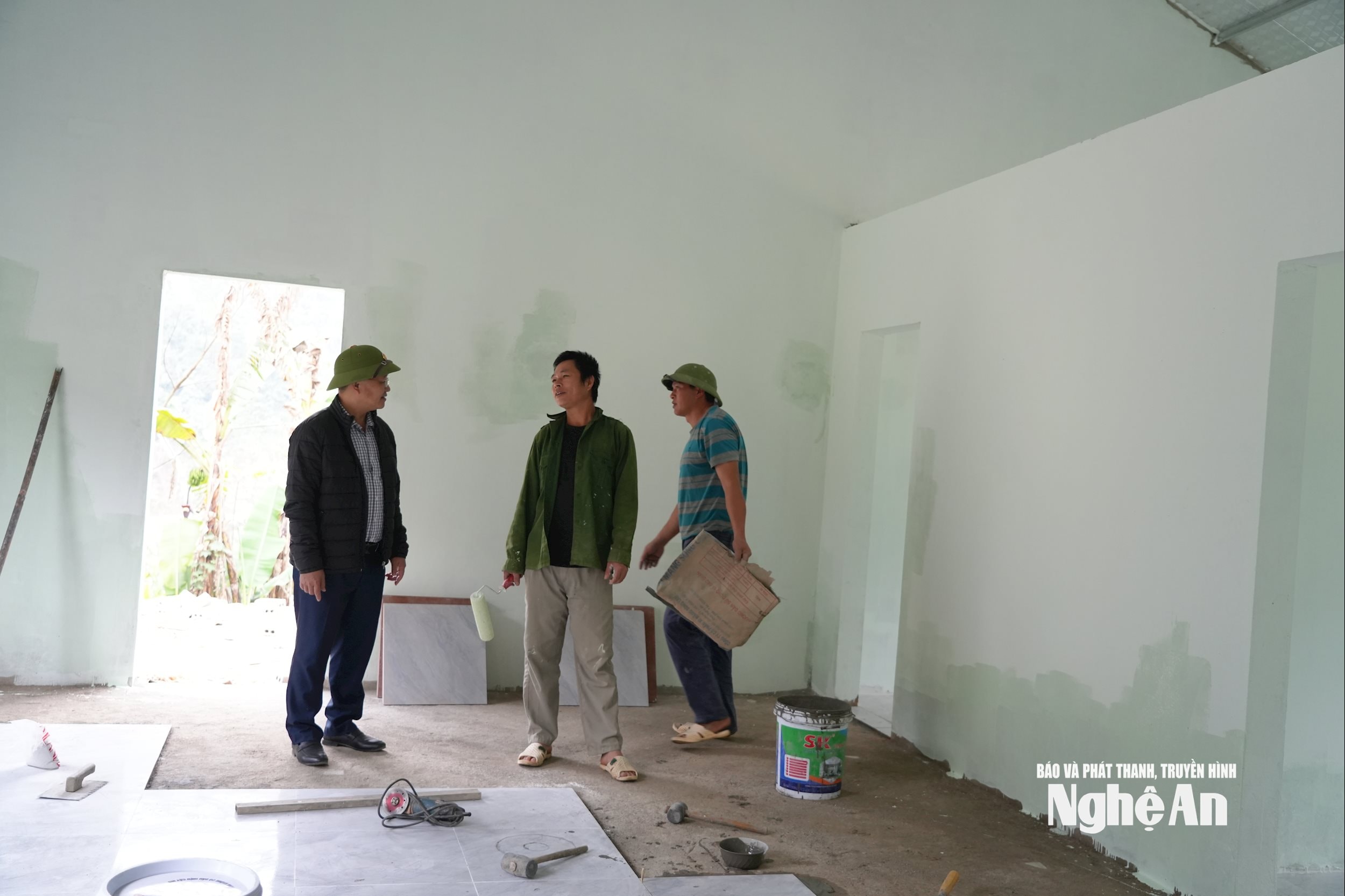
Not only individual households, but the entire community is working together to recover after the natural disaster. Moong Van Mien, head of Na Lot village, said that the Khmu people in the village contributed their labor to level the ground and transport materials to help households build new houses. “Many houses now have their frames and foundations completed, just waiting for materials to roof and build walls. Everyone hopes to have a roof over their heads before Tet,” Mr. Mien said.
Along with housing, essential infrastructure for daily life is also being urgently completed. With support from an organization in Hanoi, seven gravity-fed water tanks have been built in the center of the villages, along with five kitchens for preschool children. "After the flood, there was a severe shortage of clean water. Now that we have new water tanks, the villagers are much less burdened," shared Ms. Xeo Thi Tin from Na Lot village.
In Na Hy and Huoi Xa, the buried rice fields are being cleared of sand and gravel to restore the land. While simultaneous planting isn't yet possible, small plots of land are gradually coming back to life. Besides reorganizing the villages, people are gradually establishing livelihoods through moderate-scale livestock farming models involving goats, cows, buffaloes, chickens, and ducks, all in the initial stages of rebuilding.
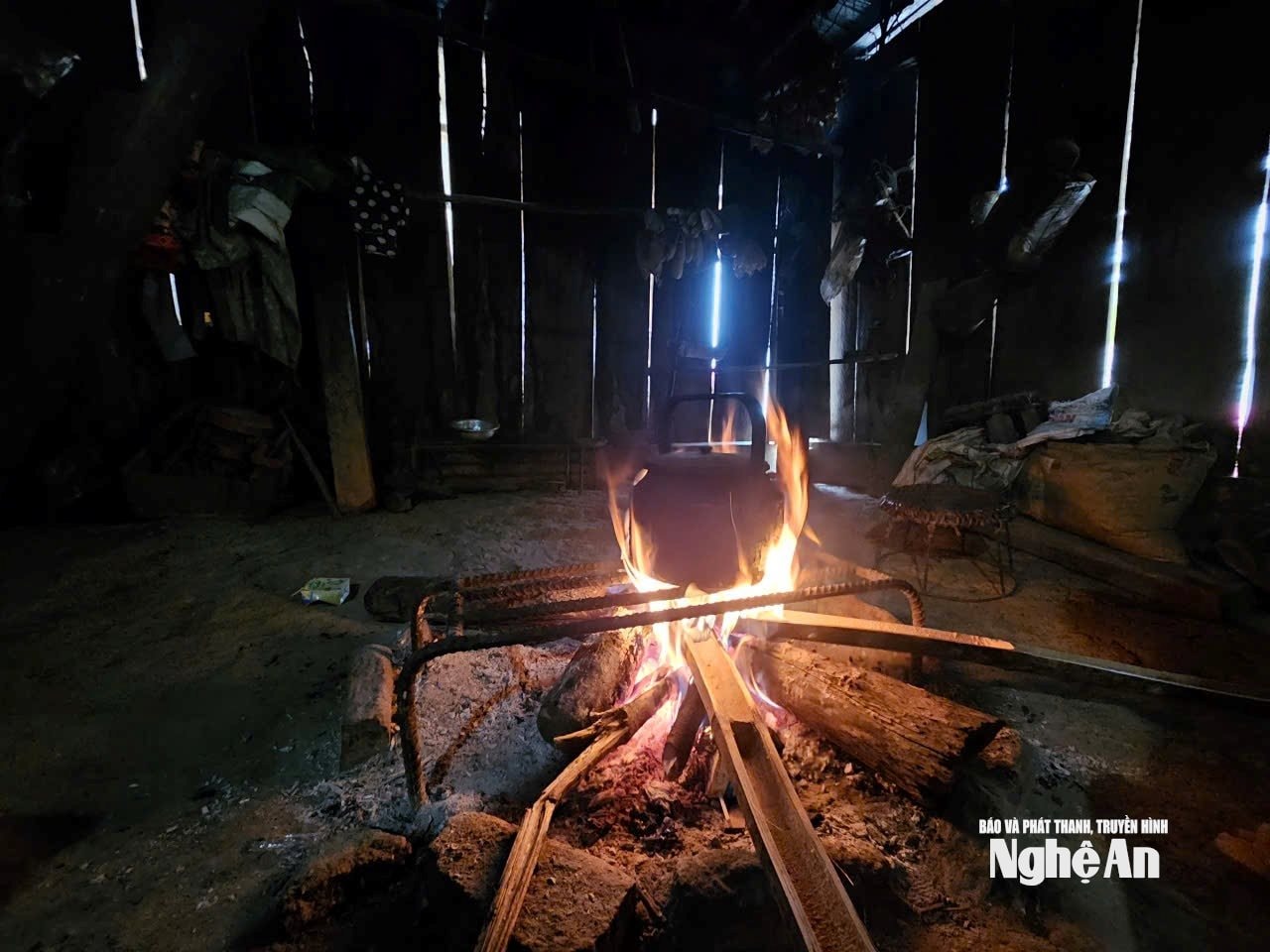
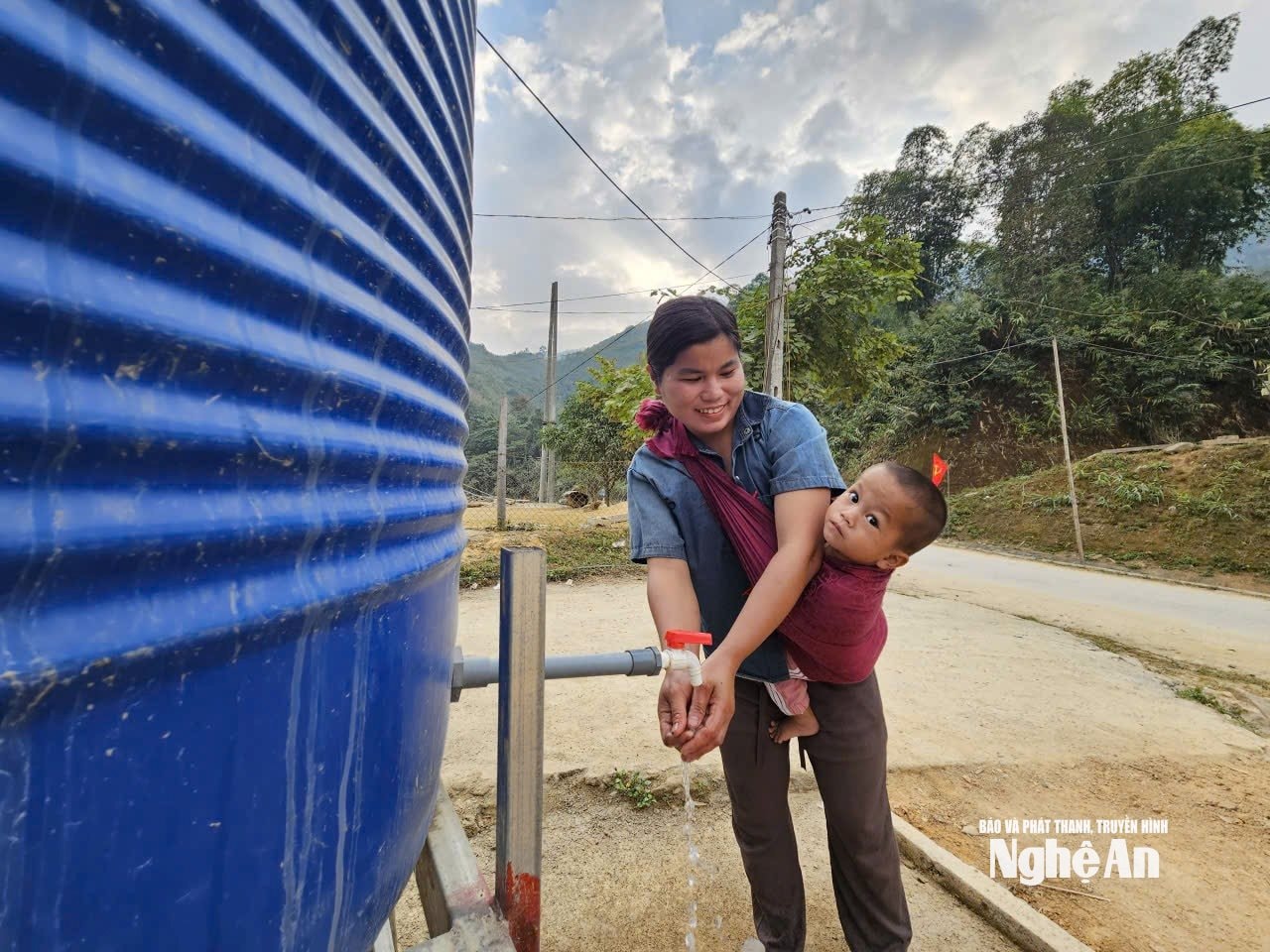
Amidst the chaos, the footprints of local officials were present in almost every village. In the final days of the year, the Party Secretary of Nhon Mai commune, Mac Van Nguyen, and other commune officials practically "ate and slept in the villages," staying close to the people and working alongside them to overcome difficulties. After the floods, the commune both appealed for and connected support from higher levels, organizations, and philanthropists, while directly guiding the people in stabilizing their living conditions and restoring production.
From leveling the land and building resettlement houses to investing 4 billion VND from the provincial Fatherland Front's support fund to reinforce rice paddies and level the land for the spring crop, everything was carried out under urgent and limited conditions.
“We determined that we had to give the people the ‘fishing rod’,” Accordingly, training courses were organized in a “hands-on” approach: From growing short-term vegetables, raising safe chickens and pigs, to preserving breeds and preventing diseases – all practical and suitable for the post-disaster circumstances,” said Comrade Mac Van Nguyen - Secretary of the Party Committee of Nhon Mai commune.
.png)
Furthermore, commune officials also assist in the product distribution process. Comrade Bui Thi Lan, a commune official, regularly visits the villages to help villagers film videos and take photos to promote golden flower tea, Mong cabbage, black chicken, local pigs, and Mong peaches on social media.
"Thanks to the commune officials, the villagers' products are known in more places and are easier to sell," said Mr. Va Chan Do (Huoi Co village).
If local officials are the "pace-keeping" force in each village, then the officers and soldiers of the Nhon Mai Border Guard Post are the steadfast, silent, yet indispensable support in the post-flood reconstruction journey.
Since the historic floods at the end of July 2025, Nhon Mai Border Guard Station has mobilized hundreds of officers and soldiers to stay in villages and among the people, directly participating in supporting people to overcome the consequences of the natural disaster.
In the last few months of the year alone, border guards contributed more than 1,000 man-days to help local people level land, transport materials, repair and rebuild dozens of houses that were swept away or severely damaged in the villages of Na Lot, Pha Mut, Na Hy, Huoi Co, etc.
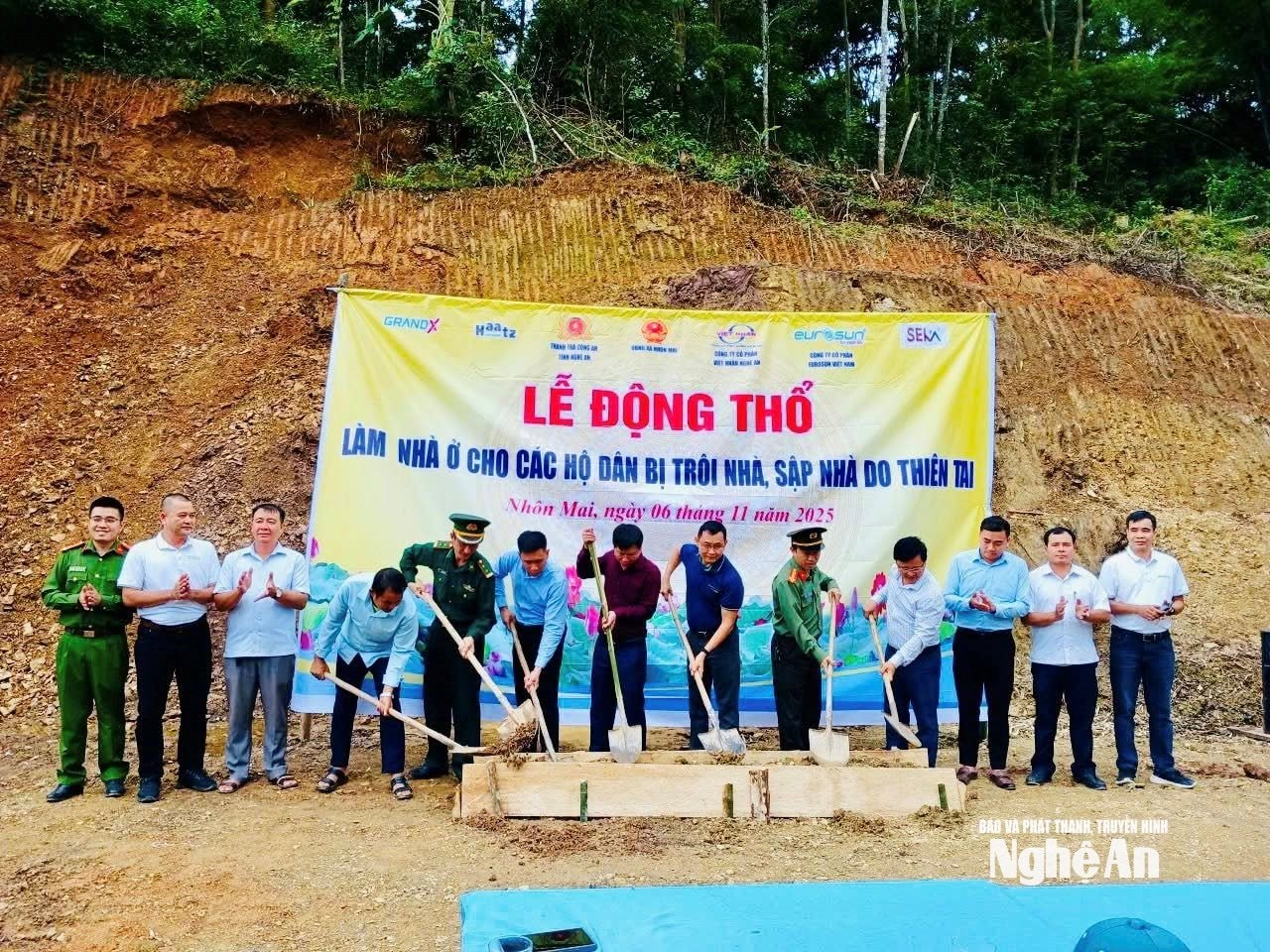
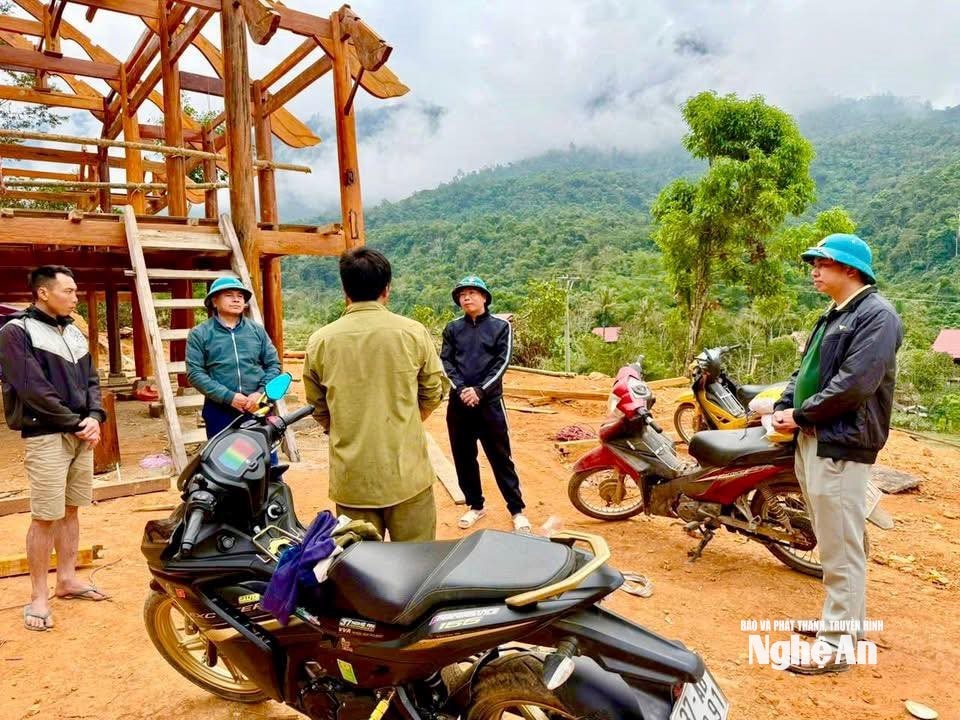
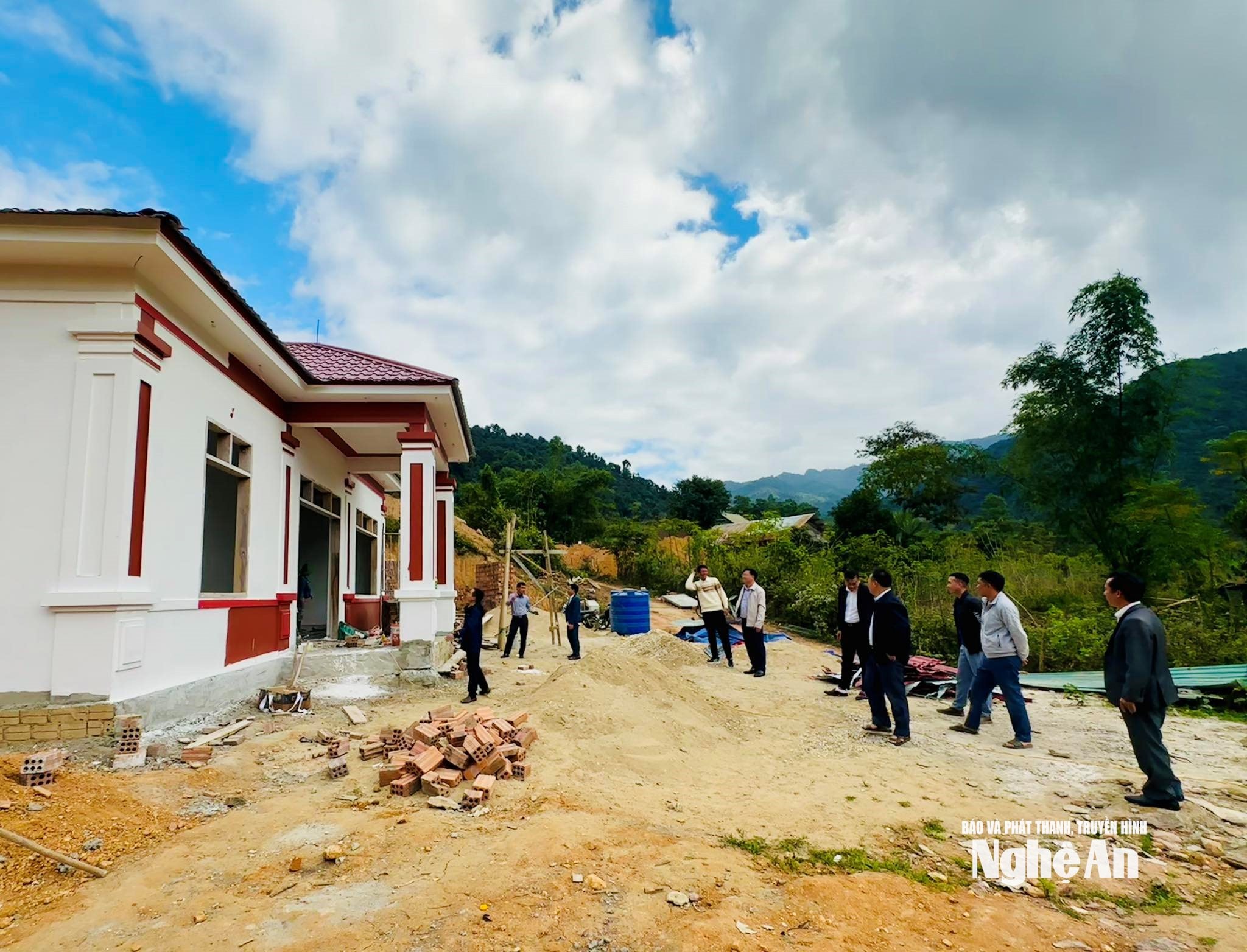
As Tet approaches, while many families are still racing against time to complete their housing, the sight of border guards and local people mixing mortar, roofing, erecting walls, and finishing up essential homes has become familiar.
Besides helping to rebuild homes, border guards also work alongside local people to restore their livelihoods, starting with the smallest things. On the land where the mud and sand have just been cleared after the flood, officers and soldiers directly guide people in planting short-term vegetables such as cabbage, kohlrabi, and carrots; repairing livestock shelters, and assisting in caring for the newly re-established native chicken and pig herds.
.jpg)
Although the livestock herds are not yet numerous and the vegetable plots not yet fully covered the land, these are the initial foundations for the villagers to gradually stabilize their lives after the natural disaster. Interspersed between the labor sessions are simple yet heartwarming moments: soldiers and villagers cleaning up village roads, re-erecting fallen flagpoles, hanging national flags along the village's main roads, and tidying up the village to welcome Tet (Lunar New Year).
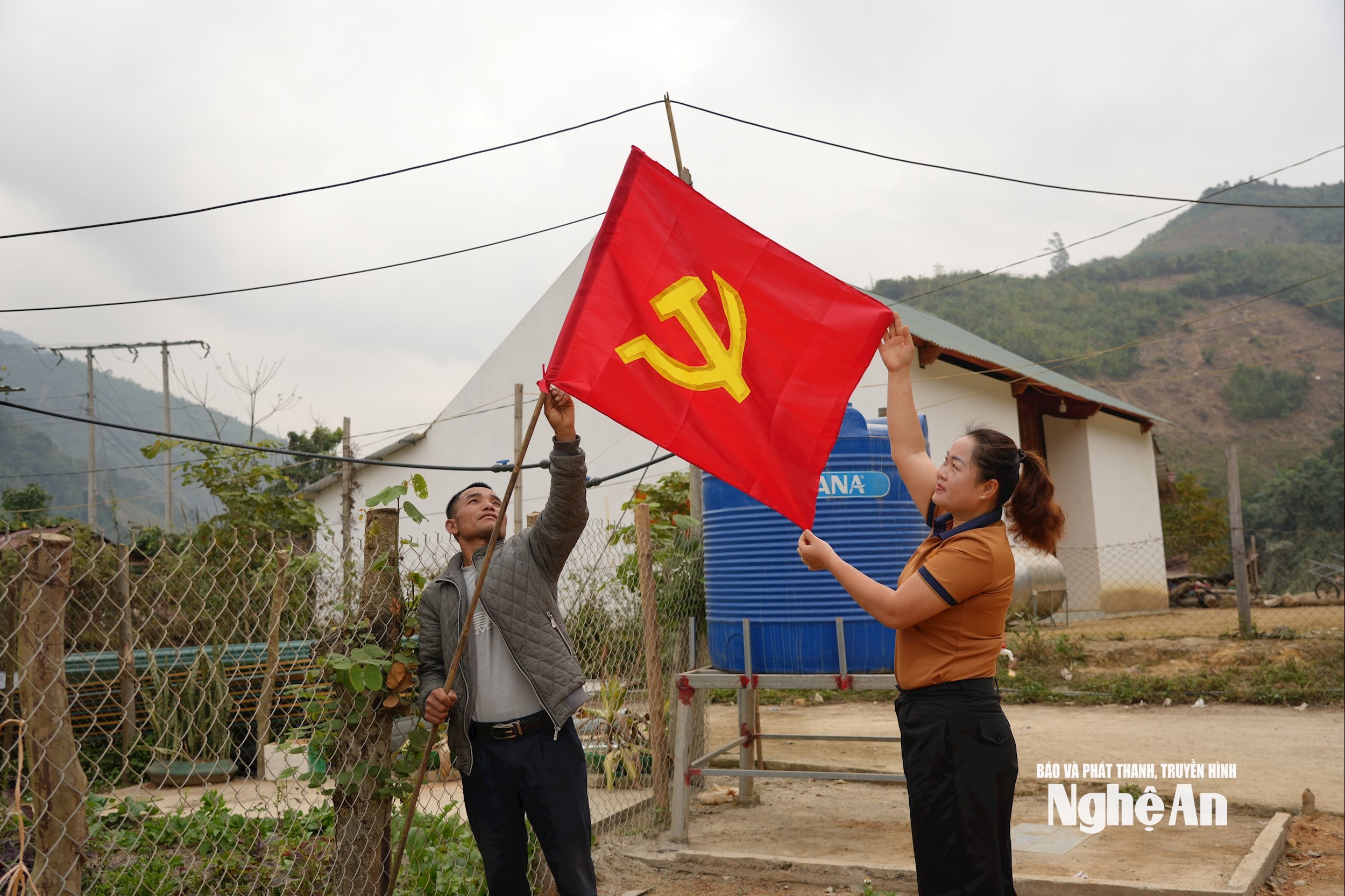
Helping people stabilize their lives is also about protecting the border from the ground up. When people feel secure in staying on their land and in their villages, rebuilding their livelihoods, then the border will truly be strong and sustainable.
Lieutenant Colonel Nguyen Van Thuong - Political Officer of Nhon Mai Border Guard Station
.jpg)
One of the most significant signs of the initial revival in Nhon Mai is the resumption of the local market at the beginning of January this year. Amidst the overwhelming workload of disaster relief efforts and the approaching end of the year, restoring the market represents a tremendous effort by the local Party committee and government. Organized systematically and regularly on the first and third Sundays of each month, the Nhon Mai market not only facilitates the buying, selling, and exchange of goods and products for people of various ethnic groups within and outside the commune, helping them gradually restore their livelihoods, but also becomes a vibrant cultural space for the community in this border highland region.
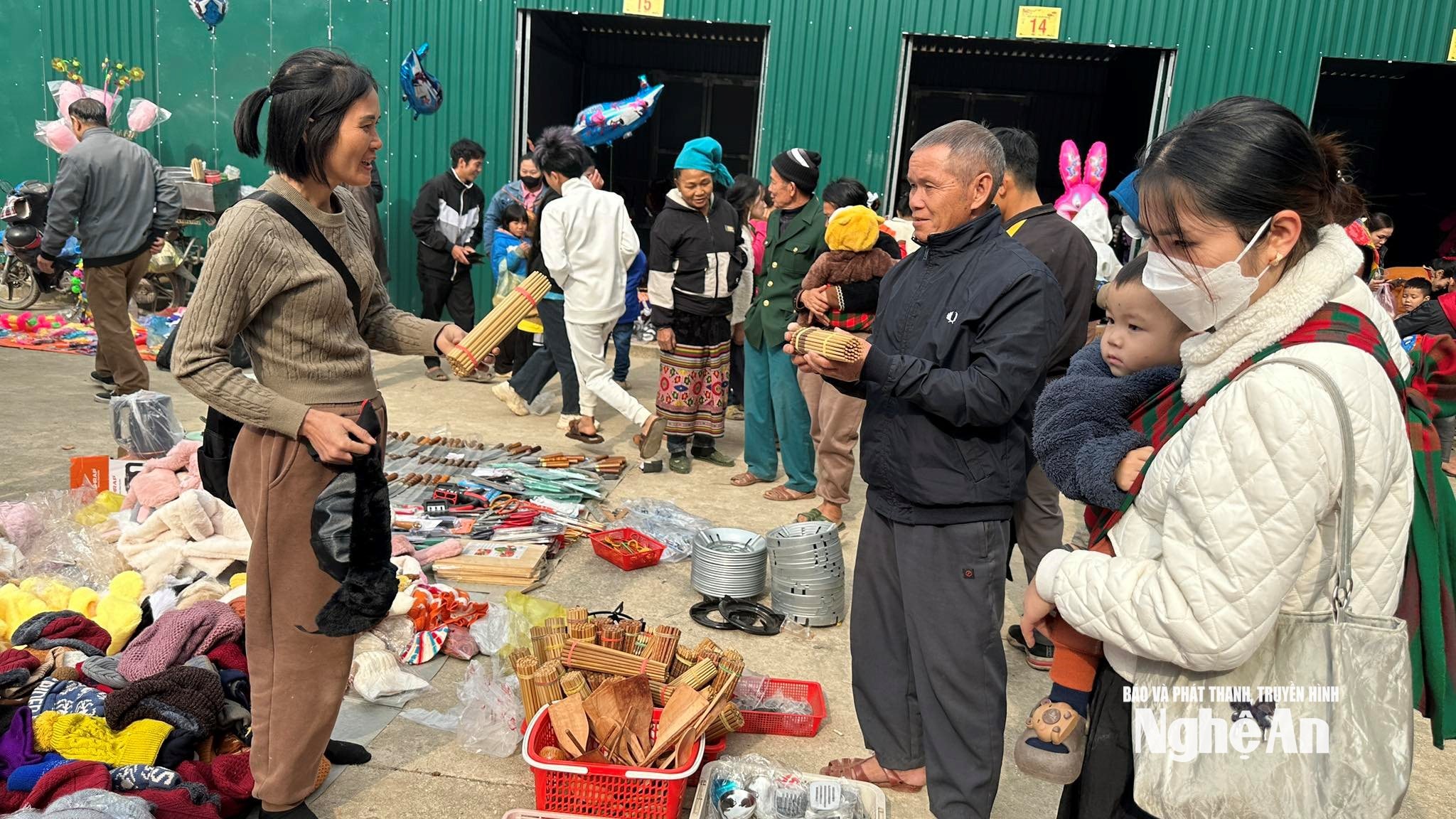
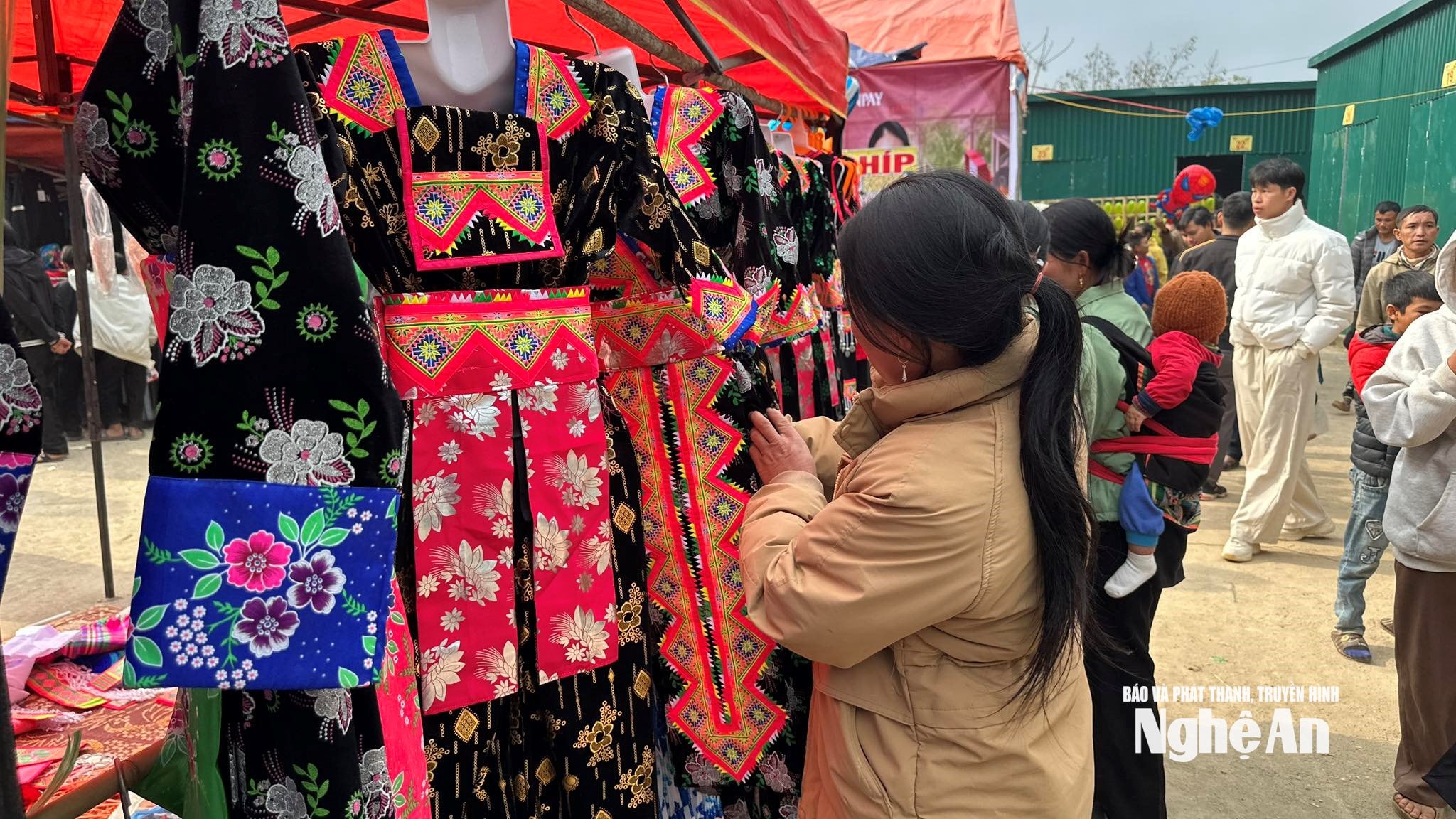
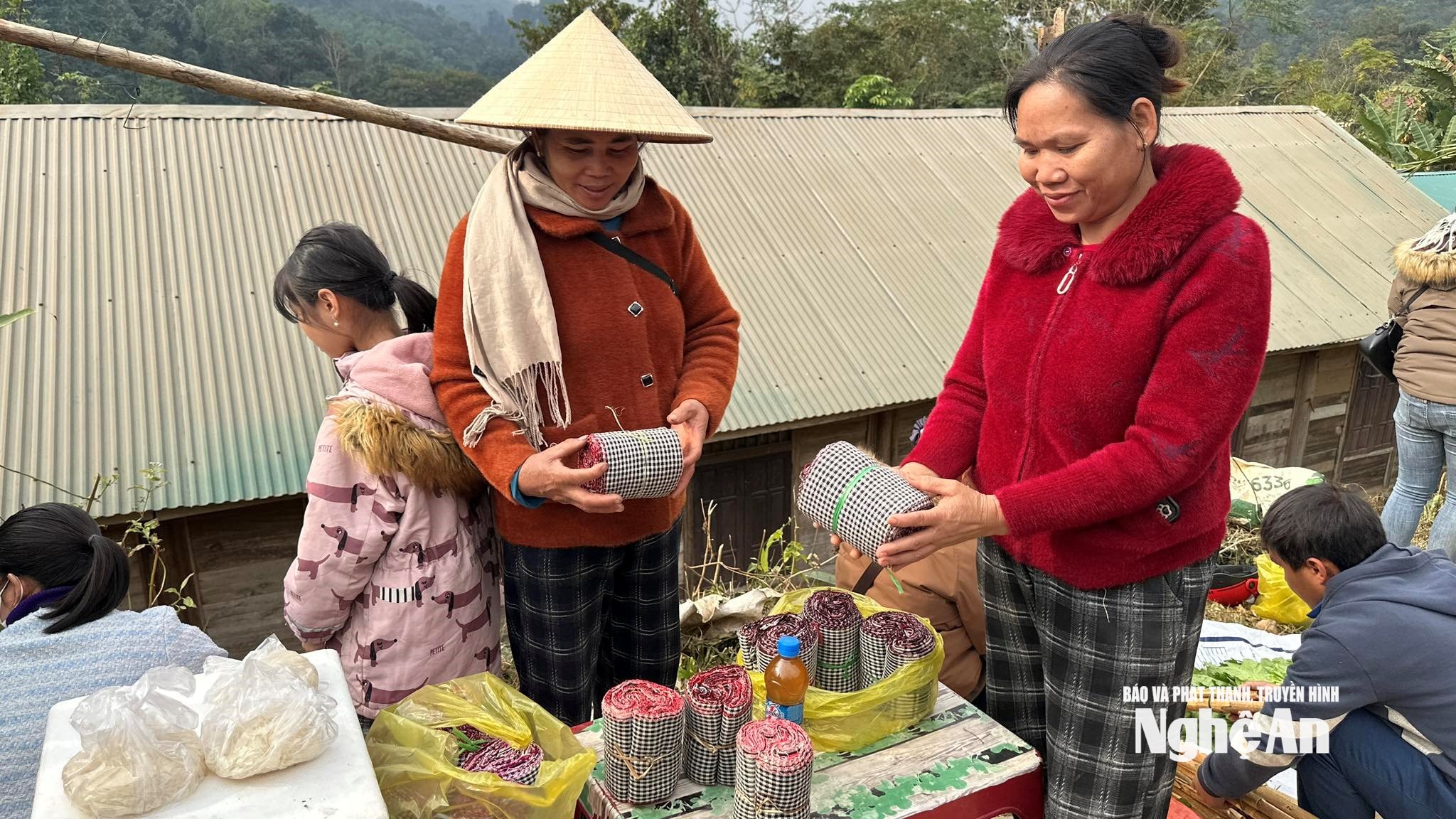
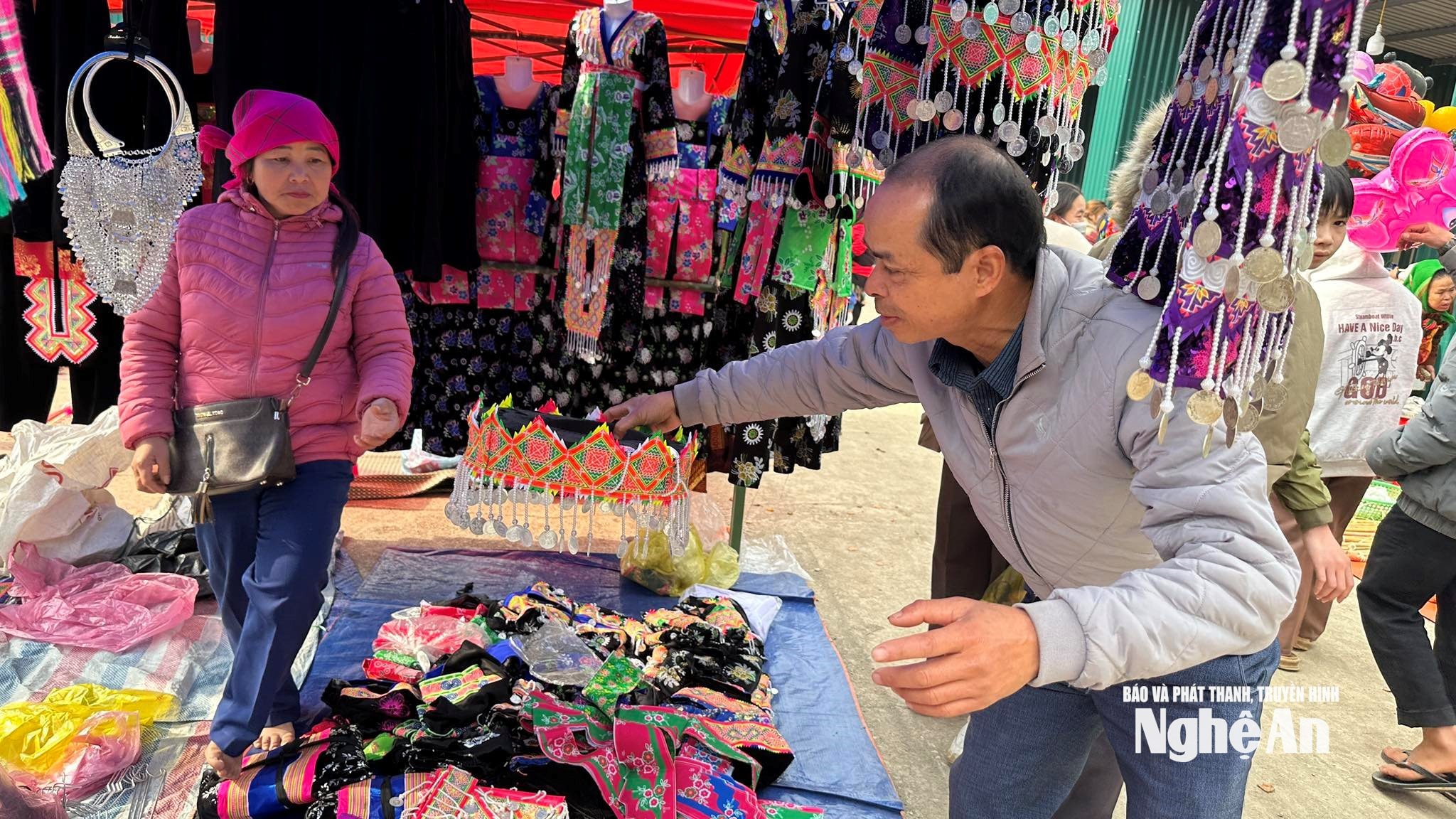
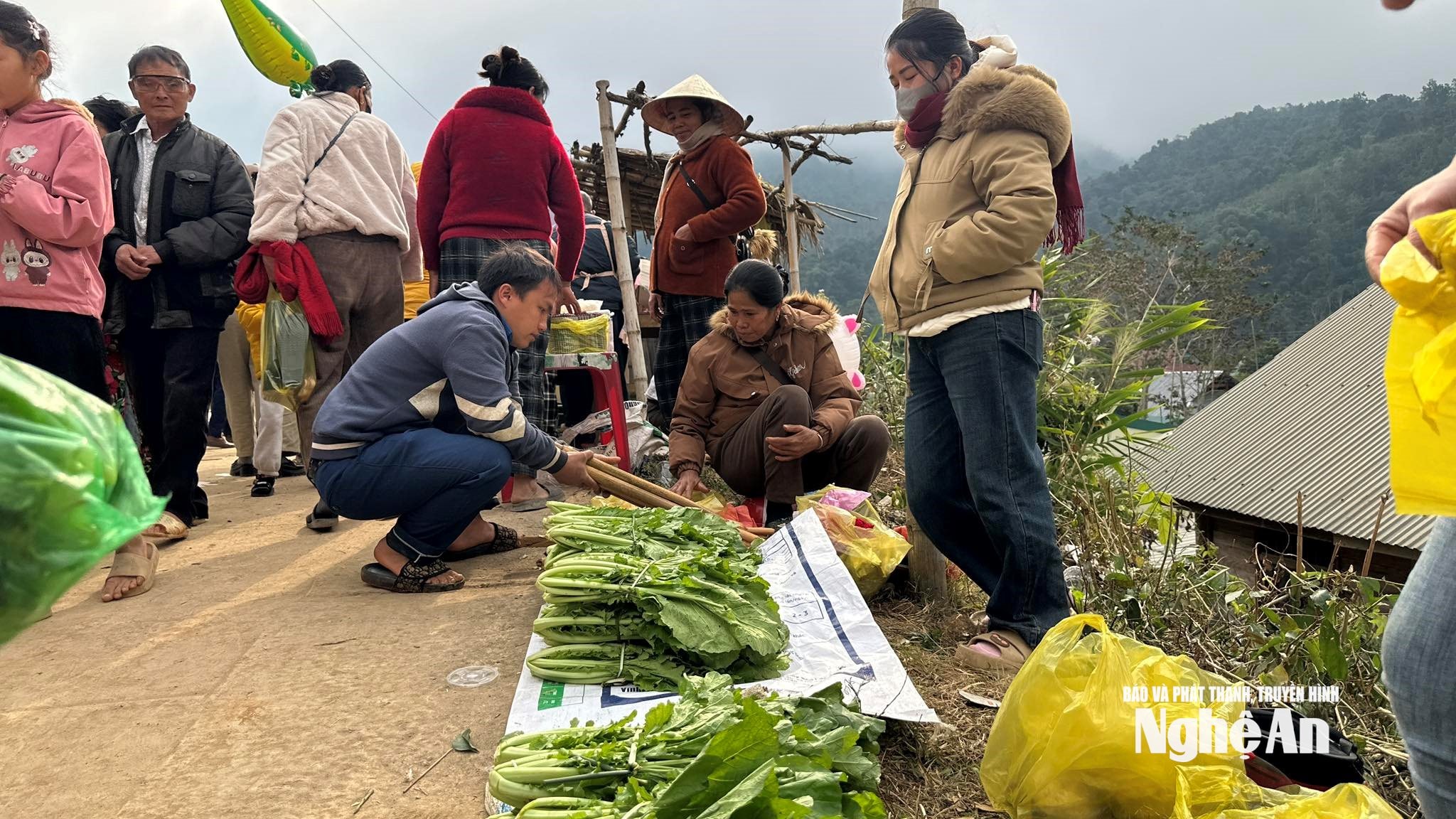
In the heart of the market, nearly 40 stalls are neatly arranged in three rows, selling a diverse range of local products and traditional handicrafts such as brocade, rattan and bamboo weaving, agricultural tools, grilled stream fish, vegetables, flowers, and golden tea buds… The food court, with familiar dishes like fish soup, fish stew, bamboo rice, grilled fish, and grilled meat, creates a warm and lively atmosphere rarely seen after months of gloom due to natural disasters. Throughout the stalls, people choose dresses, scarves, musical instruments, and household items to prepare for Tet (Lunar New Year); products bearing the distinct cultural imprint of the Mong, Khmu, and Thai ethnic groups are exchanged and bought with excitement and confidence.
The reopening of the market is vivid evidence of the post-disaster recovery in a still-difficult area, instilling confidence and motivation in the ethnic minority communities of Nhon Mai to move forward on the path to stabilizing their lives and achieving sustainable development; it is also a clear signal that a new spring is gradually emerging in the flood-stricken region.
According to Comrade Mac Van Nguyen, Secretary of the Party Committee of Nhon Mai commune, more than 70 households in the commune suffered damage to their homes, and over 80% of their rice and crop fields were swept away by the floods. Life is now gradually stabilizing. This is the result of concerted efforts from many sides, but most importantly, it is due to the unity of the people, the close supervision of local officials, and the persistent and responsible support of the forces stationed in the area, especially the officers and soldiers of the Nhon Mai Border Guard Post.
Spring in Nhon Mai is not yet vibrant with colorful flowers, nor is it yet full of prosperity and abundance. But in the houses nearing completion, on the fields that are being restored, and at the first market of the new year 2026, one can clearly feel Nhon Mai rebuilding its life from the simplest and most practical things.
Party flags and national flags are hung along the village roads; solar-powered streetlights illuminate the countryside… opening up hope for more prosperous springs ahead.
.jpg)
To encourage the people, cProgram “Tet in the Border Region – Spring of the Year of the Horse 2026”It was also held early on the afternoon of January 22, 2026. This isThis activity has profound humanitarian significance, demonstrating the concern of the local Party committee and government for ensuring social welfare and caring for the material and spiritual lives of the people in the commune during the Lunar New Year.The amount of money is over 1.5 billion VND.The Nhon Mai Commune "For the Poor" Fund Campaign Committee continues...received from collective efforts,support from agencies, units, businesses, organizations, and individuals tosame localityTaking care of Tet celebrations for people in border areas.This will be realized through warm and heartfelt gifts for them.The poor, those in difficult circumstances, and vulnerable people in the commune are happy.Spring, celebrating Tet.


