
Real images of nuclear-powered missiles have emerged.
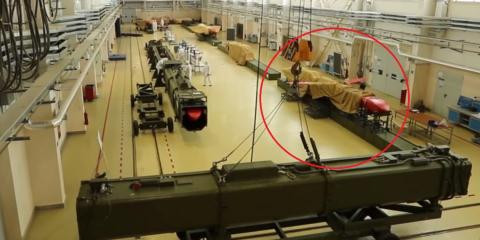
The Russian Ministry of Defense has just released a video from inside the Burevestnik missile production plant – a line of cruise missiles equipped with nuclear engines.
According to the published images, Russian engineers are inspecting Burevestnik cruise missiles in a large workshop. The missiles are painted red, but important details on their bodies are covered.
Russian engineers say that despite successful testing, the airframe design of the Burevestnik nuclear-powered cruise missile still needs adjustments. Several parts of the missile are being finalized in factories.
|
| The Burevestnik missile in the factory. |
In his State of the Union address in March 2018, President Putin asserted that the Burevestnik has an "almost unlimited range" and the ability to maneuver effectively to bypass US defense systems and attack from the most unexpected directions.
This is considered a crucial feature, allowing it to deceive any defense system and hit targets from the most unexpected directions. However, some Western military experts have expressed skepticism about the feasibility and stability of the nuclear engine installed in the missile, as well as its environmental safety.
In particular, the Americans also claimed that the Burevestnik nuclear-powered missile copied an idea they created during the Cold War, namely Project Pluto.
At the heart of Project Pluto is a cruise missile designed around a straight-flow nuclear jet engine, its acronym being SLAM (Supersonic Low Altitude Missile).
That means this giant, nuclear-powered monster would fly at an altitude just above the treetops. The straight-flow nuclear jet engine – the "heart" of Project Pluto – is the key to making this weapon so terrifying.
The engine's design is very simple, with essentially no moving parts. When the rocket is launched, the air velocity through the duct is fast enough to allow the engine to operate; the nuclear reactor heats the incoming air, where it expands and is expelled from the nozzle, providing both thrust and toxic radiation. Thanks to the nuclear reactor, the rocket has a nearly unlimited range.
However, insurmountable technological challenges such as creating small-scale nuclear engines, developing materials for nuclear reactors, and avoiding environmental pollution led the US to abandon the SLAM program.
And this is precisely why the Pentagon believes that Russia's nuclear-powered Burevestnik may only be impressive claims made by Moscow.
| Russian video releases authentic images of the Burevestnik missile. |


