
Rubber exports reached $860.9 million, with the average price decreasing by 3.8%.
In the first four months of 2026, Vietnam's rubber exports increased in volume but decreased in value due to the impact of the global price decline and new environmental barriers.
According to a report from the Ministry of Agriculture and Environment, in the first four months of 2026, Vietnam's rubber exports reached 463.8 thousand tons with a value of 860.9 million USD. Compared to the same period in 2025, rubber export volume increased by 2.4%, but the value recorded a decrease of 1.4%.
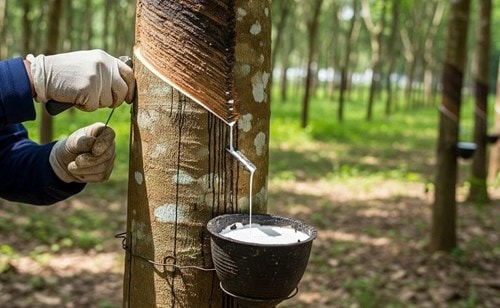
Downward price pressure and dependence on the Chinese market.
The average export price of rubber in the first four months of 2026 is estimated at US$1,856 per ton, a decrease of 3.8% compared to the same period last year. This trend clearly reflects the impact of price fluctuations in the world market, directly affecting the business performance of export enterprises.
In terms of market structure, China continues to be the largest customer, accounting for 66.1% of Vietnam's export market share. The next two largest markets are Indonesia and India, with shares of 6.6% and 6% respectively. However, the dependence on China for over 69% of natural rubber export revenue makes the industry vulnerable to changes in trade policies. Notably, from May 2026, China is expected to apply preferential import tariffs to some African countries, which could increase competitive pressure on Vietnamese rubber.
Challenges from EUDR regulations and green barriers
One of the biggest challenges today is the European Union's Anti-Deforestation Regulation (EUDR). According to the plan, from June 30, 2026, small and medium-sized enterprises (SMEs) exporting to the EU will be required to strictly adhere to traceability standards. Currently, more than 50% of Vietnam's rubber supply comes from smallholder farmers, making it very difficult to meet these sustainability criteria.
Forecasts for the whole year of 2026 indicate that rubber export turnover may only reach approximately $3.15 billion, a decrease of 7.9% compared to 2025. The main reasons are the impact of technical barriers and pressure from high transportation costs and input materials such as fertilizers, which narrow the profit margins of businesses.
Solutions to enhance competitiveness
To address internal challenges such as aging plantations and declining yields, the Vietnam Rubber Association believes that a national traceability system should be implemented soon and green credit should be promoted. In addition, diversifying markets beyond China is a crucial step to reduce the risk of dependence.
In the long term, the rubber industry needs to promote deep processing and develop high value-added industrial products. At the same time, supporting businesses in stabilizing cash flow through accelerating value-added tax refunds and building the "Vietnamese Rubber" brand associated with sustainability standards will be the foundation for enhancing competitiveness in the international market.


