
Agricultural exports in Q1/2026 reached US$16.69 billion: Pressure to shift towards sustainable value chains.
The agricultural sector grew by 3.58% in the first quarter of 2026 with a turnover of $16.69 billion, but faced pressure from falling export prices and the need to shift to a model of deep processing.
In the first quarter of 2026, the agriculture, forestry, and fisheries sector continued to affirm its role as a pillar of the Vietnamese economy with a growth rate of 3.58%, contributing 5.60% to the gross domestic product (GDP). According to data from the General Statistics Office, the country's GDP in the first quarter is estimated to have increased by 7.83% compared to the same period last year, showing the strong recovery of the economy amidst the volatile global market.
Bright spots from the fruit and vegetable and livestock sectors.
Agricultural production in the first three months of the year recorded many positive signs in key sectors. Perennial crops achieved significant growth, especially export fruits: durian increased by approximately 15%, jackfruit by 12.8%, and dragon fruit by 3.1%. The livestock sector also maintained its recovery momentum with the total pig herd increasing by 2.9% and the poultry flock by 3.3%. Live pig meat production reached 1.44 million tons, an increase of 4.9% compared to the same period last year.
Regarding exports, the entire sector's turnover reached US$16.69 billion, an increase of 5.9%. The fruit and vegetable sector was the biggest highlight, bringing in US$1.54 billion, a growth of 32.1%. Demand from the Chinese market played a crucial role in boosting sales of many agricultural products in the first two months of the year. The entire agricultural sector recorded a trade surplus of US$4.78 billion.
The paradox between production volume and export value.
Despite an increase in total export value, the agricultural sector is facing a paradox: many key commodities have seen increased production but decreased in value. Specifically, coffee production increased by 12.6% but export value decreased by 6.4% due to a sharp drop in average prices on the world market. Similarly, rice production remained stable, but export value decreased by 7.8%.
In addition, the export market also revealed new challenges. Exports to the United States decreased by 5.2% under pressure from trade competition and stringent technical barriers. The seafood industry, especially shrimp, continued to be affected by trade protection measures in major markets.
Strategy for transitioning to high-quality agriculture
To address the issue of growth based solely on quantity, the Government and the Ministry of Agriculture and Rural Development are promoting a project to develop 1 million hectares of high-quality, low-emission rice in the Mekong Delta. Deputy Minister Tran Thanh Nam assessed this as a turning point in restructuring the rice industry, both increasing farmers' income and fulfilling international commitments on carbon neutrality.
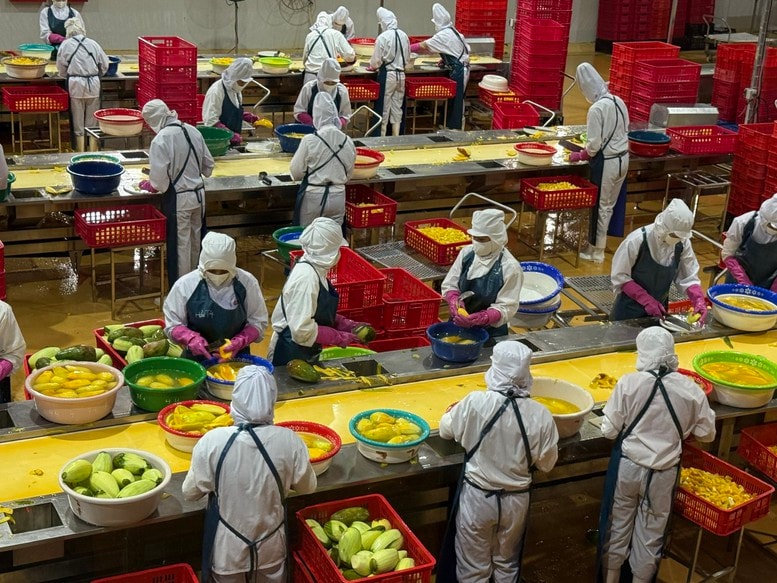
The new strategy focuses on three pillars: building a traceability system, developing a circular economy, and strengthening regional linkages. Investing in deep processing is identified as a key solution to reduce post-harvest losses and escape the pressure of fluctuating raw material prices in the international market.
The target is to achieve a trade turnover of 74 billion USD in 2026.
Aiming for $100 billion in exports by 2030, the agricultural sector has set a target of approximately $73-74 billion in export value for 2026, representing a growth of 3.7-4%. Within this, the fruit and vegetable sector is expected to lead the market, aiming to reach $9-10 billion thanks to the advantages offered by free trade agreements (FTAs).
However, Deputy Minister Phung Duc Tien noted the risks from climate change, especially the risk of water shortages due to the El Niño phenomenon and rising input costs. In the second quarter of 2026, the industry will focus on removing bottlenecks in digital transformation, completing the industry's database system, and striving to have the IUU "yellow card" lifted by the European Commission. The overall industry growth target for the next quarter is expected to reach 3.6%.


