
Gold exports to Switzerland increased by 2,300%.
While exports of gold jewelry to the US, Belgium, France, Australia, and other countries remained stable, exports to Switzerland unexpectedly increased by over 2,300%. Why did Switzerland import so much gold jewelry from Vietnam this year?
Gold jewelry is flowing into Switzerland in massive quantities.
According to data from the General Department of Customs, exports of gold jewelry, gold crafts, and gold products to Switzerland in the first nine months of 2016 reached US$324.7 million, an increase of 2,381% compared to the same period last year (in the first nine months of 2015, exports of these items to Switzerland only reached over US$13 million).
Representatives from the General Department of Customs commented that they have not yet observed any unusual issues in the export of these goods.
However, explaining the sudden surge in gold jewelry exports to Switzerland, Mr. Nguyen The Hung, from the Vietnam Gold Business Association, revealed some surprising information.
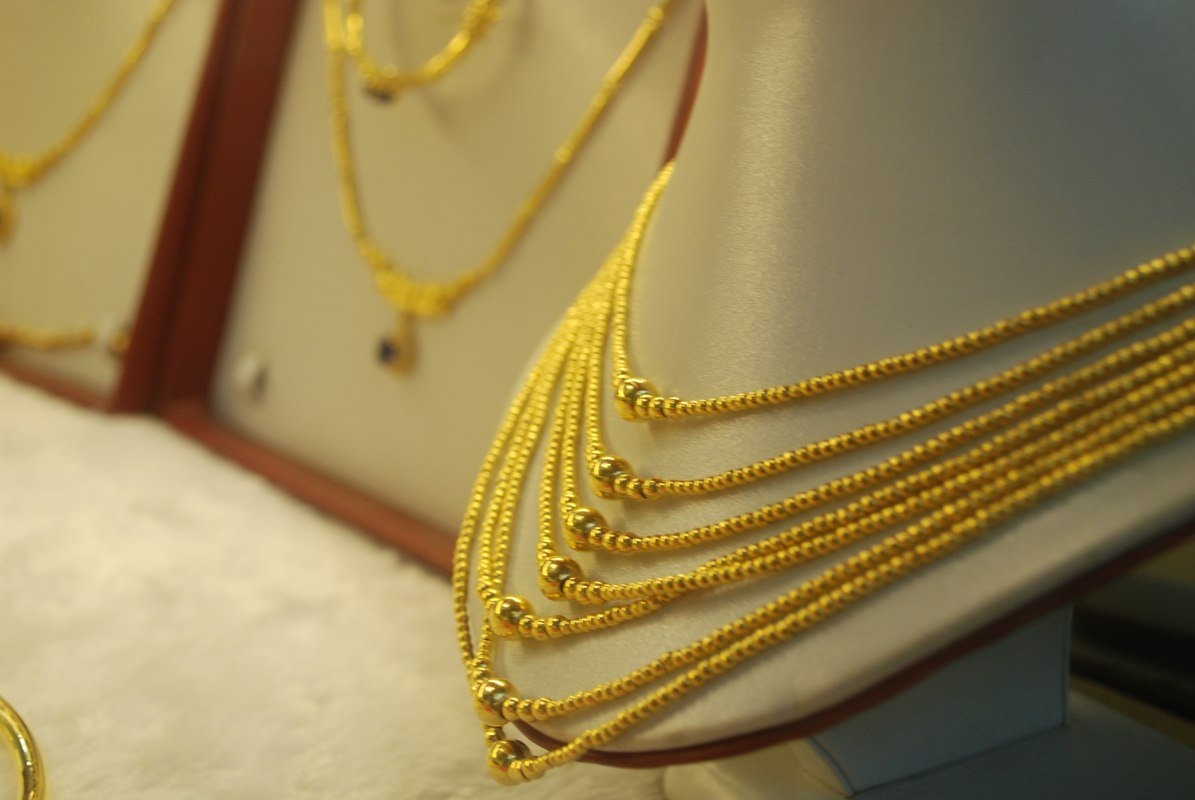 |
| Gold jewelry is flowing en masse to Switzerland to be melted down into gold bars. (Illustrative photo: L. Bang) |
Mr. Hung stated that since the issuance of Government Decree 24, the domestic gold price has never been lower than the world price. However, for the first time this year, from March to July, the domestic gold price was lower than the international price by an average of 300,000-500,000 VND/ounce, especially after Brexit (Britain's vote to leave the EU), when the domestic gold price was at times nearly 1 million VND/ounce lower than the world price. Normally, when such a difference occurs, businesses would boost exports of gold jewelry to maximize profits.
However, Mr. Hung questioned whether Switzerland imports gold jewelry from Vietnam primarily for refining and melting down into 99.99% pure gold bars for re-export to international markets. He argued that Switzerland is not primarily a jewelry consumer market; they buy raw gold.
"Most countries do this. When domestic gold prices are lower than international prices, India, Thailand, China, and others export gold jewelry to Switzerland for refining and melting into gold bars and ingots. This is because Switzerland is a gold refining center, accounting for up to 60% of the world's gold refining market share," Mr. Hung shared.
Exploiting loopholes
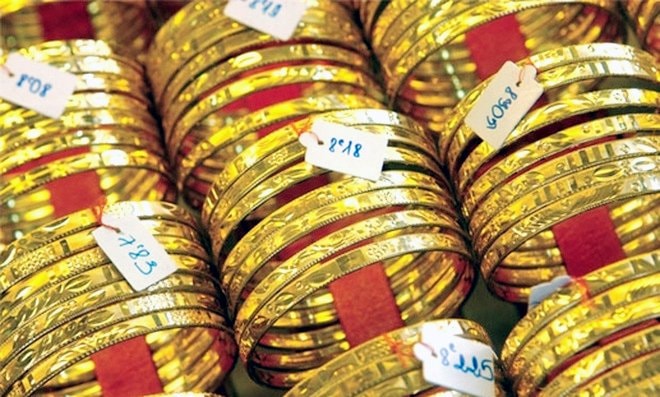
According to experts, the massive export of gold jewelry to Switzerland for melting into gold bars is an activity aimed at avoiding the high export tax stipulated by the Ministry of Finance, circumventing the ban on exporting gold bars. In fact, five years ago, there was a period when businesses circumvented the ban on exporting gold bars by exporting high-purity gold jewelry (95% or higher).
To prevent this, the Ministry of Finance issued Circular No. 157/2011/TT-BTC, requiring businesses to have the gold content inspected before exporting.
Subsequently, in May 2015, the Ministry increased the export tax from 0% to 2% on gold jewelry and handicrafts with a gold content exceeding 95% in order to limit the possibility of exporting raw gold disguised as gold jewelry and handicrafts.
 |
Many regulatory measures have been implemented, but the massive export of gold jewelry to Switzerland suggests that this needs to be re-examined to determine if this growth is unusual.
According to the General Department of Customs, anti-smuggling forces did not detect any cases related to the disguised export of raw gold as jewelry during the period from September 2015 to September 2016.
"Because businesses exporting gold jewelry comply with current regulations on the export of gold jewelry and handicrafts, even though gold jewelry for consumption typically has a maximum gold content of only 75%," explained a representative of the Gold Association.
Currently, Vietnamese regulations only allow the export of gold jewelry with a gold content below 95% with a 0% tax rate. If the gold content is above 95%, the tax rate is 2%. With this tax rate, representatives of the Gold Business Association say that businesses will not be able to export because it would be unprofitable. Therefore, Vietnamese businesses mainly export gold jewelry with a gold content below 95%.
In fact, after increasing the tax to 2% on gold jewelry with a gold content exceeding 95%, businesses only export the type with a gold content below 93%, subject to a 0% tax rate. According to the General Department of Customs, in the first nine months of 2016, the export value of this item was $324.7 million.
This raises the question: are tightening restrictions on raw gold exports or increasing taxes on gold jewelry sufficient to prevent businesses from exporting raw gold as gold jewelry, as mentioned above?
Furthermore, the Gold Business Association reflects the reality that the difference between the price of gold bars and the international gold price, which at times reached 5-7 million VND per ounce, made it difficult for businesses to purchase raw gold at a higher price than the international gold price. This makes it difficult for businesses to compete in the global market.
According to Vietnamnet
| RELATED NEWS |
|---|


