
Arms exports: A strategic tool helping Israel break its isolation.
Contracts to supply advanced air defense systems are transforming Israel into a vital security partner for Europe and Asia, creating long-term strategic dependence through technology and technical support.
Israel is successfully transforming its defense capabilities into a powerful foreign policy tool. Arms export contracts to Europe, Asia, and Africa have helped Prime Minister Benjamin Netanyahu's government overcome diplomatic isolation and establish itself as a key long-term security partner with purchasing nations.
Highest level of strategic alignment
According to Boyko Nikolov, founder of the strategic intelligence platform Hardpoint, exporting air defense systems is not just a simple commercial transaction, but the highest level of strategic alignment. This type of contract creates a bond that lasts for decades. When countries like Germany or Finland choose Israeli technology, they are "locked in" through software systems, intelligence sharing, and continuous technical support.
This dependence is what Andreas Krieg, associate professor of defense studies at King's College London, calls "weaponizing interdependence." The customer's combat readiness is tied to supply chains and technical support from Israel, extending to joint exercises and extensive operational compatibility.
European markets and billion-dollar deals
Germany is currently Israel's largest customer in the air defense sector. In early December, Berlin began deploying the Arrow 3 system supplied by Israel Aerospace Industries (IAI) under a $3.6 billion contract. On December 18, the two countries signed an additional agreement worth $3.1 billion to purchase more of these systems, marking the largest military export deal in Israel's history.
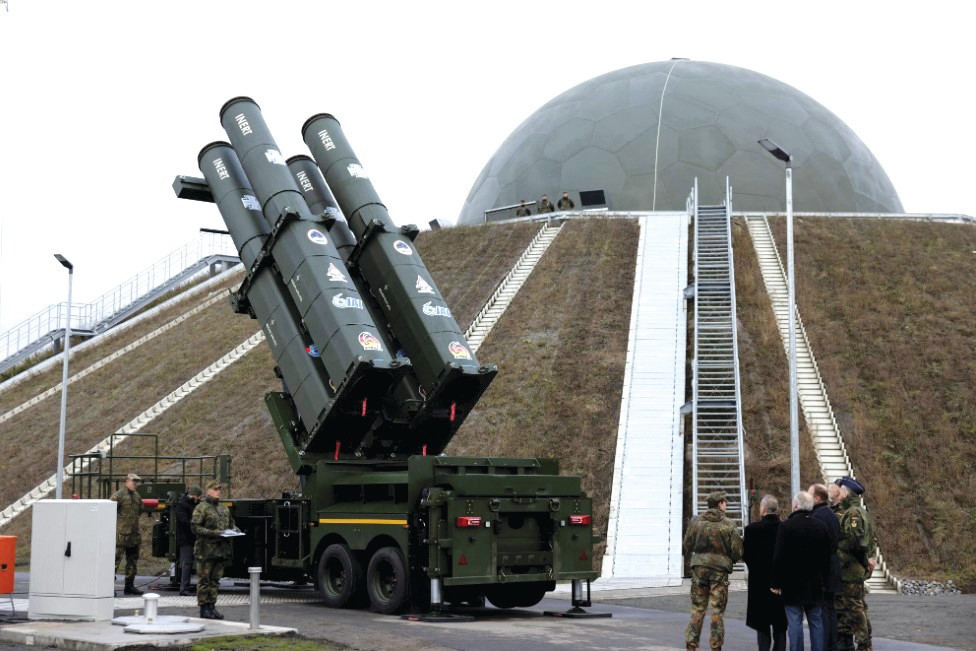
Besides Germany, many other European countries are also increasing their arms purchases from Tel Aviv:
- Romania:Signed a contract worth over $2 billion with Rafael Advanced Systems to purchase six Spyder short-range air defense systems.
- Greece:IAI is finalizing a $3 billion contract to purchase Spyder, David's Sling, and Barak MX systems to replace its Russian-made weapons.
Prime Minister Netanyahu has used these deals to strengthen alliances in the Eastern Mediterranean, while also sending diplomatic messages to regional rivals.
Advantages from real-world experience
The reason countries prioritize Israeli systems over Western contractors is their combat capability. Systems like Arrow 3 and David's Sling have consistently performed under pressure from suicide drones and ballistic missiles in real-world conflicts in the Middle East.
Boyko Nikolov stated, "When security is threatened, a nation will choose the winner of the battle in the skies, not the one with the most impressive presentation." Israel's ability to quickly deliver and deeply integrate technology is what gives it an edge over its competitors.
Expanding global influence
Besides Europe, Israel is expanding its influence in Asia and Africa. On November 20th, Israel signed a $108 million contract to supply the Barak MX system to Thailand. Kenya has also received several Spyder systems to bolster its defenses.
According to data from the Israeli Ministry of Defense, air defense and missile systems accounted for nearly 50% of the country's arms exports in 2024, with the European market accounting for 54%. To maintain this growth momentum, Prime Minister Netanyahu announced a plan to invest $110 billion to expand the defense industry in the coming years.


