
Middle East conflict threatens global food security: Risks from the fertilizer supply chain.
The FAO warns that disruptions in the Strait of Hormuz could cause fertilizer prices to skyrocket, threatening global agricultural output and putting pressure on developing economies.
The United Nations Food and Agriculture Organization (FAO) has stated that the conflict in the Middle East is increasing risks to global food security. Countries heavily reliant on imports of food, fertilizers, and energy now face the risk of serious supply disruptions along strategic transport routes.
Pressure from the strategic fertilizer production region.
According to FAO chief economist Maximo Torero, disruptions in the Strait of Hormuz directly impact agriculture through shocks to energy and input supplies. The Gulf region is currently the world's most important fertilizer production center, supplying nearly 50% of sulfur, one-third of urea, and about 25% of global ammonia trade.
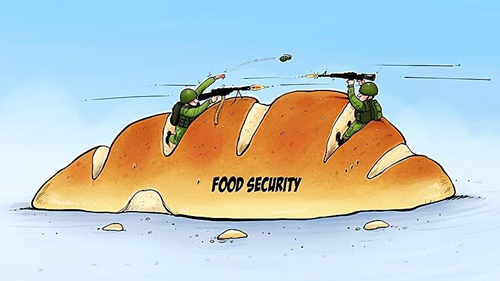
Since tensions erupted, many factories in Qatar and neighboring countries have had to temporarily suspend operations. Sylvain Pellerin, an expert from the French Institute for Agricultural Research (INRAE), warns that shortages of nitrogen, ammonium nitrate, and potassium fertilizers could reduce global crop yields by up to one-third.
Consequences for major agricultural markets
Instability in the Middle East is having a ripple effect on major agricultural powers. Brazil, the world's largest soybean producer, imports most of its urea from Qatar and Iran. Meanwhile, India is significantly dependent on phosphate from Saudi Arabia. Major producers like the US and Australia are also affected due to their reliance on supplies from the region.
Asia is currently the most affected region, importing approximately 64% of its ammonia and over 50% of its sulfur and phosphate from the Middle East. According to 2024 data, demand for these inputs continues to rise, putting significant pressure on farmers ahead of the planting season in the Southern Hemisphere this coming June.
The risk of a cost of living crisis in Africa.
The African Union (AU) and its international partners warn that conflict could quickly turn a "trade shock" into a "cost of living crisis." Soaring energy and food prices are putting some 300 million people on the continent at risk of severe food insecurity.
Reports from the AU and the UN Development Programme (UNDP) highlight the alarming levels of hunger in countries such as Burundi, the Democratic Republic of Congo, Madagascar, Somalia, and South Sudan. The parties propose strengthening energy security and establishing financial safety nets to enhance the resilience of economies against prolonged geopolitical instability.


