
Yamal suffers groin injury, tensions rise between Barca and Spain.
Barca withdrew Yamal from the national team due to pubalgia, and the Spanish Football Federation declared they were "surprised and unhappy." The 18-year-old player is undergoing radiofrequency treatment and will need approximately 10 days of rest.
Barcelona and the Spanish Football Federation are entering a new phase of tension surrounding the case of Lamine Yamal. The 18-year-old striker was diagnosed with pubalgia (groin pain) and recently underwent radiofrequency ablation. Barca withdrew Yamal from the international break, while the national team reacted with a statement expressing "surprise and displeasure".
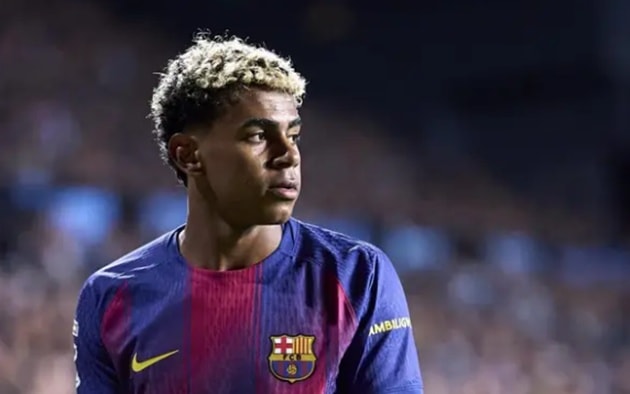
The triggers from September: exercise, painkillers, and controversy.
The tension stemmed from the September training camp. At that time, Hansi Flick claimed that the Spanish national team "didn't protect" Yamal, who had played two World Cup qualifying matches with a groin injury and had to use painkillers. Coach Luis de la Fuente denied this, insisting he wouldn't risk the young player.
However, following that training camp, Yamal missed five of Barca's seven matches due to the same issue. Then, on October 3rd, Spain announced their squad, and just hours later, Barca announced that Yamal would be out for two to three weeks and withdrawn from the national team — further fueling suspicions about how both sides handled the situation.
Returning, exploding with energy, then slowing down due to pain.
Yamal returned on October 18th and started six consecutive matches. The El Clasico against Real Madrid revealed his physical limitations: he struggled with acceleration, which Hansi Flick described as a "warning sign". His form improved afterwards with three goals in three games, but the pain persisted.
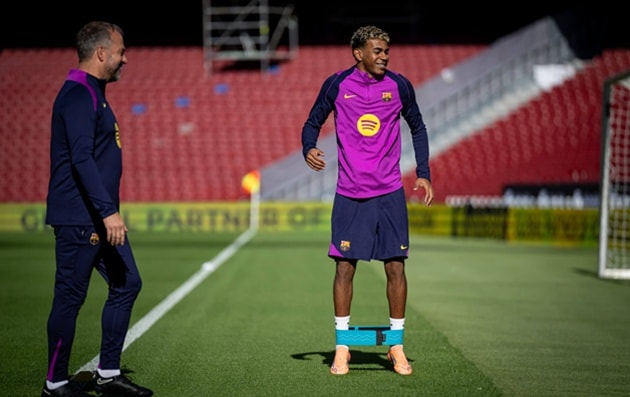
What is pubalgia and why is it so difficult to quit?
Pubalgia is a common injury among young players who engage in fast-paced play and powerful sprints. The pain is widespread, difficult to diagnose, and cannot be completely cured by short periods of rest. The usual course of action is to continue playing with controlled movements, strengthen the abdominal and groin area, and learn to tolerate the pain; severe cases may require surgery. Players like Franco Mastantuono (Real Madrid), Cole Palmer (Chelsea), and Nico Williams (Athletic Club) have all experienced similar problems.
For Yamal, Barca developed a personalized training plan: recovery, strengthening, and load adjustment. The club invited expert Ernest Schilders to assess him, who recommended radiofrequency ablation, a minimally invasive treatment but requiring about 10 days of rest to be effective.
The moment of "tactics" and the media crash.
The new trigger point stems from the timing of the treatment. Yamal underwent the procedure on Monday, then still traveled to Madrid to join the team, only to be quickly withdrawn from the squad. The Spanish Football Federation argued that Barca notified them late and that allowing a player to join the team when he was unable to play was unacceptable. Barca insisted they notified them immediately after the procedure was completed and that treatment was a top priority that could not be delayed.
The situation is further complicated by Hansi Flick's earlier comments about the team's use of Yamal in non-decisive matches. The national team's medical staff felt criticized, emphasizing that some of their doctors were also working with Yamal at Barcelona. The meeting between Deco and Aitor Karanka helped to ease the tension somewhat, but Hansi Flick and Luis de la Fuente have not spoken directly since the German coach arrived at Camp Nou.
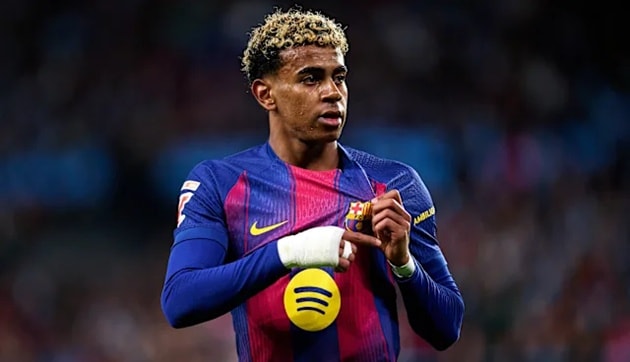
Tactical perspective on load dynamics: protecting explosive speed.
Yamal's strengths lie in his acceleration and sudden changes of direction. Pubalgia directly deprives him of that acceleration. The demanding schedule after his return (6 consecutive starts) helped him regain his form, but also sharpened the risk of relapse. This is a typical risk pattern: short-term performance increases, but the groin load capacity doesn't adapt quickly enough.
In that context, Barca's decision to use radiofrequency ablation and require approximately 10 days of rest demonstrates a priority on medium-term effectiveness. From a personnel management perspective, the question isn't just whether Yamal will play, but whether he will play.Whenandhow muchto preserve his burst of speed — his most important tactical asset.
Key milestones and facts
- September: Yamal played two World Cup qualifying matches while suffering from groin pain, using painkillers.
- Subsequently, Barca missed 5 out of 7 matches due to the same issue.
- October 3rd: Spain announces squad; Barca announces Yamal will be out for 2–3 weeks and withdraws from the national team.
- October 18th: Yamal returns, starting 6 consecutive games; scoring 3 goals in the next 3 matches.
- This week: undergoing radiofrequency ablation treatment; requires approximately 10 days of rest; withdrawn from the national team, the Federation reacts with "surprise and displeasure".
The required equilibrium point
Yamal wants to contribute to the national team like any young player. But between two pressures—immediate success and a long-term career—the approach needs to be medically sound and based on transparent communication. The focus now is on comprehensive recovery, preventing relapse, and ensuring an 18-year-old talent doesn't become a victim of off-field disputes.


