
Bird's nest is nutritious, but do you know how to use it properly?
Swifts come in many species and build their nests in various ways, resulting in a wide variety of bird's nest products. However, if used correctly, they all offer health benefits.
1. Classification of bird's nests
Bird's nest, also known as swallow's nest, is a type of nest. There are many different types of swallows, and they all build their nests in different ways.
Some nest with feathers, others with grass or straw. Only two species of swiftlets, Aerodramus and Aerodramus maximus, nest with saliva, and only these nests are suitable for consumption.
Swifts begin building their nests during the breeding season (from the end of March to mid-May). The nest takes about 33-35 days to build and is shaped like a bowl attached to the side of a cave (or wall, beam). The nest consists of many thin layers woven from numerous strands of saliva by the swiftlet.
2. Classification of bird's nests by origin
Wild/cave bird's nest
Two species of swiftlets commonly found in caves are the Fuciphaga swiftlet (commonly known as the cave swiftlet) and the Maxima swiftlet (black nest swiftlet), but only the nests of the Fuciphaga swiftlet are known as Wild/Cave Nests in the market.
Perhaps due to the dangerous nature of harvesting bird's nests from caves, this type of bird's nest usually commands the highest price compared to other types on the market.
Bird nests found in caves, under specific natural conditions, often resemble a cup in shape, with a thick body and a sturdy base. This cup-like shape helps protect the eggs or young birds from being eaten by other animals and from harsh weather conditions.
The base of the swiftlet nest needs to be firm to attach securely to the wall because the caves are usually humid. This type of nest is found in Vietnam, Thailand, Malaysia, and Indonesia.
Bird's nests in the house
The nests of the Esculanta swiftlet are commonly found in swiftlet farms. Many people still think that house swiftlets can be raised, but in reality, we can only rely on construction and design techniques to attract swiftlets to build nests in the houses; we cannot feed them like we would industrially raise chickens.

3. Classification of bird's nests by color
The reason why bird's nests have different colors is still a subject of debate. According to Vietnamese folklore, it is believed that old swiftlets or swiftlets during periods of food scarcity use their own blood mixed with saliva to build their nests. This explains the red or pink color, as well as the poorer expansion rate of blood swiftlet nests compared to white swiftlet nests.
However, many theories regarding the temperature, humidity, or food conditions that create blood swiftlet nests are still being researched. Additionally, when white swiftlet nests are built on red cliffs and absorb water seeping from the rock crevices, it also creates the red color of the nest. However, blood swiftlet nests from these cliffs expand in water to a similar size (7-9 times) when soaked.
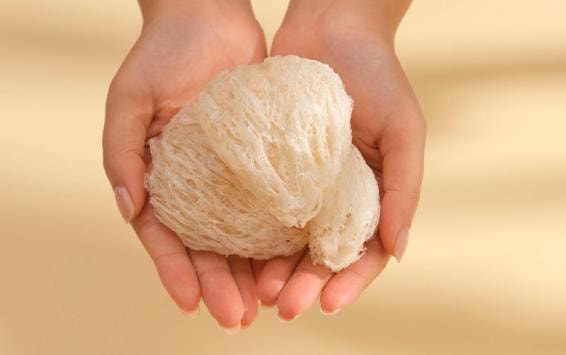
4. Cases where bird's nest should and shouldn't be consumed.
For young, healthy individuals with good absorption capabilities, consuming bird's nest daily may not have a significant negative impact.
- For the elderly, continuous consumption of bird's nest may have a negative impact on their digestive system.
- Improper use of bird's nest can cause discomfort and bloating. In the long run, this can lead to indigestion and other undesirable consequences affecting the digestive system.
- Bird's nest should not be consumed in the following cases: People with colds, fever, headaches, stomach pain due to cold or bloating, and coughs with excessive thin phlegm;
People with symptoms of dermatitis, acute bronchitis, urinary tract infections, and high fever;
People who are thin and weak, pale, have a weak spleen and stomach, and cannot absorb food and nutrients; people with yang deficiency, loose urine, and clear urine; children under 7 months old or who are currently experiencing fever...
The aforementioned individuals should not consume bird's nest because they cannot absorb foods containing excessive amounts of nutrients and protein, such as bird's nest, which can easily worsen their condition.

5. Appropriate dosage of bird's nest
Children aged 1-4 years: 1-2 grams of pure bird's nest per day.Children aged 4 years and older, pregnant women, and young adults: 2-3 grams of refined bird's nest per day.Elderly people and those with illnesses (diabetes, cancer, recovering from illness, etc.): 3-4g of refined bird's nest per day.

Many people consider bird's nest as a medicine and mistakenly believe it can be used to cure diseases. Remember, bird's nest is a nutritious food with many benefits; it is used as a functional food. Therefore, it should not be overused.


