
Yen Thanh and Quynh Luu districts experience dam breaches, cutting off many areas.
(Baonghean.vn) - Heavy rains lasting for several days in Quynh Luu and Yen Thanh districts have caused dikes and irrigation canals to break, flooding hundreds of hectares of rice and vegetable crops...
| Clip: Thai Duong. |
In Yen Thanh district,Water flowing from upstream has caused widespread flooding, severely damaging production and people's lives.
According to preliminary data from the Steering Committee for Flood and Storm Prevention in Yen Thanh District, over 4,400 hectares of summer-autumn rice crops, currently in the heading stage, have been flooded, with approximately 2,000 hectares at risk of total loss; nearly 100 hectares of aquaculture farms have been flooded; over 25 hectares of forest have been damaged; and thousands of poultry and waterfowl have been swept away by the flood.
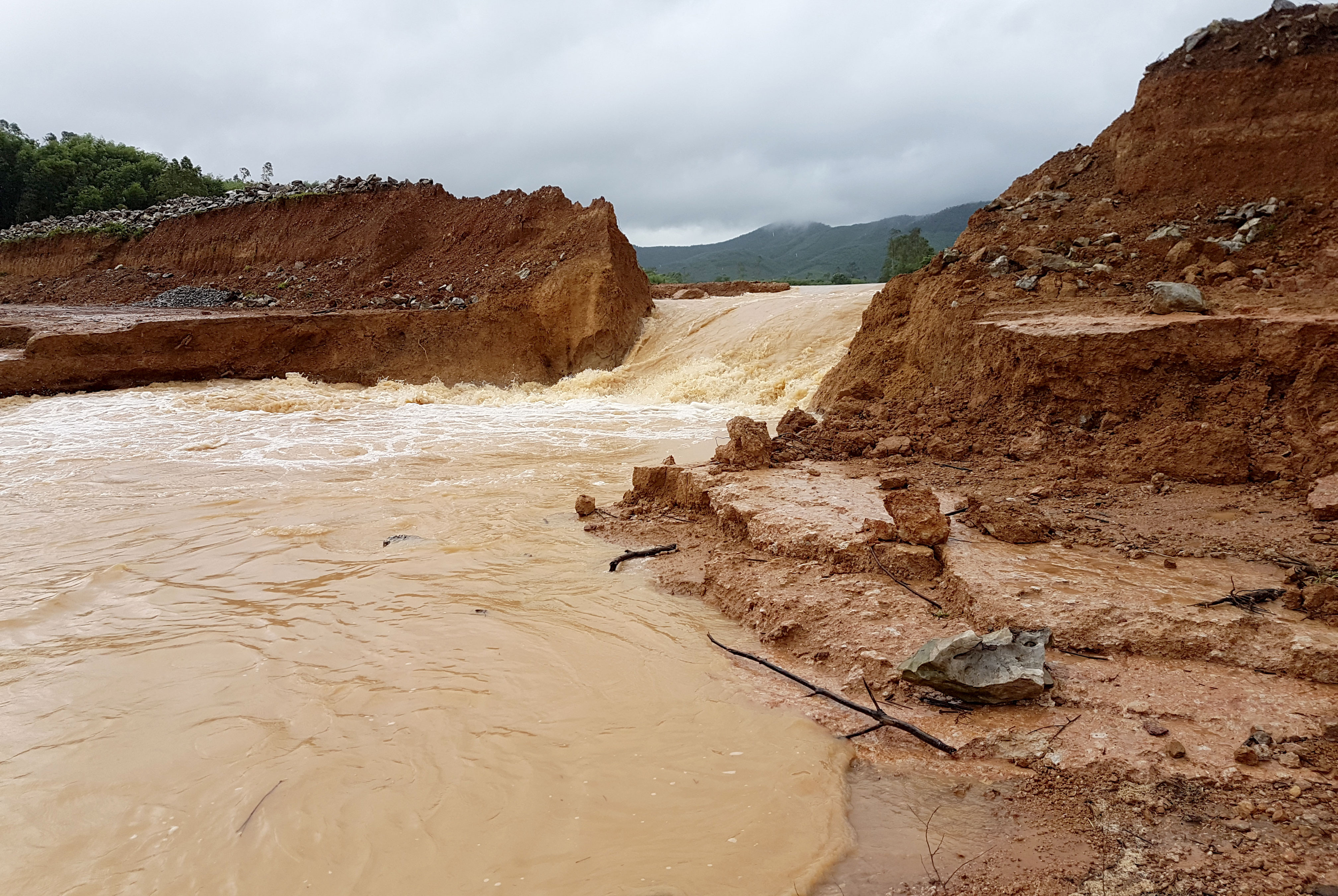 |
| The Lim Dam in Dong Thanh commune (Yen Thanh district) suffered a breach in its embankment shortly after being upgraded. Photo: Thai Duong |
In particular, the high water levels combined with the remnants of Typhoon No. 3 have caused flooding in over 900 households in the communes of Long Thanh, Khanh Thanh, Bao Thanh, Cong Thanh, and Trung Thanh; currently, 140 households in Hamlet 5, Bao Thanh commune, are isolated by floodwaters.
The Khe Cat flood control dike (Bao Thanh commune); the Lung dam (Thinh Thanh commune); and the Lim dam (Dong Thanh commune) were breached by 10-12 meters; the Bien Hoa dike (Khanh Thanh commune) suffered a 200-meter landslide, causing flooding in the downstream area.Several bridges and culverts in Tan Thanh, Minh Thanh, Hau Thanh, and Phuc Thanh communes have subsided.
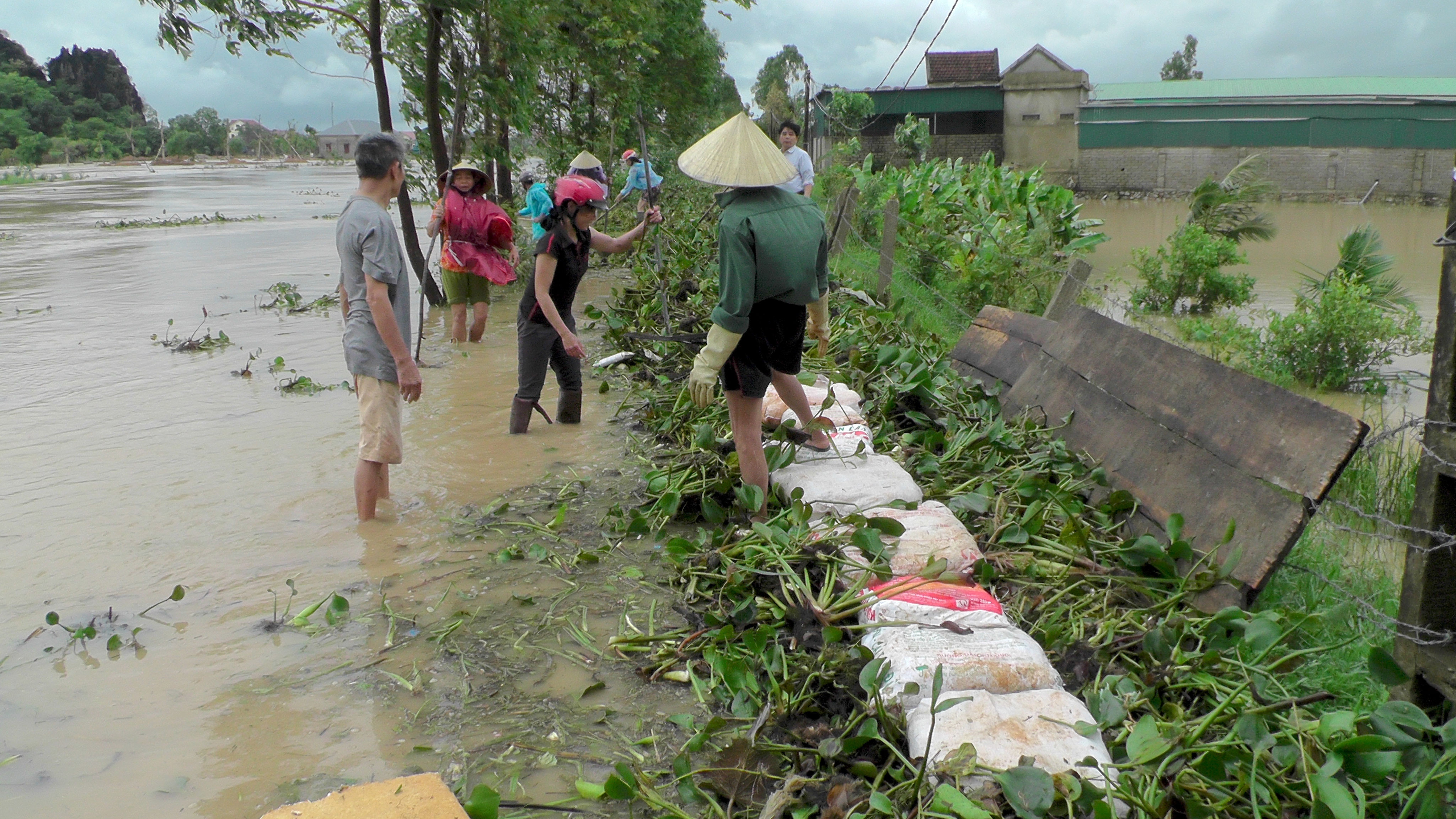 |
| Khanh Thanh commune mobilizes forces to rescue efforts at Bien Hoa dike. Photo: Anh Tuan. |
National Highway 7A, the 2 km section from Cong Thanh commune to Bao Thanh commune, was flooded with water levels ranging from 0.5 to 0.7 meters, making it impassable for vehicles; National Highway 7B, the section passing through Roc market area in Trung Thanh commune, was deeply flooded; many inter-district roads suffered serious landslides; 21 power poles collapsed. Particularly in Dong Bau hamlet, Ma Thanh commune, a low-voltage transformer station short-circuited, causing fires that damaged many electrical appliances belonging to residents...
On the morning of July 19th, district leaders directly visited key areas, mobilizing forces to focus on overcoming the consequences of the floods and implementing many timely solutions to support the people in the flooded areas to quickly stabilize their lives. In particular, on National Highways 7A and 7B, the Yen Thanh Police and Traffic Police Team 1-7 of Nghe An Province established barrier checkpoints to prohibit people and vehicles from passing through. At the same time, they rerouted and directed traffic to safe alternative routes.
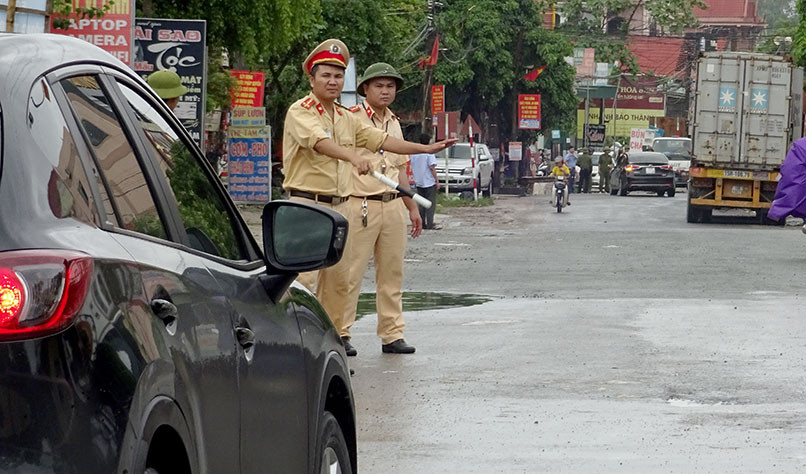 |
| Yen Thanh police are directing and guiding people and vehicles onto safe routes. |
Due to ongoing construction of the Dien Thanh (Dien Chau) drainage canal, as of 3 PM on July 19th, floodwaters in the remote areas of Yen Thanh were still draining slowly, and a large volume of water flowing from upstream was causing widespread flooding.
Thai Duong - Anh Tuan
Bau Xa Dam, Quynh Lam commune, Quynh Luu districtIt has a water storage capacity of over 1 million cubic meters. The dam system includes 3 pumping stations, 4 irrigation sluices, and 1 spillway. The dam irrigates 300 hectares of agricultural land for residents of hamlets 9, 10, 5, 15, 13, 14, 2, 3, and 4.
Due to heavy and prolonged rainfall over several days, the irrigation canal in Hamlet 17 broke starting on July 14th. At that time, only 1 meter of the canal was broken, then it increased to 3 meters. After the heavy rain from Typhoon No. 3 on the evening of July 18th to the morning of July 19th, the canal broke further, extending to 6 meters, causing the water level to rise rapidly and isolating 7 households in the hamlet.
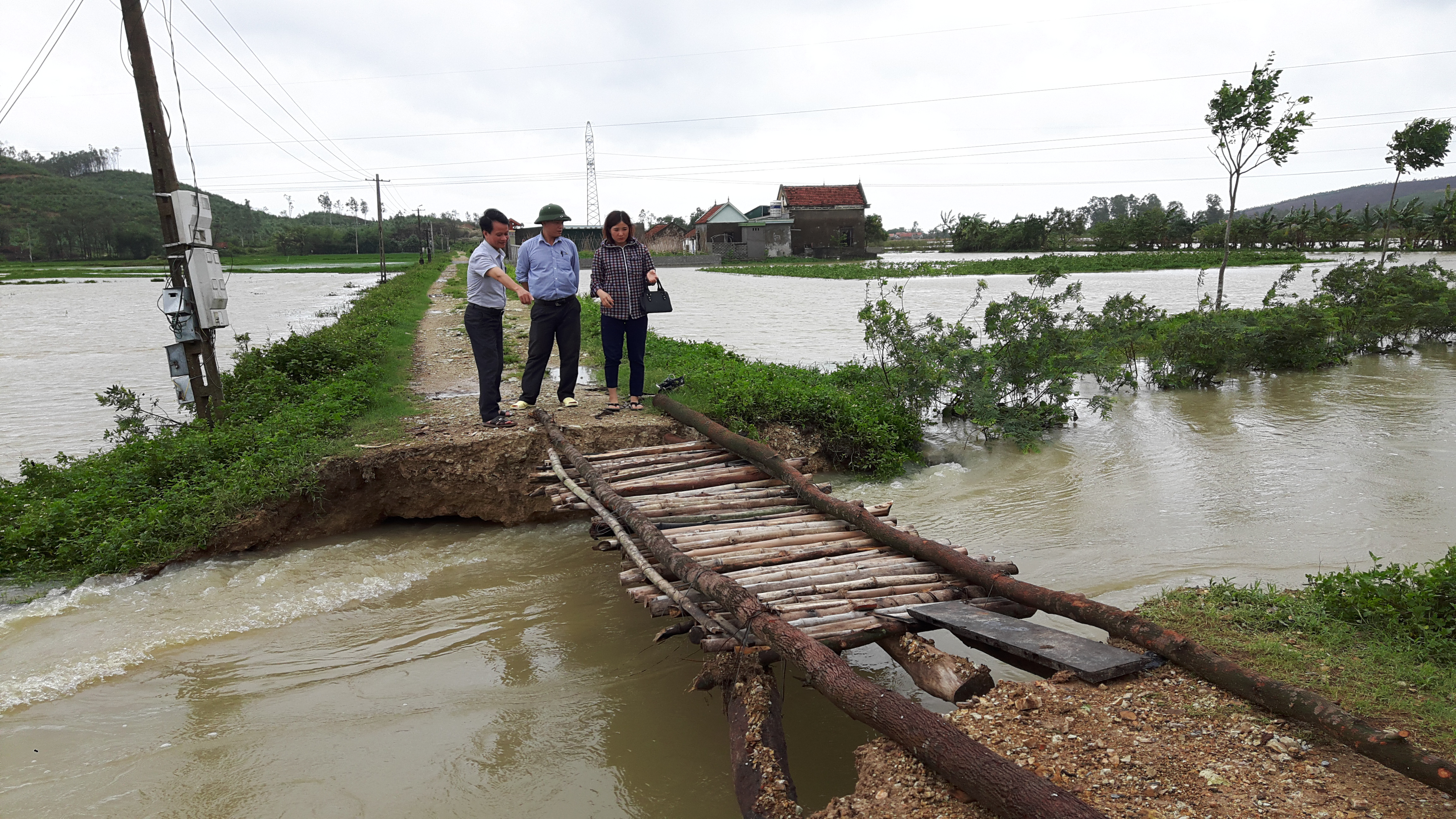 |
| The irrigation canal at Bau Xa dam, located in Hamlet 17, Quynh Lam commune (Quynh Luu district), has broken over a length of 6 meters, requiring the use of bamboo stakes to construct a temporary bridge across it. Photo: Hong Dien |
In response to the situation, Quynh Lam commune directed village 17 to announce the emergency situation overnight, and proceeded to evacuate residents, especially the elderly and children, to safe areas. Simultaneously, livestock and poultry were moved to higher ground. The village committee mobilized forces from various organizations to use bamboo poles to build a temporary bridge to help isolated households access the outside world.
"Currently, the landslide is too extensive, and if the rain continues, the landslide will intensify; the village has assigned the Veterans' Association to be stationed at this temporary bridge to support the 7 households that are cut off during the rainy and windy days," said the village head.Mr. Ho Viet Lang, head of village 17, Quynh Lam commune, added.
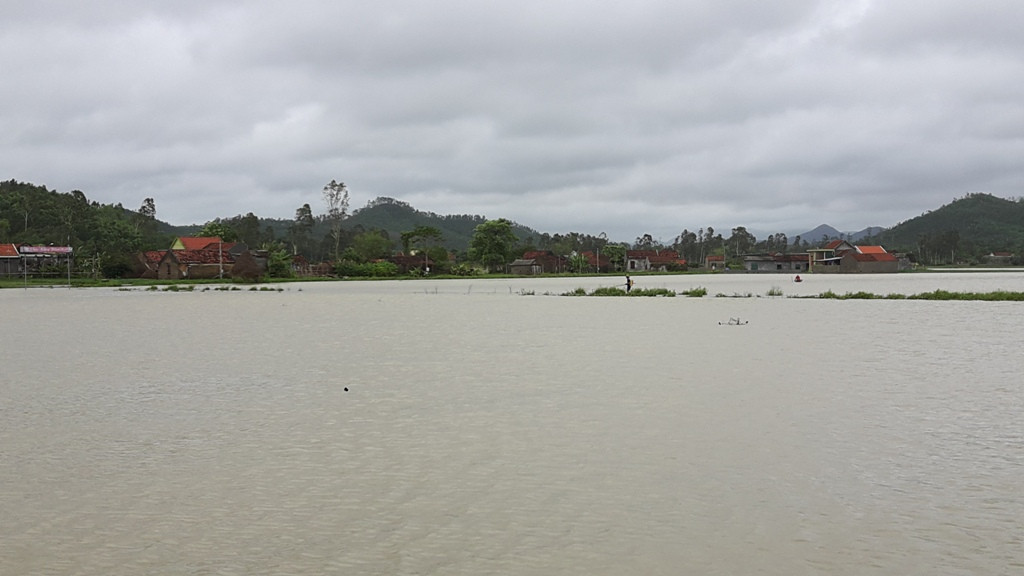 |
| Hundreds of hectares of rice fields were flooded due to the breach of the Bau Xa dam. Photo: Hong Dien |
The breach of the Bau Xa dam's irrigation sluice gate has flooded over 200 hectares of rice and other crops, and wiped out nearly 8 hectares of freshwater fish farms. It is expected that the water level in the dam will drop completely in about 15-20 days before the water outside recedes completely.Mr. Ho Ngoc Truong, Vice Chairman of the People's Committee of Quynh Lam commune, added that the commune had organized a meeting of the steering committee and assigned specific tasks to each member working directly at the village level. He instructed the village to take all measures to prevent the isolation of households on both sides of the sluice gate area and to build a temporary bridge for access.
Currently, due to the high water levels in reservoirs and streams throughout Ngoc Son commune converging on the Bau Xa dam, the water level is rising, causing deep flooding in rice paddies downstream. If the rain continues and the flooding persists, there is a risk of significant economic losses for the local people.


