
The King of Thailand's 10-Year Battle Against Illness
For a decade, King Bhumibol Adulyadej suffered from everything from lumbar spinal stenosis and pneumonia to infections and brain hemorrhages.
The health of a head of state is always a matter of concern, especially when they are so beloved and revered by the people as King Bhumibol Adulyadej.
Although the royal family frequently concealed the king's condition with reports stating he was recovering and suppressed any debate on the subject, doubts still arose. In reality, the Thai king's battle with illness began 10 years ago.
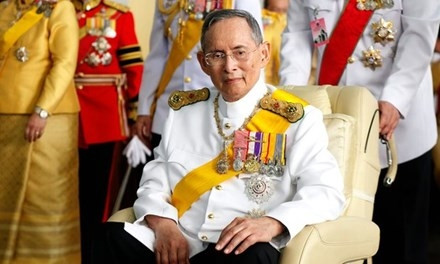 |
| King Bhumibol Adulyadej. Photo: Bhumibol Adulyadej. |
According to the Bangkok Post, the Thai people first learned about King Bhumibol Adulyadej's health problems in July 2006 when he underwent surgery to treat lumbar spinal stenosis. The age-related condition had plagued the king since 1995, making it difficult for him to even take a step with his right foot.
In October 2007, King Bhumibol was hospitalized due to sudden weakness in the right side of his body. Doctors concluded that the king was suffering from cerebral ischemia along with other problems such as heart disease. After an 8-hour course of injections, King Bhumibol gradually recovered. He remained at Siriraj Hospital for 3 weeks before returning to the palace.
In September 2009, the head of the Thai royal family was hospitalized again due to influenza and pneumonia. Since 2010, the king's public appearances have decreased significantly. He has spent most of his time in the hospital.
In 2011, a data leak from the US State Department revealed that King Bhumibol suffered from Parkinson's disease and depression. Thus, the monarch was much weaker than the public had known.
In November 2011, Bhumibol was diagnosed with diverticulitis. At this time, Princess Chulabhorn, the king's youngest daughter, revealed on television that her father's health was not good. He suffered internal bleeding leading to unconsciousness, most likely due to stress from the flood crisis that year. The treatment for diverticulitis and brain hemorrhage lasted until July 2013.
In 2015, the 88-year-old monarch's health deteriorated to the point that he was absent from his birthday celebrations. Tests revealed he had sepsis, left pneumonia, and arthritis in his right knee. On December 14th, King Bhumibol appeared on television after a long hospital stay.
The last time King Bhumibol was seen was on January 11, 2016. "The King will go to Chitralada Palace for a change of scenery," Reuters quoted an official as saying. Earlier, Thailand confirmed that the head of the royal family was being treated for blood infection and pneumonia.
In May, the Royal Household announced that the king had been treated for hydrocephalus, a condition that had afflicted him in August 2015. On October 1, King Bhumibol was reportedly recovering well after a two-week-long fever. However, he still suffered from sepsis, pneumonia, pleural effusion, and kidney failure.
On October 9th, the king underwent dialysis to remove toxins, salt, and excess fluid from his blood. He took medication and was on a ventilator. Initially, doctors announced that his condition "remained unstable," as if foreshadowing an impending disaster. Upon hearing the news, Thai people flocked to Siriraj Hospital and the palace, dressed in pink, to pray for their beloved monarch.
After a 10-year battle with illness, King Bhumibol Adulyadej passed away at 3:52 PM on October 13, 2016, ending his 70-year reign. The King's passing was seen by the Thai people as a living saint, a symbol of national unity and solidarity, and a pillar of national stability, leaving behind immense grief. A year-long period of mourning for King Bhumibol began on October 14th.
According to VNE


