
10 principles for teaching children to travel to school safely on their own.
Parents should point out the following ways to minimize the risks children face when going to school alone.
1. Teach children to walk in groups.
Children often enjoy going to school in groups of friends, which is good for them, but of course, make sure you've properly instructed them on the rules of transportation to and from school.
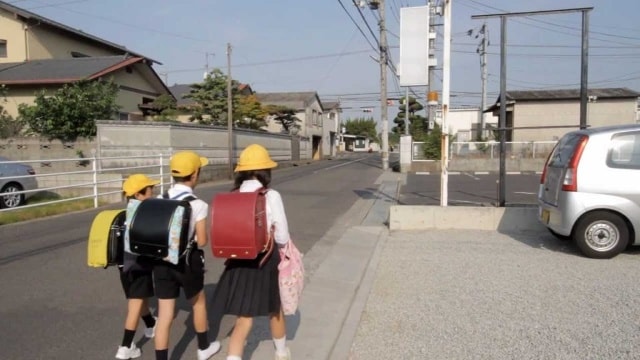 |
| Children are always safer when traveling in groups than when traveling alone. (Illustrative image.) |
Walk on the sidewalk when available, or walk toward the road if there is no sidewalk. Dress children in bright-colored clothing to increase visibility; at least this will help drivers/pedestrians see them from a distance and avoid them if they are crossing the road incorrectly, or they may spot a child in need of help.
3. Never be alone.
Children under 9 years old should be accompanied by an adult when crossing the street. Make sure your child understands that the safest places to cross the street are at pedestrian crossings, street corners, or intersections. Teach your child that wandering the streets alone is not good for a young child; not only are there traffic risks, but also the possibility of encountering strangers.
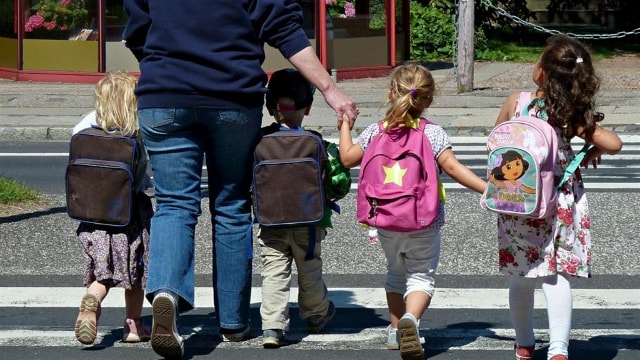 |
| Children under 9 years old should be accompanied by an adult when crossing the road. |
4. Choose a safe route.
Choose the safest route possible for your child. Avoid roads under construction as much as possible to avoid delays or other safety hazards.
On the way to school, children should at least have a few safe places where they can take shelter or find refuge in bad weather or any unexpected dangers. The homes of friends, family, or relatives along the route are places where children can stop for help in case of trouble.
Make sure these are people who know your child and that your child can consider their home a safe place to go. Of course, when your child goes to these places, there should always be someone at home to greet them, such as grandparents or aunts and uncles.
6. Speak out about unusual dangers.
Make sure children know how to react when they encounter strangers on their route. Always respond briefly and quickly leave, or shout loudly if a stranger acts strangely, touches, or tries to grab them. Additionally, children need to be physically fit enough to run fast when they feel danger is imminent.
 |
| Teach your child to speak up about unfamiliar dangers. |
7. Always keep emergency phone numbers handy.
If your child has a phone, make sure they know how to call for emergency help. Numbers to write down in the quick-call list include the local emergency number, a contact person's phone number, and anyone else who can help your child in an emergency if needed.
8. Prepare to respond to seasonal weather patterns.
Teach your children about seasonal hazards. They need to know where to take shelter when it rains, and use umbrellas when it's sunny to protect their health. They need to understand that it's never safe to cross or play on storm drains, sewer pipes, construction sites, etc.
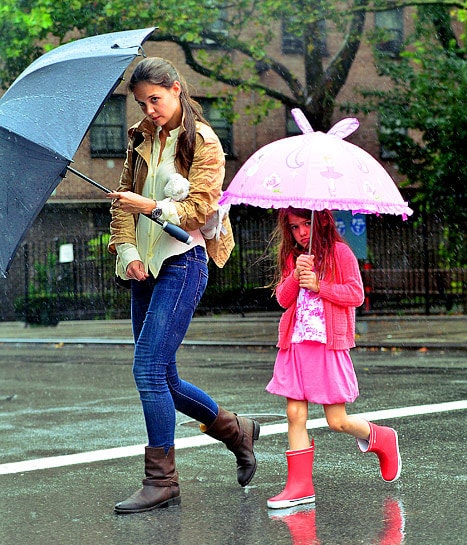 |
| Children should be taught to use umbrellas or find shelter from rain and sun to protect their health. |
9. Do not allow children to carry objects that are too heavy for them when going to school.
Check the weight of your child's backpack, school bag, or satchel when walking to school. A growing child should not be overloaded with a backpack that is too heavy for their body weight.
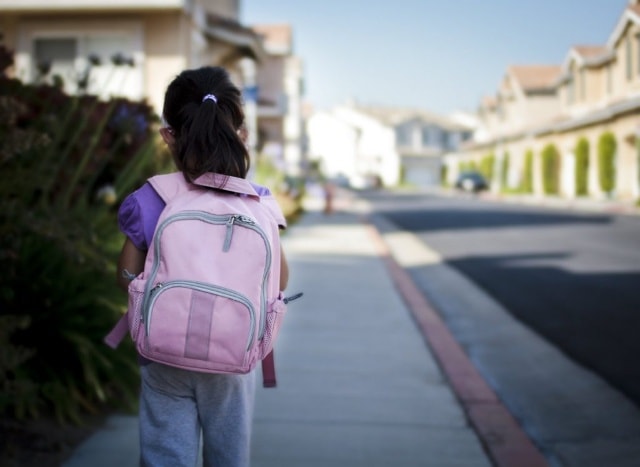 |
| Check the weight of your child's backpack or school bag. |
10. Prepare for change.
When relocating, moving, or relocating to a different city, parents should consider their children's walk to school when making buying, selling, or renting decisions.
According to PNVN


