
10 of the world's most magically beautiful waterfalls.
These waterfalls don't need to be huge or tall; they have their own unique charm and hold strange secrets.
Around the world, many waterfalls have become popular tourist destinations, but relatively few truly stand out from the crowd. They don't necessarily have to be the biggest or tallest, but they always possess a unique quality that will leave a lasting impression once you've seen them. Here is a list of 10 spectacular waterfalls from around the world.
1. Firefall (Yosemite National Park, California, USA)
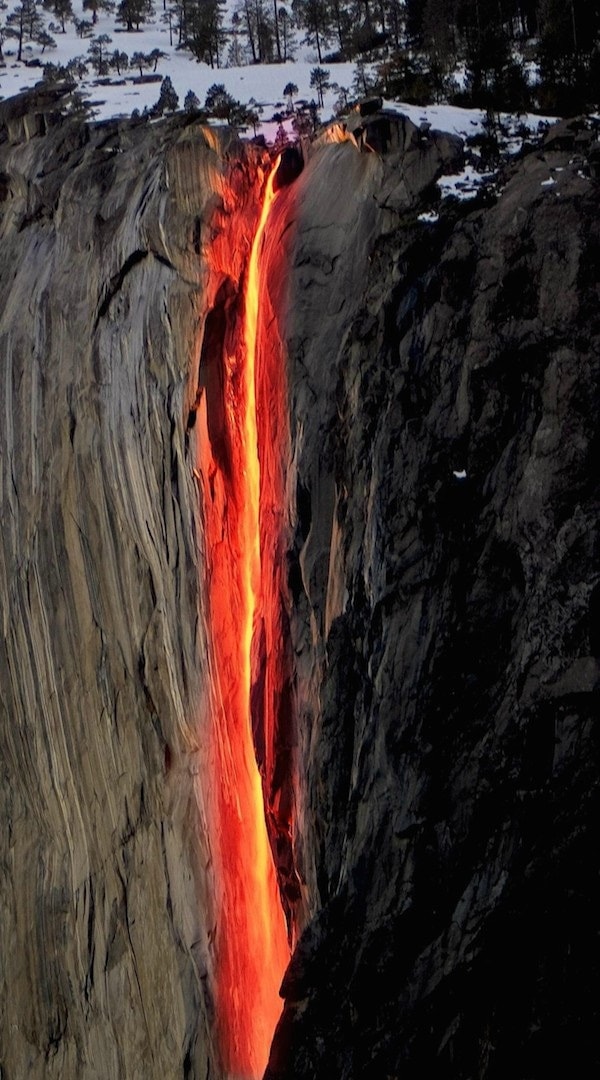 |
| Horsetail Falls looks like a stream of lava flowing down a sheer cliff. |
Horsetail Falls, also known as "Firefall," flows from El Capitan mountain in two separate streams during winter and early summer, cascading from a height of 478.5 meters down a steep rock face, sending water droplets into a mist before continuing to flow down to the foot of the mountain.
During the last two weeks of February, Horsetail Falls changes color and becomes a "firefall." This phenomenon occurs as the day draws to a close, when the last rays of sunlight fall on the waterfall, and if reflected at the right angle, a brief but spectacular sight unfolds: a brilliant stream of fire appears, cascading down to the ground.
2. Mist Falls (Djupadal, Iceland)
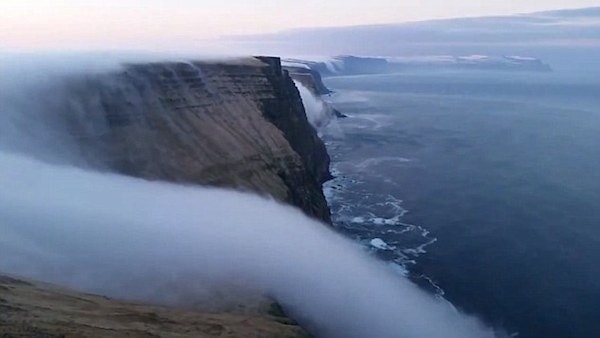 |
| This waterfall is made of mist, flowing very gently down the cliff. |
Dense fog created the illusion of a waterfall cascading down a sheer cliff face in Iceland. This unusual phenomenon is believed to occur when temperatures reverse, causing warm air to rise and trapping cold air below.
3. Horizontal Falls (Kimberley, Western Australia)
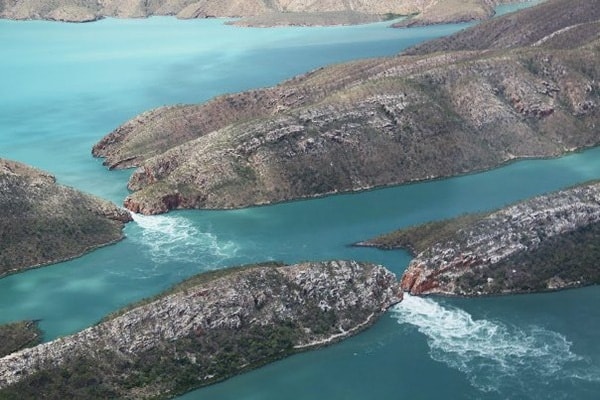 |
| These two horizontally cascading waterfalls are unique in the world! |
There are only two such waterfalls in the world, and both are located deep within Talbot Bay in the Bucaneer Archipelago, in the Kimberley region of Western Australia. This natural wonder comprises two canyons of the McLarty Range.
Between these two canyons, a large volume of water is pushed through by very strong tidal waves, creating temporary waterfalls that can reach up to 5 meters in height. The direction of the water flow changes with the tide. Each time the water rises or falls, a huge amount of water accumulates in front of the canyon compared to the amount it allows to flow through. Therefore, water rushes through the canyon like a waterfall, under the influence of the tidal current.
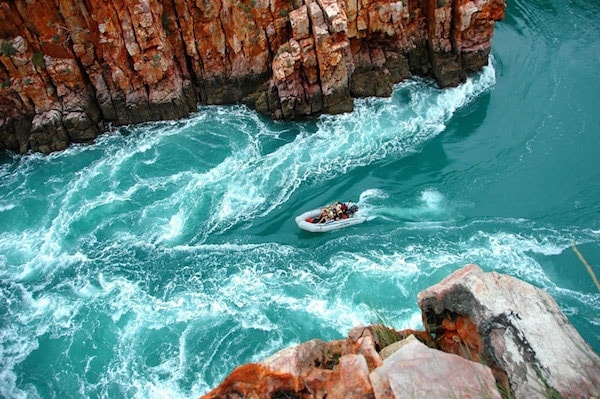 |
| The water rushes through the canyon at the speed of a waterfall. |
4. Bigăr Waterfall (Caraş-Severin County, Romania)
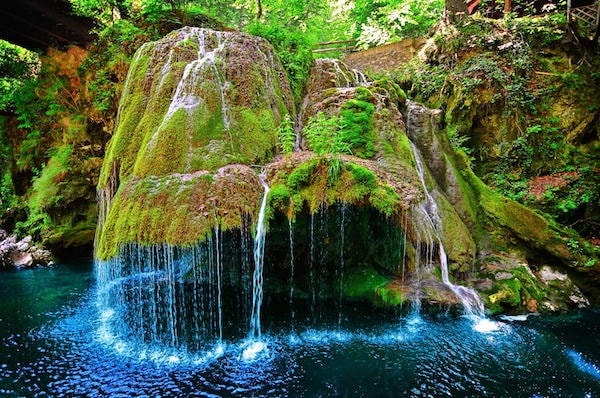 |
| Bigar Waterfall is as beautiful as something out of a fairy tale. |
Although not remarkable in size or volume, what makes Bigăr Falls unique is its distinctive shape and location. The entire cliff face is covered in moss, and the water flows over this verdant surface into a small river called Miniş. Located precisely at latitude 45, equidistant from the Equator and the North Pole, the waterfall is one of the most unique in the world.
5. Cameron Falls (Alberta, Canada)
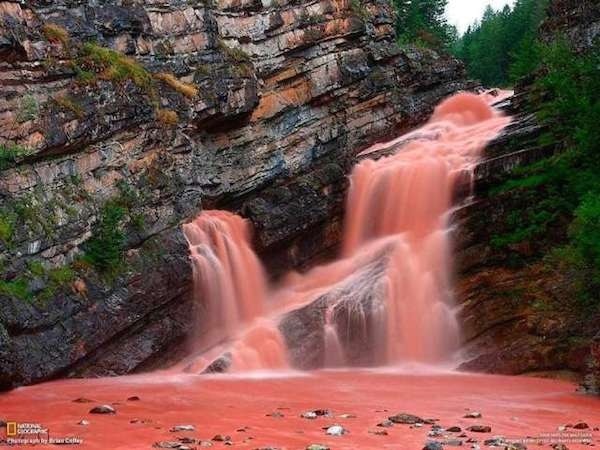 |
| The water turned a beautiful pink color. |
If you visit Cameron Falls in Lake Waterton National Park, Alberta, Canada in June, you'll have the chance to witness an extremely rare phenomenon: the entire falls turn pink.
In spring, torrential rains stir up layers of claystone, or argillite, dissolving them into the water. When light reflects off this mineral, the water turns a beautiful reddish-pink color.
6. Blood Falls (Antarctica)
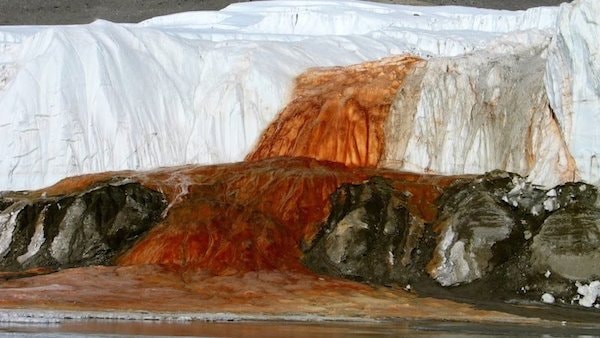 |
| This strange phenomenon has caused a stir among netizens. |
In Antarctica's McMurdo Dry Valley, a vibrant red waterfall, as tall as a five-story building, cascades from the Taylor Glacier into Lake Bonney.
Of course, it's not real blood as the name suggests; instead, the main cause is the five-million-year-old lake flowing underground. As the glaciers that formed on the lake's surface began to freeze, the water below became saltier.
To date, the salt content in the underground lake at the bottom of Blood Falls is five times that of seawater, so salty that it cannot freeze. The lake is "trapped" beneath a 0.25-mile-thick layer of ice and cannot come into contact with air. It has never seen sunlight and is completely unable to absorb oxygen. The lake also contains a particularly high amount of iron. When water from the underground lake leaks through cracks in the glaciers, this iron-rich water suddenly comes into contact with the air and rusts instantly, creating streaks of red water that resemble blood flowing on the ice as the water falls.
7. Waterfalls in water (Mauritius)
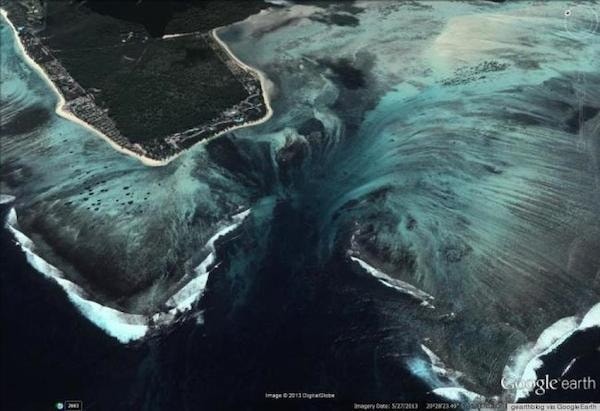 |
| This scene is not photoshopped. |
Of course, we all understand that there can't be a waterfall in water. In reality, the waterfall on the coast of the Republic of Mauritius is just an optical illusion that makes it look like a majestic waterfall flowing in the ocean. Because sand and mud sink deeper into the sea, from the continental shelf to the deep water area, it creates the illusion of a waterfall within a waterfall.
8. Pamukkale Waterfall (Denizli Province, Türkiye)
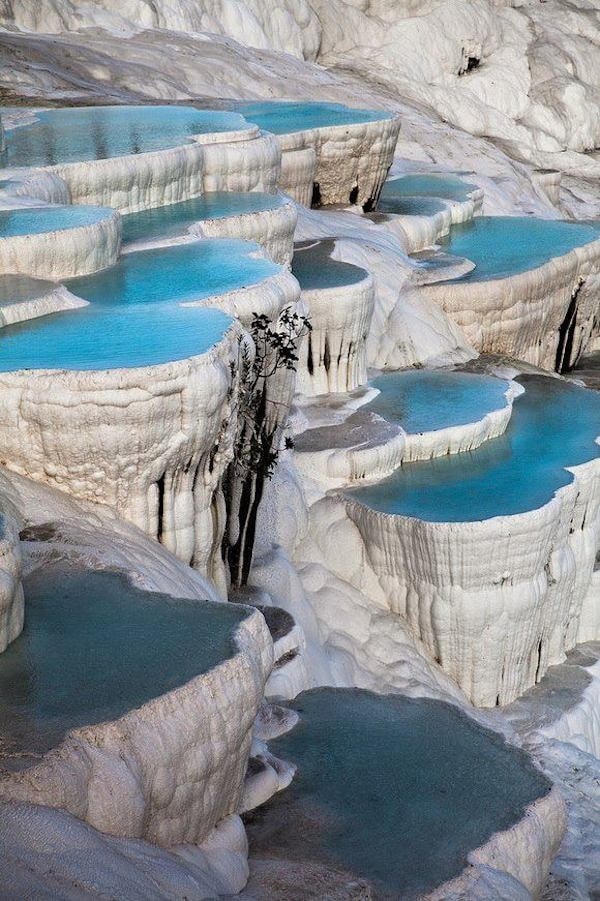 |
| A waterfall with steps in Türkiye. |
Pamukkale Waterfall (which translates to "cotton castle" in Turkish), located in southwestern Turkey, has been a UNESCO World Heritage Site since the 1970s.
The tiered cascades of this famous waterfall are made of limestone: a type of carbonate mineral, deposited by the flow of water. This perfectly formed natural structure is 2,700 meters long, 600 meters wide, and 160 meters high.
Pamukkale Falls has been used as a natural bathing spot for centuries. Ancient Greeks and Romans discovered the therapeutic value of these mineral-rich hot springs. The springs have attracted many visitors, not only for their therapeutic benefits but also to admire the wondrous beauty of the calcium bicarbonate deposits that have formed layers across the steep cliffs.
9. Devil's Kettle Falls (in Grand Marais, Minnesota, USA)
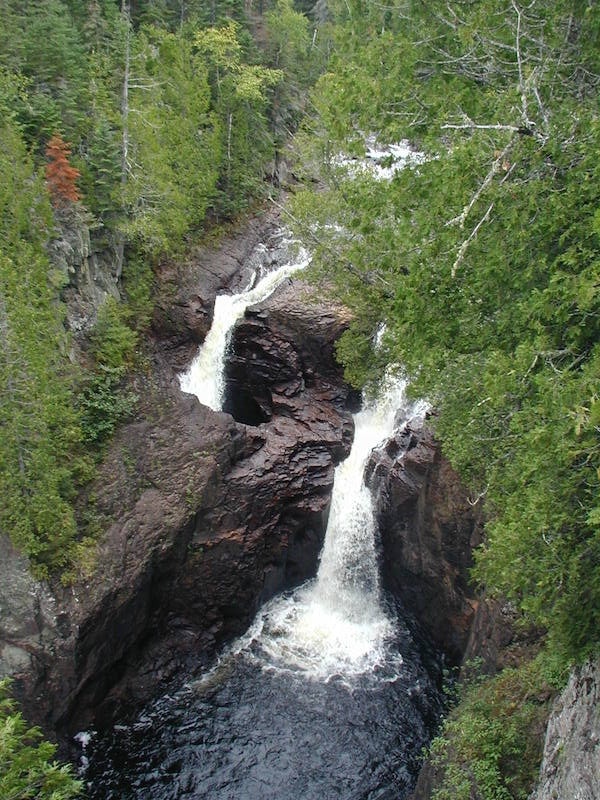 |
Devil's Kettle is a very unusual geological area. Located on the northern edge of Lake Superior, the Brule River suddenly splits into two waterfalls. But the strangeness doesn't stop there. One side of the waterfall flows into the river as usual, while the other flows into a deep pit and – disappears without a trace. No one has yet discovered where the water goes. Researchers have tried throwing objects like ping-pong balls and pouring dye into the pit, but no one has found any sign of them.
10. Ruby Falls (in Chattanooga, Tennessee)
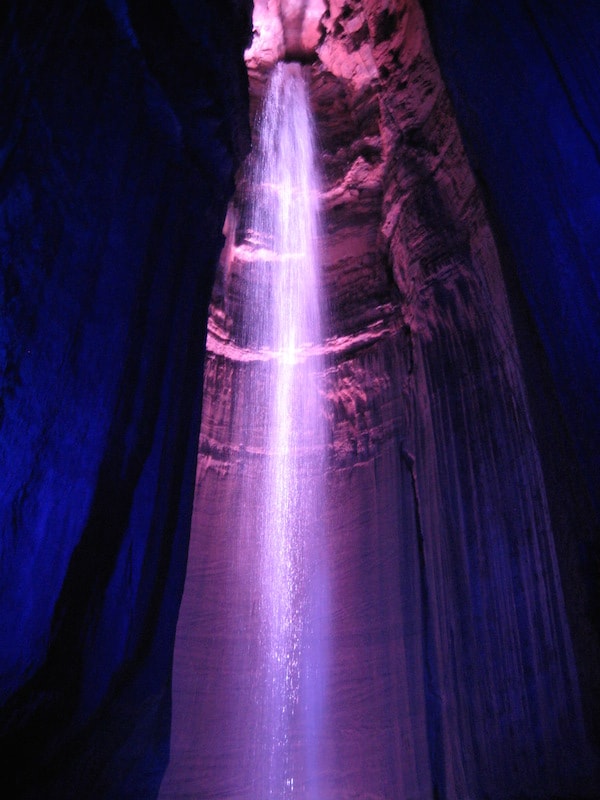 |
| A mystical purple hue bathes the waterfalls and the surrounding landscape. |
Ruby Falls is a famous limestone waterfall, the deepest in the United States, and also the most visited underground waterfall in the country, attracting over 400,000 tourists annually.
This waterfall, over 44 meters high, is named after Ruby Lambert, the wife of the man who discovered it. The waterfall contains a lot of magnesium ore, so if people drink enough of its water, they will have to go to the toilet frequently (because magnesium is considered a natural laxative).
According to Tri Thuc Tre (Young Intellectuals)


