
5 medicinal remedies using Cynomorium coccineum
In Traditional Chinese Medicine, the ginseng root is considered a tonic for the kidneys and aphrodisiac, often used to treat impotence, coughs, diarrhea, and abdominal pain.
1. Characteristics of the wild ginseng plant
Curculigo orchioides, also known as Sâm cau or Ngải cau or Tiên mao, has the scientific name Curculigo orchioides Gaertn. It belongs to the Hypoxidaceae family. Sâm cau is a herbaceous plant, 40cm or more in height, with a long, cylindrical underground stem. Its leaves are narrow, lanceolate, pointed at both ends, 15-40cm long and 12-35mm wide, with a 10cm petiole, resembling betel leaves.
The plant known as "sâm cau" (or "sâm cau") grows commonly in many northern provinces of Vietnam. It is also found in Cambodia, India, Malaysia, Thailand, China, and the Philippines.
The roots are washed, sliced thinly, and dried in the sun or in a drying machine for medicinal use.
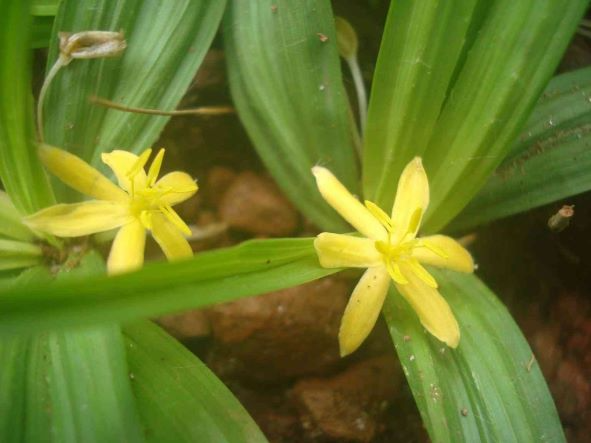
2. Uses and Dosage of Polygonum multiflorum
According to Dr. Nguyen Quang Duong, MD, MSc – Department of General Internal Medicine, Tue Tinh Hospital, some ethnic minority regions in Vietnam use the roots of this plant as a tonic, hence the name "ginseng," and because the leaves resemble those of the betel nut tree, it is called "betel nut ginseng." In India, the roots of this plant are also considered a tonic.
According to Traditional Chinese Medicine, the plant known as "sâm cau" (Cynomorium coccineum) has a pungent taste, warm nature, and is slightly toxic. It enters the kidney meridian and has the effects of warming and nourishing kidney energy, strengthening male potency, warming the middle, drying dampness, dispersing stagnation, eliminating cold and dampness, strengthening tendons and bones, and regulating digestion.
Additionally, the plant is used to treat coughs, hemorrhoids, jaundice, diarrhea, and abdominal pain. For external use, it is crushed and applied to scabies and ulcers.
For internal use: Take 6-12g daily in the form of a decoction or tincture.
3. Remedies containing Cynomorium
Dr. Nguyen Quang Duong introduces some herbal remedies containing Cynomorium as follows:
- Treats rheumatism, cold back pain, nervous exhaustion, and erectile dysfunction:Thinly sliced and roasted 100g of Cynomorium songaricum, 10g of Angelica sinensis, and 500ml of white wine. Soak for 7 days or more. Drink twice a day, before main meals, a small cup of about 25-30ml each time.
- Treating erectile dysfunction caused by functional nervous disorders:20g of Sâm cau (a type of ginseng), 12g each of Sâm bố chính (a type of ginseng), Trâu cổ (a type of herb), Câu kỷ tử (a type of goji berry), Ngưu tất (a type of herb), Tục đoạn (a type of herb), Thạch hộc (a type of herb), Hoài sơn (a type of herb), Ba kích (a type of herb), and Phá cố chỉ (a type of herb); 8g each of Nữ trinh tử (a type of herb) and Ngũ gia bì (a type of herb). Boil all ingredients in 1 liter of water until reduced to 300ml. Divide into 2-3 doses and drink before meals throughout the day.
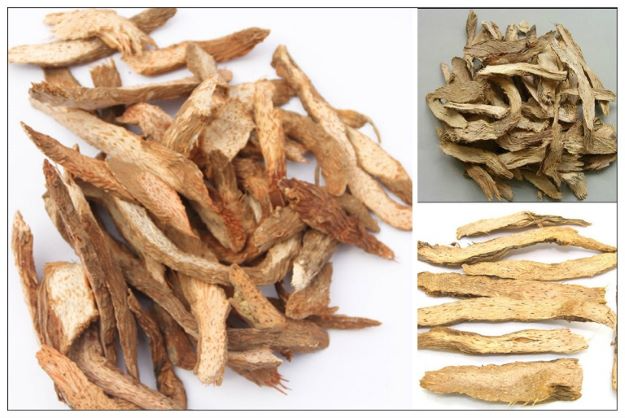
ButTreating asthma and diarrhea:Dried and thinly sliced ginseng root is roasted until golden brown. Use 20g, boil with 250ml of water until reduced to 50ml, and drink once a day before meals. Alternatively, steep 20g of ginseng root in water and drink throughout the day.
ButTreating rheumatism and general body aches:Soak 20g each of the roots of Polygonum multiflorum, Polygonum multiflorum, and Siegesbeckia orientalis in 500ml of white wine for 7-10 days (or longer if possible).
- Internal hemorrhoids with bleeding:20g of Sâm cau (Rhizoma Curcumae Longae), 8g of Đẳng sâm (Radix Codonopsis Pilosulae), 20g of Huyền sâm (Radix Scrophulariae), 15g of Trắc bách thán (charred Thuja orientalis), 20g of Cỏ nhọ nồi (Radix Polygoni Multiflori), 15g of Cát căn (Radix Puerariae), 8g of Thăng ma (Radix Cimicifugae). Decoct and
Note: People with yin deficiency and excessive heat should not use ginseng.


