
5 phone scams you need to know about.
These age-old scams still trap many people, especially women and the elderly. Some victims have lost billions of dong after just one phone call.
Recently, these scams have started to resurface. Below are 5 phone scams you absolutely must read about. Don't forget to share this with your family members, especially women and the elderly.
Phone bill notification
This type of scammer typically uses voicemail or makes direct calls to landline numbers to demand payment of large outstanding bills, threatening to temporarily cut off service or take legal action if payment is not made.
Even more cunningly, they used VNPT's sales hotline number 18001166 to easily gain the trust of customers.
A representative from VNPT warned that the VNPT number 18001166 is a telephone sales hotline that only receives incoming calls and never makes outgoing calls. Therefore, all calls to landline phones reminding users of outstanding bills that display the number 18001166 are fraudulent.
Report any suspicions to the police immediately. Do not try to handle it yourself, as you could easily fall into the trap of criminals.
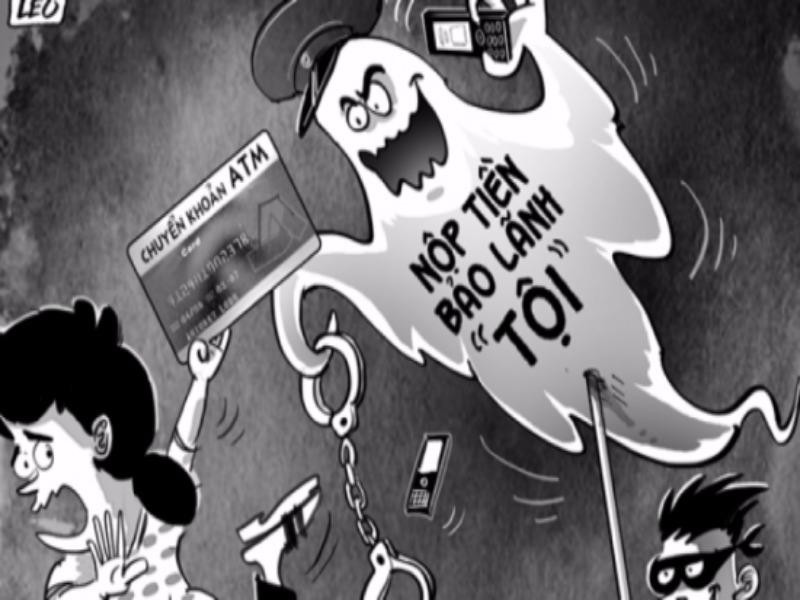
Police announce involvement in money laundering.
Scammers often call people posing as police officers or prosecutors, informing them that they are involved in large-scale drug trafficking or money laundering rings, and demanding money for investigation purposes, threatening imprisonment if they refuse.
More sophisticatedly, they don't need to identify themselves; instead, they give victims a phone number and tell them to call the 1080 hotline directly to find out who they are.
In fact, in both this case and the phone bill payment notification, they used software to spoof phone numbers that looked exactly like those of official agencies.
Believing the lies and fearing imprisonment, many gullible and uninformed people fell into the trap.
In this case, people should hang up immediately without thinking because it's a scam.
“Firstly, telephone companies only send letters to notify people of outstanding bills; they don't use voicemail. Secondly, when the police are investigating, they will send an invitation letter clearly stating the time, location, and requiring citizens to come directly to the police station or headquarters for questioning. Thirdly, the police never request money transfers to personal accounts,” affirmed Lieutenant Colonel Le Minh Le, head of the General Affairs Team of District 3 Police.
Relatives of the victim
These individuals often make late-night phone calls to inform victims (spouse, children, etc.) that they are in trouble and urge family members to come immediately. The location they report is usually a remote, deserted area. They will then lie in wait to rob the victims.
If this happens, the first thing to do is call a family member or acquaintance of that person. If you are too worried to reach them by phone, ask a few other people to come with you. Absolutely do not tell anyone where you are.
Lottery scam via phone
One fine day, you suddenly receive notifications via Facebook messages or phone calls about winning an SH motorbike, an iPhone, or hundreds of millions of dong in cash, even though you never participated in any lottery or prize draw… You only have to send a small amount of money, about 3 million dong in taxes, or high-value phone top-up cards to receive your prize. Rest assured, you've been scammed!
Carefully verify information from multiple sources (Internet, friends, ask for the exact address of the prize-awarding agency, the delivery address, etc.). You can ask acquaintances living near the address to confirm whether the company exists, whether your name is listed among the winning customers, etc. Even a few simple steps – typing in the phone number and address – will bring up numerous previous scam warnings. Absolutely do not hand over any money to the scammers through methods such as scratch cards or bank transfers.
 |
A group of foreign fraudsters were arrested in Ho Chi Minh City. Photo: Quoc Thang. |
Many victims fall for this old trick. They often pose as foreigners residing in England or the United States, then approach and flirt with many women.
After a period of "romance," they will generously offer to send a package worth hundreds of millions of dong (including shoes, handbags, jewelry, phones, iPads, USD...).
Next, a Vietnamese person posing as a postal delivery employee called directly, requesting that the delivery fee be transferred to a bank account in order to receive the package.
Finally, they demand payment of fines to receive the goods, with various excuses: the package contains money that was seized by customs… Trusting them, the victims continue to pay money hoping to get their goods, only to fall into a trap: money lost, relationships ruined.
On July 31, 2017, Mr. NTL (24 years old, from Hau Giang) received a phone call from a woman requesting him to pay a fee of over 18 million VND to receive a package from Graham Bond (living in London, whom Mr. L met through social media). Mr. L went to BIDV bank in District 3 to deposit money but did not receive the goods, so he reported the incident to the District 3 Police Station. Through investigation, the District 3 Police determined that Nguyen Tuan Anh (19 years old, Ward 6, District 11) was the person who opened the account at BIDV bank and provided it to the foreign individuals. On September 15, 2017, District 3 Police arrested Graham Bond, whose real name is Okwudilichukwu Chinedu Timothy (27 years old, Nigerian nationality, residing in Tan Hung Thuan Ward, District 12). During questioning, Timothy confessed to colluding with Nigerian accomplices and Vietnamese individuals to commit fraud by befriending and seducing victims through Facebook, using emotional manipulation and sending gifts to deceive them. Timothy admitted to defrauding victims in Vietnam of more than $94,000 and over 1 billion VND along with his accomplices. The District 3 Police are continuing their investigation to clarify the matter. |
According to PLO


