
6 "taboos" when feeding vegetables to children
When cooking and choosing vegetables, mothers should "commit" to avoiding these "terrible mistakes" if they don't want their children to become malnourished.
When it comes to green vegetables, mothers are always incredibly enthusiastic, asserting that children who eat plenty of vegetables will have balanced nutrition, lots of vitamins, and avoid constipation. However, few realize that no matter how many vegetables you feed your children, if you do it incorrectly, those adorable babies still won't grow properly.
When cooking and choosing vegetables for children, mothers should "commit" to avoiding these taboos.
Cooking vegetables in a copper pot
Child health experts recommend using aluminum or iron cookware to prepare food for children, avoiding copper pots. In particular, many mothers, when boiling vegetables for their children, want the vegetables to be softer, so after boiling, they don't remove them from the pot but instead leave them covered for a while. This is an unscientific method of softening vegetables, because doing so not only destroys the nutrients but also causes copper contamination.
We know that food, including vegetables, contains a certain amount of acid. When soaked in a pot, this acid can leach out metals or oxidize the surface of the metal container.
Although the concentration and amount of leached metals are not high, this is still completely detrimental to the baby's health.
Eat only root vegetables, avoid leafy greens.
Carrots and potatoes can also be considered vegetables, so when children show a dislike for leafy vegetables, many mothers decide to replace them with root vegetables. Is this a smart solution? Of course not. Bamboo shoots, potatoes, pumpkins, squash, cucumbers, tomatoes, radishes, white beans, zucchini... although also vegetables, contain fewer minerals than leafy vegetables. Furthermore, the amount of vitamin C and inorganic salts provided by root vegetables is not as high as that of leafy vegetables.
Mothers should come up with more creative ways to get children to eat leafy vegetables; don't just cater to your child's preferences and inadvertently miss the opportunity to provide them with the best nutrients.
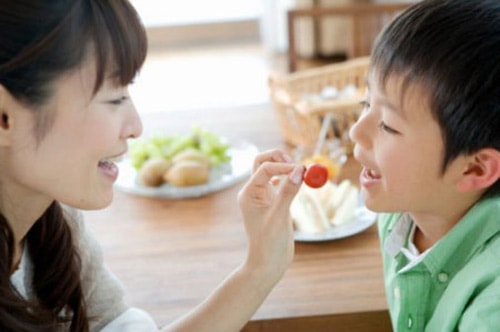 |
| Feeding children only root vegetables and not leafy greens inadvertently deprives them of the best opportunity to receive essential nutrients. (illustrative image) |
Feeding children legumes too early
Beans are not only visually appealing but also delicious. Children may love dishes made from beans. However, it's important to know that the protein content in beans like peas, lentils, and black beans is quite high. Health experts advise that adults should not introduce beans to children too early (under 7 months) as this could cause them to develop an allergy to the protein they contain.
Too much cabbage is eaten without the core.
When washing vegetables for their children, many mothers tend to discard the core of the cabbage because it's very crumbly, focusing only on the outer leaves. However, vitamins and trace elements (vitamin C, PP, magnesium, and folic acid) are not evenly distributed in cabbage. Most of the beneficial substances are found in the core of the cabbage. The core of the cabbage is rich in fiber, which can help remove accumulated toxins from the body, providing a feeling of fullness without excess calories.
In addition, it contains substances that help normalize metabolism. That's why many nutritionists recommend that mothers feed overweight or obese babies lunch and dinner dishes made from cabbage core.
The time between preparing vegetables and cooking should not be too long.
If mothers buy fresh vegetables, clean and wash them, and then leave them for a long time before cooking, the vegetables will no longer be fresh and will lose some of their nutrients. The best solution for busy mothers is to buy vegetables, prepare them, and freeze them immediately for their babies, or even better, choose vegetables that can be cooked and eaten immediately at each meal.
Use only vegetable water.
Many mothers believe that bone broth, meat broth, and vegetable broth are very nutritious. Therefore, many women have a habit of simmering bones with various vegetables to make broth for their children's porridge, and then... discarding the solids.
However, nutritional analyses have shown that protein (meat, fish, shrimp, etc.), no matter how long it's cooked, remains in the solid parts and doesn't dissolve in the water, and the same applies to fiber in vegetables. To ensure your child receives sufficient nutrients, you must feed them the solid parts of the food by finely chopping, dicing, or cooking them until soft. If you only give your child the vegetable broth, they won't get the fiber they contain.
According to Eva.vn


