
6 reasons why your car is sluggish and lacks power.
(Baonghean.vn) - The phenomenon of cars showing signs of no longer being as "healthy" as they were when new stems from many causes. The core issue is the lack of regular maintenance and poor driving skills... According to automotive experts, a car's sluggish performance and lack of acceleration can be due to the following reasons.
1. Dirty air filter, uneven airflow.
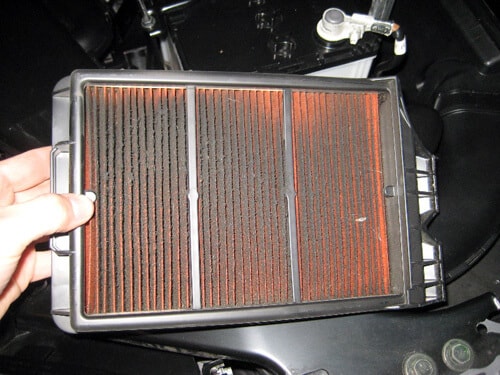 |
Frequent driving inevitably leads to significant clogging of the air filter. Many car owners often overlook this, and if left unattended for too long, it will result in insufficient air intake to create a proper air-fuel mixture, greatly affecting the engine.
According to experts, all types of car air filters should be cleaned every 5,000 km and replaced every 20,000 km.
2. BWorn fuel pump, leaking pressure regulator.
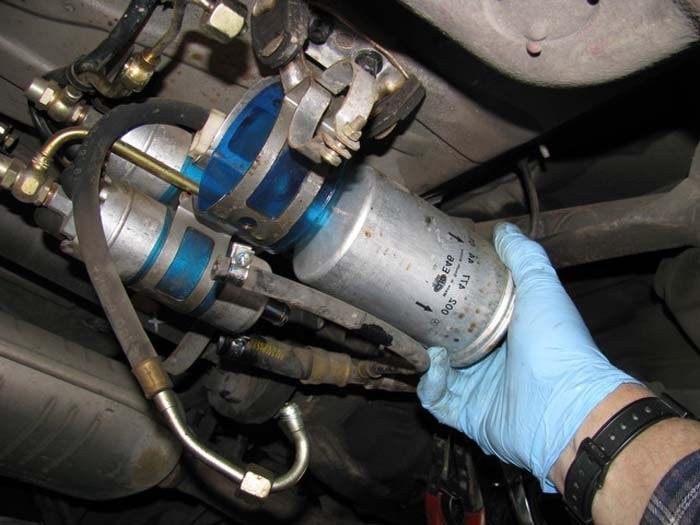 |
When the fuel pump is worn or the fuel pressure regulator shows signs of leakage, this will cause low fuel pressure from the intake manifold to the combustion chamber, resulting in inefficient power generation and a noticeable reduction in engine power, making the vehicle weaker.
3. The fuel filter is clogged.
If the fuel filter system malfunctions, it can cause far more serious damage than an air filter... A clogged fuel filter will affect the fuel injection system, potentially causing detonation in the cylinders and engine stalling on the road.
Typically, car fuel filters should be replaced and serviced every 40,000 km; however, since the fuel is not perfectly clean, replacing it every 25,000 km is the safest option.
4. Due to fuel pressure
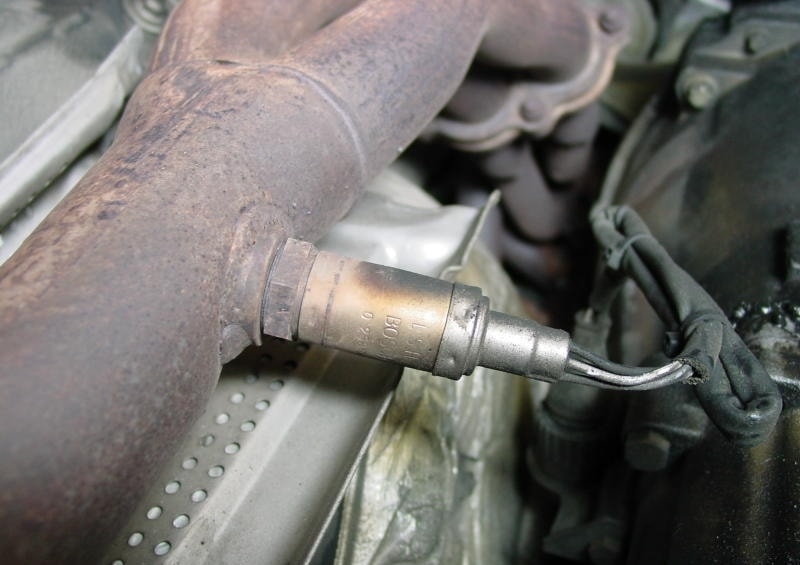 |
The fuel pressure regulator's function is to maintain a constant pressure difference between the fuel in the distribution pipe and the air inside the intake manifold. This allows the ECU to control the injectors, ensuring they open for a certain amount of time and spray the same quantity of fuel as "calculated" by the ECU. If the pressure difference changes (due to a faulty pressure regulator), the amount of fuel sprayed will differ from the calculated amount, even if the injectors open for the same amount of time.
This will cause an excess or shortage of fuel, leading to unstable engine operation, resulting in the car running sluggishly and lacking power.
5. Worn spark plugs (for gasoline engines)
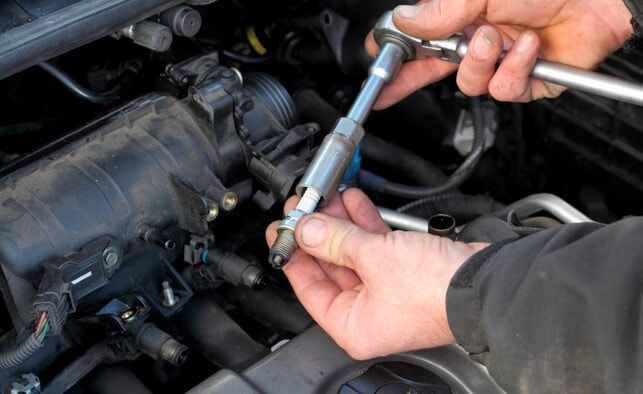 |
Before combustion, meaning at the end of the compression stroke, the fuel is compressed to its peak and the spark plug begins to ignite to generate power. At this point, the fuel to be burned must receive a large amount of energy from the spark plug's electrode gap to operate at full power.
However, during operation, the gap between these two electrodes also erodes, causing the spark to become less efficient and reducing the power of the combustion process.
6. Incorrect ignition timing
 |
When the engine is running and experiences knocking at high throttle, unstable idling, high fuel consumption, rapid engine overheating, and occasional backfiring, these are signs that the ignition system is misfiring.
When the ignition system generates a spark too late compared to when the engine needs it, it often causes problems such as increased engine temperature, popping noises in the exhaust due to unburned fuel continuing to burn in the exhaust, increased fuel consumption, and engine "flooding" due to insufficient combustion, resulting in poor acceleration. Additionally, the engine becomes difficult to start.


