
69% of the country's population participates in health insurance.
This information was released at a rally commemorating Vietnam's Health Insurance Day (July 1st), organized by the Ministry of Health and the Vietnam Social Security on the morning of June 26th in Hanoi.
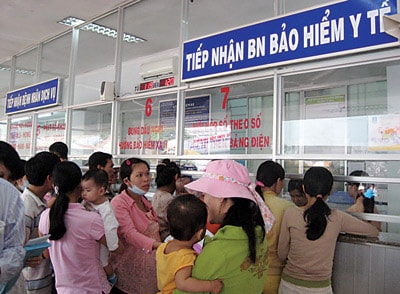 |
| Illustrative image |
Here, the Director General of Vietnam Social Insurance, Nguyen Thi Minh, stated that after more than 20 years of implementation, especially since the National Assembly enacted the Health Insurance Law, the health insurance policy in Vietnam has made significant progress, contributing positively to poverty reduction and ensuring social security.
The number of people participating in health insurance has grown rapidly, especially those in social policy categories such as the poor, ethnic minorities living in disadvantaged areas, children under 6 years old, people with meritorious service to the country, veterans, and the elderly... with 100% participation in health insurance.
Notably, health insurance coverage increased from 60% in 2010 to 65% in 2011, and by 2013, 61.67 million people were covered, reaching approximately 69% of the population. The set targets are to reach 70% of the national population by 2015 and around 80% by 2020.
Along with that, the revenue of the health insurance fund has also increased significantly. For example, in 2009, before the implementation of the Health Insurance Law, health insurance revenue reached 14,400 billion VND; after one year of implementation, the health insurance fund collected over 25,000 billion VND; in 2011, health insurance revenue was nearly 30,000 billion VND; and by 2013, it was over 46,000 billion VND, ensuring a stable and timely financial source to pay for medical examination and treatment costs for the people.
The Social Insurance Agency has signed health insurance contracts with more than 2,100 medical facilities from district to central level, including 424 non-public medical facilities; in addition, there are 9,500 commune-level health stations and equivalents participating in health insurance medical examinations and treatments, accounting for more than 86% of the total number of commune-level health stations nationwide. Health insurance patients are provided with many modern technical services and use many new and expensive medicines. While in 2010, the health insurance fund paid for over 102 million health insurance cardholders with costs exceeding 19,000 billion VND, in 2013, the corresponding figures were over 131 million health insurance cardholders and over 42,000 billion VND.
However, according to Ms. Nguyen Thi Minh, the self-awareness of some people regarding participation in health insurance is still low, and compliance with health insurance laws in some businesses, especially private enterprises, remains low (only 55%). Many units still evade or default on health insurance contributions for their employees. The abuse of the health insurance fund has not been thoroughly addressed, and recently, some medical facilities have sought to profit from the health insurance fund. The new pricing for medical services is not yet suitable for the socio-economic conditions of the localities. In some localities with difficult socio-economic conditions and low incomes, the health insurance fund is always in deficit, yet most services are approved at or above 90% of the maximum price range issued by the inter-ministerial committee…
The Director General of Vietnam Social Insurance believes that, in order to further improve the health insurance policy, it is necessary to urgently implement a pilot program for centralized drug bidding at the central and provincial levels to gradually manage drug prices uniformly nationwide; research and review to amend and supplement the list of drugs covered by health insurance, build a basic medical service package suitable to the actual situation of Vietnam and the payment capacity of the health insurance fund; strengthen investment and development of the grassroots medical examination and treatment network, bring health insurance-covered medical examination and treatment closer to the people and ensure the rights of health insurance participants….
According to HNMO


