
8 common mistakes made during emergency situations.
Disinfect the wound with alcohol or iodine; tilt the head back to prevent nosebleeds; perform artificial respiration by chest compressions and mouth-to-mouth resuscitation…
Those are the things you would typically do when providing first aid to someone before they can get to the hospital.
However, you should read the following to know whether the methods you are using are right or wrong.
1. Disinfect cuts and scrapes with hydrogen peroxide, alcohol, iodine, or Betadine.
Fresh wounds should be disinfected promptly, but antiseptic solutions should be avoided as they are unhelpful and can cause pain.
They might give you the feeling they're disinfecting, but in reality, they're "killing" fibroblasts, the skin cells responsible for wound healing. And the itching they cause is because healthy tissues are being damaged.
 |
The best way to clean bacteria and dirt from a wound is to rinse it under running water. If the wound continues to bleed, stop the bleeding by applying direct pressure, similar to how you would with a nosebleed.
After cleaning the wound, you can apply some antibiotics such as Bacitracin or Neosporin; although they don't fight infection, they can create a protective barrier.
Then you tie or cover the wound with a loose bandage, or if possible, leave it exposed to the air. The body will direct white blood cells to form a scab, which is a sterile barrier allowing the body to continue healing underneath.
2. Tilt your head back to stop a nosebleed.
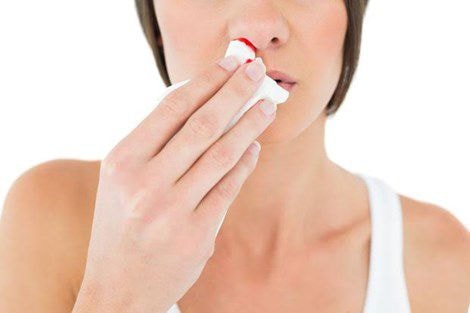
When experiencing a nosebleed, people often panic and their common reaction is to tilt their head back to stop the bleeding.
But doing so will only cause the blood to flow back down your throat and may make you vomit. Furthermore, you won't know how much you're bleeding, and you won't be able to stop the bleeding.
 |
You should tilt your head back to reduce pressure in the blood vessels of your nose, use your index finger and thumb to pinch both nostrils for 15 minutes, breathing through your mouth. Then, if the nose continues to bleed, continue pinching for another 15 minutes. Most nosebleeds will stop on their own.
But if the nosebleed doesn't stop after more than 30 minutes, or if it happens after an injury, you should go to the hospital.
3. Go to the nearest hospital for emergency treatment.
You should go to the hospital that can best treat your condition, not necessarily the nearest one. For example, if you have a heart attack, you should go to a hospital that can perform angioplasty.
In an emergency, you would typically call 115, but you should consider where you should go. People often consider a better hospital if it's further away, but in certain situations, a more distant hospital might be able to do things that the other hospital can't.
4. Perform artificial respiration by chest compressions and mouth-to-mouth resuscitation.
The American Heart Association is advocating for manual resuscitation (CPR) to be the only method used. Research shows that neglecting chest compressions (to create pressure for artificial respiration) can worsen the patient's condition. A recent survey found that only 1 in 20 people who experience cardiac arrest outside of a hospital survive because people often don't know how to perform CPR correctly.
If you see someone having a stroke, you should check for a pulse in their neck. If you don't feel a pulse, you should immediately perform chest compressions while calling for emergency services. Place one hand in the middle of the patient's chest, and place your other hand on top of your hand, pressing down about 5 cm at a time, about 100 times per minute—that's more than once per second.
5. "Rescuing" people from car accidents.
This often happens in movies, but you shouldn't do it. One of the most serious injuries that can occur after a car accident is a head or neck injury. Moving someone without properly immobilizing them beforehand can cause paralysis.
In the event of an accident, call emergency services. While waiting, make sure the injured person is still breathing and try to comfort them by offering encouragement and staying with them until the ambulance arrives.
6. Using Tylenol as medicine for babies.
This pain and fever reliever is very easy to abuse. Acetaminophen is a good medication, but it needs to be used wisely. The US Food and Drug Administration recommends a daily dose of only 4000mg, and 6-8 Tylenol tablets can actually be deadly. Acetaminophen abuse is one of the deadliest poisonings in the world.
You may not realize that acetaminophen is present in many common medications. While you shouldn't skip Tylenol if necessary, you should carefully read your prescription and use it sparingly, checking the amount of acetaminophen in other medications (such as APAP, AC, Acetaminophen, Acetaminoph, Acetaminop, Acetamin, or Acetam...). If you're unsure, ask your doctor or pharmacist.
7. Apply a tourniquet to the limbs to stop the bleeding.
When bleeding occurs, apply direct pressure to the wound. Tying a bandage over the wound can also stop the bleeding, but it also prevents blood from reaching that part of the body, potentially causing permanent tissue damage or even amputation.
You should use sterile gauze or a clean cloth to press firmly against the wound, holding it down until it is saturated with blood. Just one finger is enough to control the bleeding until you see a doctor. Seek emergency medical attention if the bleeding doesn't stop, or if the wound is large, open, dirty, or caused by an animal bite.
8. Place a pencil in the mouth of an epileptic to prevent them from biting their tongue.
No one can swallow their tongue, and doing so is quite dangerous. If you put something in the mouth of someone having an epileptic seizure, they might swallow it whole, or it could make it difficult for them to breathe.
A person having an epileptic seizure can only stop it on their own; you can only call for help and remove all dangerous objects from their surroundings. You can also position them on their side to keep their airway clear.
According to Health and Life


