
ADB warns Vietnam's public debt could reach 60% of GDP.
Due to limited revenue sources, Vietnam may have to choose to increase its budget deficit rather than cut spending, according to the Asian Development Bank (ADB).
Speaking at a press conference updating the economic development situation this morning (March 24), ADB economist Dominic Mellor said that Vietnam could face risks regarding public debt as the budget deficit is projected to widen further.
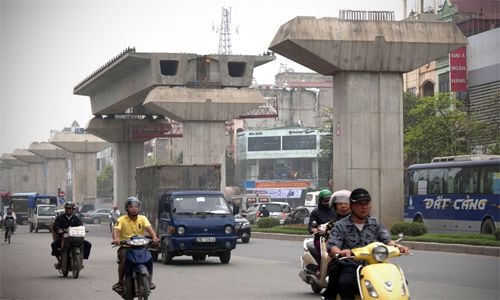 |
| The Asian Development Bank (ADB) forecasts that Vietnam's public debt could reach 60% of GDP by 2016. (Illustrative image) |
The reduction in corporate income tax, tax exemptions for priority businesses, the removal of tariff barriers under import commitments, and the drop in oil prices will adversely affect Vietnam's revenue. Meanwhile, investment spending is projected to increase by nearly 20% after two years of decline, recurrent spending is also expected to increase by 10%, and spending on healthcare and education by 11% and 5%, respectively.
"Assuming that revenue falls short of expectations, the government will choose to increase the budget deficit rather than cut spending. Under that scenario, public debt could rise to 60% of GDP by the end of 2016," the ADB stated. In this context, Mr. Mellor emphasized the importance of adjusting the budget balance in the medium term to avoid increasing public debt to unsustainable levels or negatively impacting investor confidence.
Mr. Tomoyuki Kimura, ADB Country Director for Vietnam, forecasts continued GDP growth over the next two years, at 6.1% in 2015 and 6.2% in 2016. Inflation this year is expected to be 2.5% but will quickly rise to 4% next year as domestic demand and global oil prices both increase.
"With such low inflation, the State Bank will continue to loosen monetary policy to stimulate growth, and credit growth this year is also projected to be higher than last year," Mr. Mellor stated. However, according to the ADB expert, Vietnam's GDP growth is still below its potential, so it could still grow higher with the right policies.
Vietnam still needs to address a range of structural issues, such as accelerating progress in banking reforms, dealing with bad debts, implementing new laws on state divestment, and privatizing enterprises.
Furthermore, with the establishment of the ASEAN Economic Community later this year, Vietnamese businesses need to participate more actively in supply chains, as currently only 36% of domestic businesses participate in export networks, compared to around 60% in Thailand and Malaysia. "Inter-sectoral coordination is needed in implementing policies to support businesses in connecting to production networks and developing key strategies," the ADB emphasized.
| According to the government report, public debt at the end of 2013 was 54.2% of GDP and approached 60% of GDP by the end of 2014. While increasing rapidly in recent years, according to government members, Vietnam's public debt remains below 65% of GDP – the safe threshold according to international standards. The national public debt and foreign debt strategy for the period 2011-2020 and vision to 2030 stipulates that public debt by 2020 should not exceed 65% of GDP, with government debt not exceeding 55% of GDP and national foreign debt not exceeding 50% of GDP. |
According to VnExpress


