
"Oh, the eggplant of Nghe An..."
(Baonghean) - 1. When my brother was building his house, more than half of the garden was reduced. Then, when the plan to build a new house to replace the old one came along, the garden was in danger of disappearing. I'm not home often enough to plant and enjoy the garden's produce, but not having a garden at home would be a huge loss. Therefore, even though the land isn't much, I discussed with my parents setting aside a small area in front of the house to create a garden. And who knows, that small plot of land might help my mother feel less bored during the days when she can't work in the fields.
In the last months of the year, my mother would start preparing the soil and planting beans and vegetables… When Tet (Lunar New Year) comes, the meals offered to our ancestors would, of course, include a few dishes of vegetables harvested from the garden. In February, she would start planting tiny eggplant seedlings. The loose soil,加上 the gentle spring rains, seemed to encourage the eggplant plants to take root and grow day by day. Soon, when the eggplant plants grow and bear fruit, our house will have dishes made from eggplant, including pickled eggplant. Just thinking about it fills my heart with excitement.
2. Perhaps nowhere else has eggplant as delicious as that from Nghe An, especially pickled eggplant.
To make pickled eggplant, my mother usually chooses small, white eggplants and lets them wilt in the sun. After a day or two, when the eggplants have lost some of their moisture, she brings them inside to peel the stems. Peeling the stems seems simple, but it's extremely important and requires skillful hands to ensure the knife doesn't cut into the eggplant flesh. Only then will the eggplant not spoil and can be stored for many months.
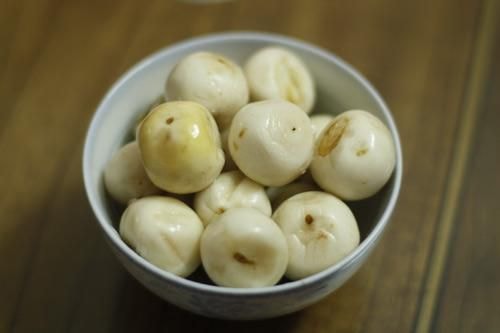 |
| Illustrative image - Internet |
After sun-drying and removing the stems, the eggplants are washed, drained, and sprinkled with a little coarse salt, then tossed thoroughly. Once all these steps are complete, they are placed in a ceramic jar, covered with slightly warm boiling water, and topped with some crushed garlic. What makes the pickled eggplants from Nghe An province tastier than those from other places is perhaps the tight packing of the eggplants by placing a woven bamboo mat on top. To prevent the eggplants from floating to the surface, a heavy stone is placed on top of the mat. This is what makes the pickled eggplants whiter and crispier.
Leave the jar of pickled eggplant for a week, and you can start eating it gradually. The longer the pickled eggplant is left, the better it tastes. To keep the eggplant from spoiling, my mother always added a lot of salt to the jar when pickling it. Nghe An eggplant, "the saltier it gets, the crispier it becomes," like the line in the poem by poet Huy Can, is a product of experience and love. During busy harvest seasons, when it's impossible to go to the market, pickled eggplant is a convenient dish, serving as both a vegetable and a main course. A simple meal like that, yet so heartwarming!
Pickled eggplant can be eaten with rice in all seasons. But in the summer, besides a plate of pristine white pickled eggplant next to a bowl of shrimp paste mixed with lemon and chili, if the meal also includes a bowl of bitter melon leaf soup or boiled water spinach, that meal becomes a truly delightful experience.
The lằng plant, related to the chân chim plant, is commonly found in the forests of western Nghe An province. The lằng leaves are harvested from the forest, chopped, and dried; they can be stored for years. I still call lằng leaf soup "poor man's soup." Perhaps it's because it's cooked so simply, so simply that no other soup could be simpler. Just boil water, then remove the pot from the heat, add salt, MSG, and the lằng leaves. When adding the lằng leaves, absolutely do not stir, as this will make the soup bitter and very unpleasant to eat.
On more extravagant days, they would cook the bitter melon leaves with dried shrimp. The soup would have the bitterness of the bitter melon leaves and the sweetness of the dried shrimp. And surely, any meal that included bitter melon leaf soup and a plate of pickled eggplant would be met with great enthusiasm and enjoyment. A bite of rice, a pickled eggplant dipped in shrimp paste, and then the sound of the soft "crunch" escaping through the gaps between teeth, creating a delightful and captivating sound.
3. Occasionally, in the batches of pickled eggplant my mother made, there would be a few times when the eggplants became soggy, or because there wasn't enough salt and they were left for too long, they turned dark. But even so, those eggplants couldn't be thrown away. At subsequent meals, my mother would take them out, rinse them with cold water to clean them and remove the saltiness, then cut them in half before stir-frying them with pork cracklings.
Those glossy, oily eggplants, eaten with hot rice on chilly days, are simply irresistible. Even now, I can't forget those early mornings going to class, always starting with a bowl of fried rice and pickled eggplant that my mother had prepared beforehand. Those meals nourished me as I grew up, and now that I'm far away, I miss them terribly.
Ho Huy Son


