
The 'American enigma' at Astana
(Baonghean) - According to plan, peace talks for Syria, sponsored by Russia and Türkiye, will take place in Astana, Kazakhstan, on January 23rd. However, it is currently uncertain whether the US will participate in these talks...
An uncertain invitation.
Over the weekend, numerous regional media outlets such as Anadolu, Al Jazeera, and Middle East Eye simultaneously reported that Russia and Türkiye had agreed on the need to invite the United States to participate in the upcoming Syrian peace talks in Astana.
The Washington Post provided more specific information, stating that the Russian ambassador to Washington, Sergey Kislyak, extended an invitation to Michael Flynn, the national security advisor appointed by US President-elect Donald Trump, via a phone call.
However, all information regarding Russia and Türkiye inviting the US to the Astana talks was quoted from the remarks of Turkish Foreign Minister Mevlut Cavusoglu at a press conference in Geneva, Switzerland, and has not been officially confirmed by Russia. The US State Department itself confirmed on January 14th that it had not received an official invitation.
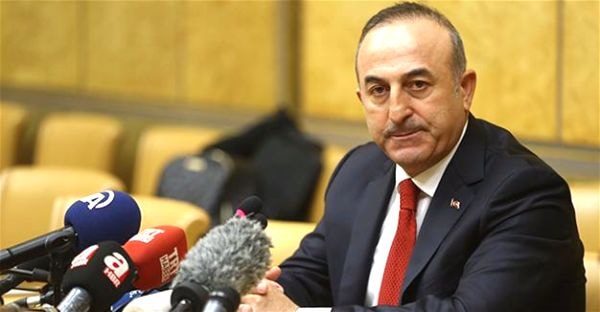 |
| Turkish Foreign Minister Mevlut Cavusoglu confirmed that Türkiye and Russia have invited the US to attend talks in Astana (AFP). |
The limited information available from Russia so far consists only of the cautious stance of Kremlin spokesman Dmitry Peskov on January 13th, when he stated: "I cannot say anything yet about inviting the United States to participate in the negotiations," accompanied by the general view that Russia hopes the participants in the talks can be expanded to include all parties involved in reaching a political solution in Syria.
According to analysts, although Russia is considered to be "in control" of the Syrian battlefield, its hesitation in extending an invitation to the US suggests that Russia is carefully calculating the boundaries of the US role in Syria.
Russia cannot ignore the US.
Peace talks between the warring parties in Syria, sponsored by Russia and Türkiye, are scheduled for January 23rd in the capital Astana, involving Syrian government forces and seven opposition armed groups with approximately 60,000 fighters, excluding the self-proclaimed "Islamic State" (IS) terrorist group and fighters from the former Al-Nusra Front, which is linked to the international terrorist network Al-Qaeda.
These peace talks took place after a ceasefire, effective from December 30th, across Syria between the Syrian government and rebel groups, proposed by Russia and Türkiye. Significantly, this ceasefire, which involved no US involvement, is widely considered more effective than the two previous ceasefires brokered by Russia and the US – the February 2016 and September 2016 ceasefires.
The UN Security Council's welcome and support for Russia and Türkiye's efforts to end the violence in Syria and restart a political process partly reflects the "marginalized" position of the United States after years of deep intervention in Syria, aimed at overthrowing the government of President Bashar al-Assad. Even the decision by Russia and Türkiye to bring the Astana peace talks to a strategic conclusion was a calculated move to indirectly sideline the US role in this issue.
However, with less than a month remaining until the negotiations, reports of Russia extending an invitation to the US suggest that Russia likely understands it cannot completely ignore the US's role. Firstly, while the US has lost the initiative in Syria to Russia, this does not mean it has no influence whatsoever over the opposing forces on the Syrian battlefield.
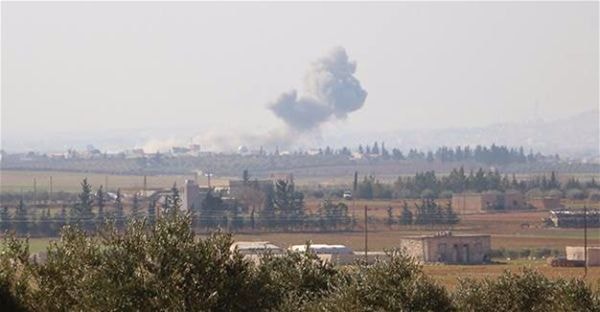 |
| The Astana talks are expected to bring peace to Syria after six years of conflict (Daily News). |
Secondly, as Russian Foreign Minister Sergey Lavrov stated, the Astana talks were merely a supplement, not a replacement, to the Geneva talks in Switzerland – which were UN-backed and took place in February, following the Astana talks.
The US will undoubtedly be an indispensable party in Geneva, so consistent US support from Astana to Geneva will increase the likelihood of the parties reaching an agreement on a political roadmap for Syria. Furthermore, another crucial factor behind Russia's calculations is that US participation in Astana will be the first sign of increased cooperation between Russia and the US under the new administration of Donald Trump.
The unknown factor from the US side.
In a recent press conference, US Secretary of State John Kerry stated that the US is working to advance the Astana talks and hopes they will create a new breakthrough toward bringing peace to Syria.
Since then, the US has made virtually no moves to demonstrate its role in Astana, other than occasional phone calls with the foreign ministers of Russia, Türkiye, and Arab countries regarding ceasefire efforts, and sometimes talks with the opposition.
The Astana peace talks will take place three days after Donald Trump officially takes office as President of the United States. This is seen as the first "test" of how Donald Trump will handle relations with Russia. To date, Trump's transition team has also not revealed any clear signs of its intentions regarding Syria.
Despite facing difficulties after acknowledging Russia's involvement in the recent US presidential election, Donald Trump still stated that Russia and the US could cooperate on "some fronts." Analysts suggest that these "some fronts" could include Syria. However, all scenarios remain speculative, and the "American enigma" can only be definitively solved in Astana on January 23rd.
Thuy Ngoc
| RELATED NEWS |
|---|


