
Are you about to activate clause 50?
On March 14th, after the UK House of Lords and House of Commons approve leaving the EU, British Prime Minister Theresa May is expected to trigger Article 50 of the Lisbon Treaty. What will happen then? Sky News offers some answers.
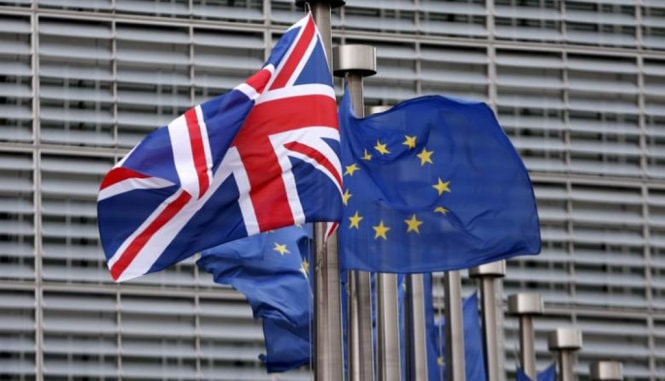 |
| The British flag and the EU flag at EU headquarters in Brussels, Belgium - Photo: Reuters |
What is Article 50?
Article 50 has five paragraphs, of which paragraph 1 allows any EU member state to leave the bloc at the request of its constitution. Paragraph 5 of Article 50 states that if a member state has left the EU and wishes to rejoin, it must follow the provisions of Article 49.
Article 50 was only added to EU law in 2009 in the Lisbon Treaty. Prior to that, there were no provisions regarding leaving the EU.
The provisions of Article 50 are quite brief, and because there is no precedent for triggering them, the implementation process remains rather unclear.
How is Article 50 triggered?
Because there is no precedent, Article 50 will be triggered by agreement between the UK and the EU. Under the law, the UK only needs to write an email to the President of the EU Council.
At the same time, the UK could also send a letter directly to the EU Council building in Brussels, Belgium. This could be done by the UK ambassador to the EU, Sir Tim Barrow, or the Brexit Minister, David Davis.
When is Article 50 triggered?
It is expected that on March 14th (UK time), after being approved by both the House of Lords and the House of Commons, British Prime Minister Theresa May will activate Article 50.
The UK's activation of Article 50 to leave the EU could influence the Dutch elections on March 15th. This news could potentially give an advantage to Geert Wilders, a candidate who has consistently opposed the EU.
After triggering Article 50, what will be the UK's relationship with the EU?
For two years from the date Article 50 is triggered, the UK remains a member of the EU. For example, if Article 50 is triggered on March 15, 2017, then the UK will not officially cease to be a member of the EU until March 15, 2019.
During these two years, the UK remained subject to all EU laws and procedures. There were only two issues on which the UK was not involved with the EU: discussions regarding the UK's withdrawal from the bloc and internal economic matters within the bloc.
Once activated, is it possible to stop Article 50?
Article 50 does not specify whether it can be stopped after being triggered, and EU lawyers have not yet addressed this issue. If the UK wishes to remain in the EU after triggering Article 50, politicians will meet to discuss whether it is possible to reverse Article 50.
What will the UK and the EU negotiate?
Sources close to the EU say it will take about eight weeks for the EU to draft a detailed guide. It is possible that in early April 2017, the remaining 27 EU members will meet to agree on the issues to be negotiated with the UK.
By law, the British delegation will negotiate with the EU delegation, but it is likely that the UK will have to negotiate each issue separately with each member state. Some issues may be negotiated within the purview of Michel Barnier, the head of the EU negotiating delegation. But there will also be issues negotiated between the heads of state.
According to assessments, Belgian diplomat Didier Seeuws played a crucial role in keeping the negotiations on track.
According to Tuoi Tre newspaper
| RELATED NEWS |
|---|


