
Pressure from groundwater sources in coastal vegetable-growing areas of Nghe An province.
Behind the high-value vegetable farming areas along the coast of Nghe An province lie thousands of wells drilling day and night to extract groundwater. With production still almost entirely dependent on groundwater, the pressure on water resources is increasing, creating an urgent need for a sustainable agricultural development approach.
Beneath each field lie hundreds of boreholes.
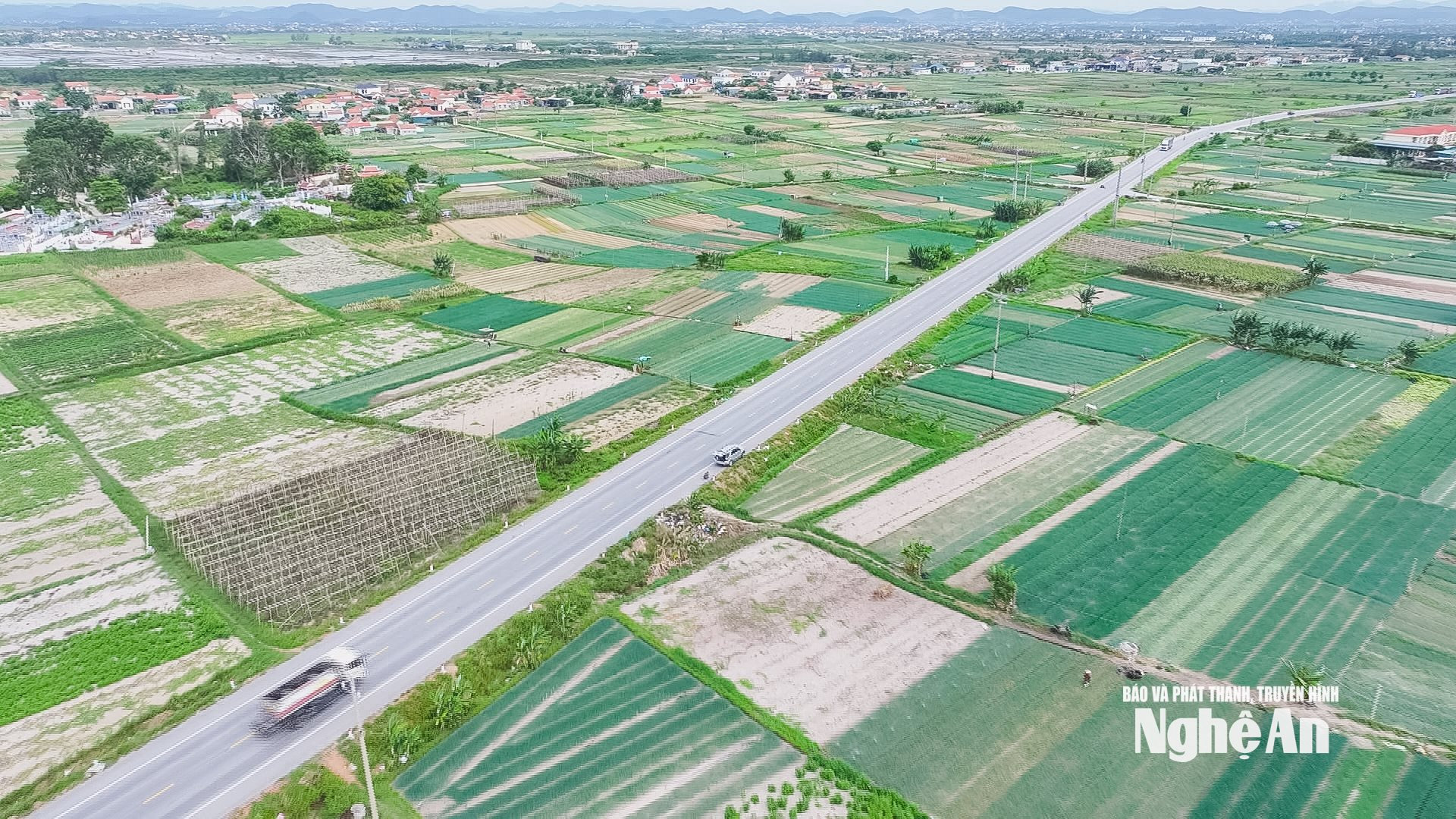
In the middle of the vegetable fields in Quynh Anh commune, the sound of water pumps echoes continuously under the scorching summer sun. Every 5 minutes or so, Mr. Hoang Van Nghia has to turn off one irrigation tap and switch to another. It's not to save electricity, but because each well now only has enough water to irrigate a small row of vegetables. "Previously, one well could irrigate two or three rows at once, but now we have to alternate between many wells to get enough water," Mr. Nghia said. This is also the common situation in many coastal vegetable farming areas of Nghe An province today.
In recent years, along with the restructuring of crop patterns, the area of vegetable cultivation in coastal localities has continuously expanded. Vegetables yield significantly higher economic value than rice cultivation, becoming the main source of income for thousands of households. However, this development has also led to an increasing demand for irrigation water. While the irrigation infrastructure serving dryland crops has not been comprehensively invested in, groundwater has become almost the sole source of water for production.
In Quynh Anh commune, most vegetable-growing households have two to three dug or drilled wells. When the water flow decreases, people continue to drill new wells. "The cost to drill a well is about 3 million dong. Every time one well runs dry, another one has to be drilled," shared Ms. Ho Thi Tuyet.
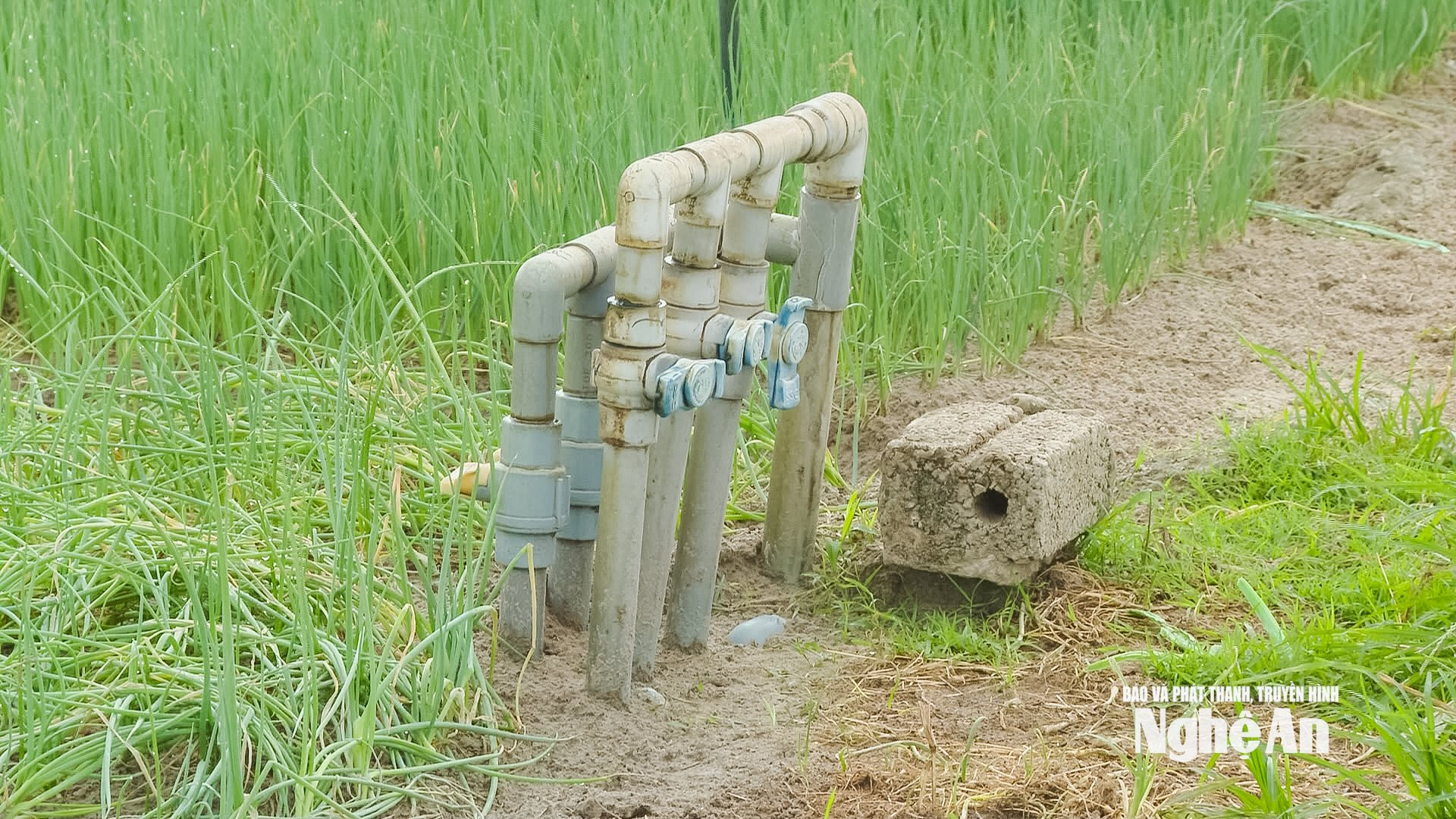
According to many households, in recent years, the water supply in drilled wells has not been as abundant as before. To have enough water for irrigation, many families have to use multiple wells simultaneously. This situation is not unique to Quynh Anh; it is also common in other coastal vegetable-growing areas.
According to Mr. Chu Van Toan, Head of Hong Phong village, Duc Chau commune, the entire village currently has about 400-500 drilled wells serving agricultural production. One cooperative in the area alone has recorded approximately 1,000 drilled wells belonging to households. It can be said that beneath the lush green vegetable fields today lies a "maze" of drilled wells, day and night, extracting groundwater.
The pressure isn't just coming from the wells.
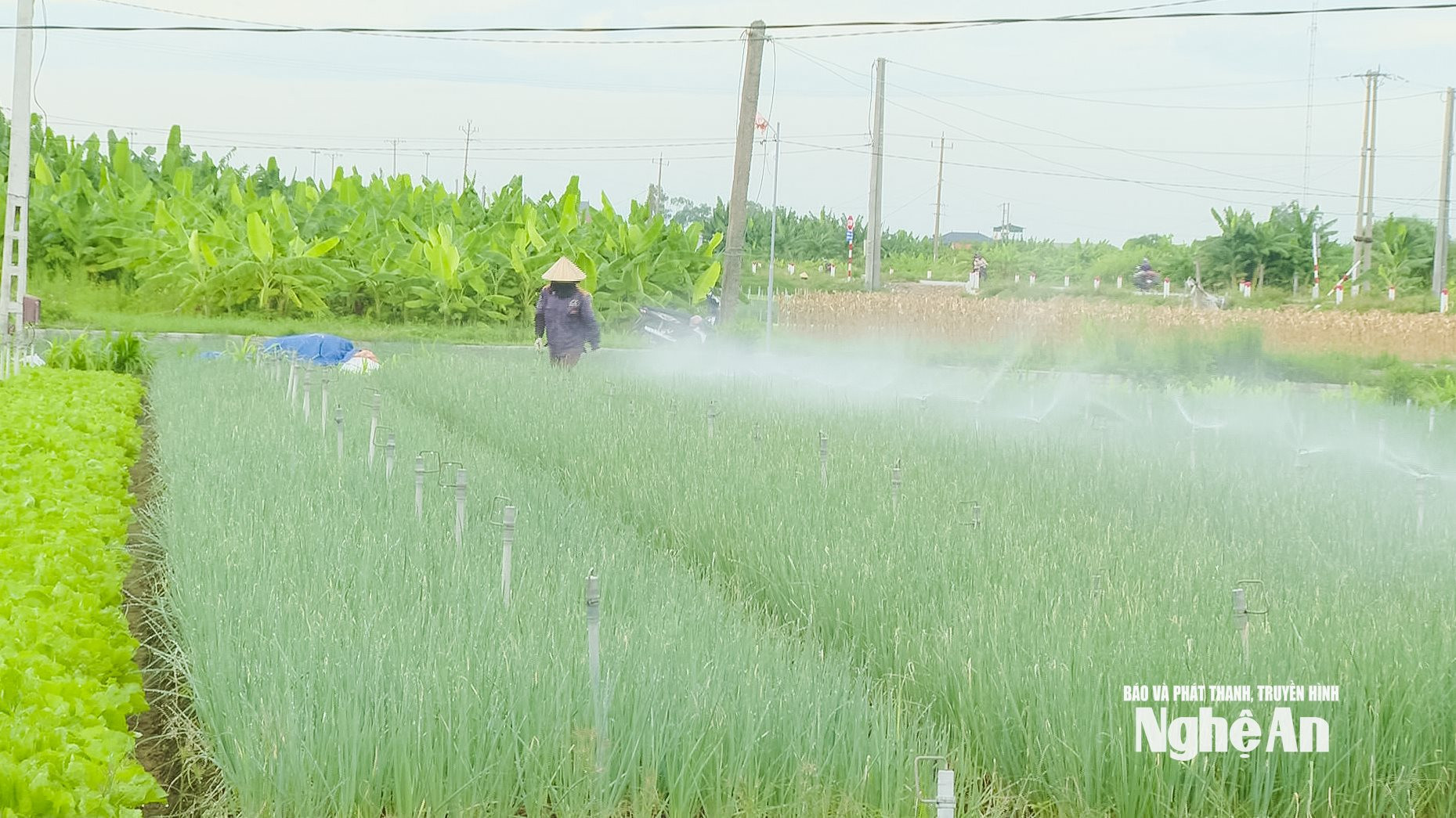
From a resource management perspective, the worrying aspect is not just the increasing number of wells, but the total amount of water extracted daily from thousands of wells operating simultaneously. According to Mr. Nguyen Cong Luc, Head of the Mineral Resources Department of the Nghe An Department of Agriculture and Environment, excessive groundwater extraction can lead to a depletion of groundwater reserves, cause land subsidence, and increase the risk of saltwater intrusion in coastal areas.
In fact, this risk has been identified by Nghe An province for many years. In 2021, the Provincial People's Committee issued Decision No. 1646/QD-UBND approving the List and Map of Restricted Zones and Registered Groundwater Exploitation Zones in the province. Accordingly, the entire province has 1,219 restricted exploitation zones, of which 96 zones are located in coastal areas at risk of salinization, and many areas must be registered for groundwater exploitation to strengthen management.
However, the gap between planning and reality remains quite large. While many areas have been designated with restrictions on groundwater extraction, the number of wells drilled in vegetable-growing regions continues to increase. It's worth noting that the people are not unaware of the consequences of groundwater extraction, but rather they have virtually no other choice.
"We know that drilling many wells will affect groundwater resources, but without water, we can't produce anything," Mr. Chu Van Toan frankly shared.
It is clear that the root cause of groundwater exploitation does not lie in people's awareness, but rather in the lack of alternative water sources.
The bottleneck in irrigation infrastructure.
In many coastal areas of Nghe An province, irrigation systems are primarily invested in to serve rice production. Meanwhile, vegetable crops have a high demand for irrigation water, but the water supply system has not received adequate investment. Ms. Ho Thi Tham's family in Quynh Anh commune has nearly 5 sao (approximately 0.5 hectares) dedicated to vegetable cultivation. The entire area relies on water from drilled and dug wells. "Without well water, it's impossible to grow vegetables," Ms. Tham stated.
According to Mr. Tran Van Tinh from the Economic Department of the People's Committee of Quynh Anh commune, to reduce dependence on groundwater, it is necessary to invest in a canal system to bring surface water to production areas. This is also the wish of many households. In reality, the conversion from rice cultivation to vegetable farming has helped increase production value per unit area. However, if the irrigation infrastructure does not keep pace with this conversion, people will still have to rely on drilled wells to maintain their livelihoods. In other words, to reduce groundwater exploitation, the problem of irrigation water sources must first be solved.
According to Mr. Nguyen Truong Thanh, Head of the Nghe An Irrigation Department, in the coming time, the department will coordinate with localities to review water supply needs in specialized farming areas to develop a plan for investing in irrigation systems. Since the Northern irrigation system was upgraded, the increased water flow from the Do Luong weir will create conditions for expanding the capacity to supply surface water to many production areas, gradually replacing groundwater sources. This is considered a fundamental solution to reduce pressure on groundwater resources in the long term.
However, investing in irrigation infrastructure is a process that requires significant resources and cannot be completed in a short time. Therefore, along with investing in water supply projects, localities need to strengthen the management of groundwater exploitation; control the drilling of new wells in areas with restricted exploitation; and at the same time promote the dissemination of information and guidance to people on water conservation and the application of advanced irrigation methods to improve water use efficiency.
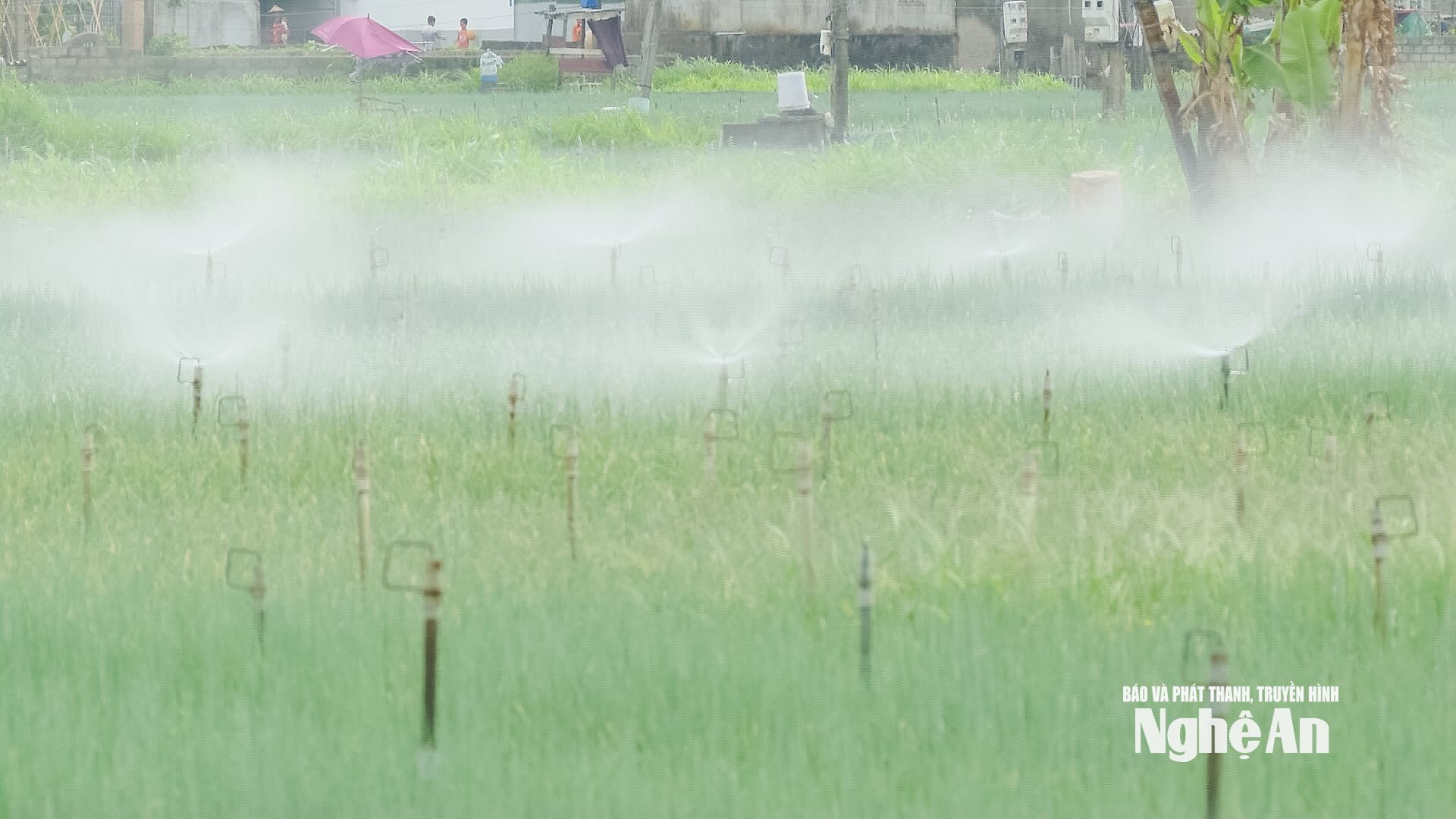
Coastal vegetable fields are creating jobs, increasing income, and contributing to a shift in crop structure towards greater efficiency. However, this development will be difficult to sustain if it continues to depend entirely on the dwindling groundwater resources.
Agricultural development cannot come at the expense of natural resources. Therefore, investing in irrigation systems for dryland crops, gradually replacing groundwater with surface water, and strictly managing groundwater extraction activities are not only short-term solutions but also long-term requirements to ensure the sustainable development of coastal vegetable farming areas in Nghe An province amidst climate change and increasing water demand.


