
ASEAN+3 strives to combat drug trafficking.
Over two days, May 20-21, in Bandung, the capital of West Java province in Indonesia, an international workshop on combating drug trafficking took place, with the participation of representatives from the National Anti-Drug Agencies of the Association of Southeast Asian Nations (ASEAN) and three East Asian partners, including China, South Korea, and Japan (ASEAN+3).
Over two days, May 20-21, in Bandung, the capital of West Java province in Indonesia, an international workshop on combating drug trafficking took place, with the participation of representatives from the National Anti-Drug Agencies of the Association of Southeast Asian Nations (ASEAN) and three East Asian partners, including China, South Korea, and Japan (ASEAN+3).
General Anang Iskandar, head of Indonesia's National Anti-Drug Agency, emphasized that the workshop is one of the activities implemented within the framework of ASEAN and ASEAN+3 cooperation in the common fight against drug trafficking in each country, in the region, and globally, as committed and agreed upon by ASEAN leaders in the "Declaration on a Drug-Free ASEAN by 2015."
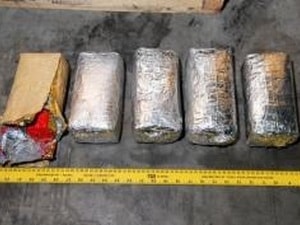
Evidence seized in a drug trafficking case. (Source: AFP)
With only two years left to achieve this significant goal, ASEAN and ASEAN+3 are entering a crucial phase to finalize the terms of reference for the ASEAN+3 Airport Anti-Drug Task Force (AITF).
General Anang Iskandar stated that the workshop focused on discussing, exchanging, and seeking measures to strengthen cooperation and improve the effectiveness of preventing and disrupting the trafficking and transportation of narcotics and drug precursors via air routes at airports between ASEAN+3 countries.
He affirmed Indonesia's strong support and commitment to strengthening ASEAN and ASEAN+3 cooperation in preventing drug trafficking at airports, and in 2012, the Indonesian National Anti-Drug Agency issued a decree on technical operations in the implementation of AIFF tasks. This provides the legal basis and technical guidance for AITF personnel to deal with drug trafficking via air, sea, and land routes, including border crossings.
Speaking at the workshop, Ms. Khine Myat Chit, a senior official from the ASEAN Secretariat, stated that ASEAN established a task force against drug trafficking in 1997, but with the increasing number of dangerous synthetic drugs, strengthening cooperation within ASEAN and between ASEAN and other countries to address this issue is an essential requirement.
A report by the United Nations Office on Drugs and Crime (UNODC) indicates that the threat from drug trafficking, use, and drug money in Indonesia has increased alarmingly, as the archipelago nation has long been used as a key drug transit point for transnational organized crime groups, a destination for trafficking in amphetamine-type stimulants, primarily ecstasy and methamphetamine.
According to (Vietnam+) - DT


