
Australia successfully transplants a stopped-beating heart into a patient.
On October 24, Australian surgeons announced the successful transplantation of hearts that had stopped beating into several patients. This marks only the second time in the world that doctors have performed transplants using "dead hearts," and it could revolutionize the way organs are donated today.
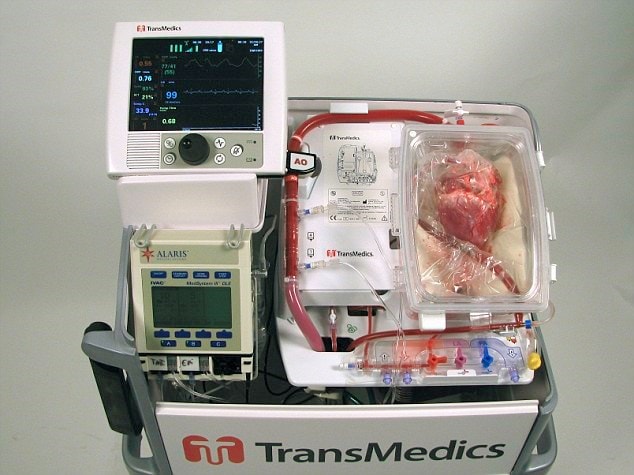 |
| The stopped heart is used for transplantation into patients. Source: Daily Mail |
For a long time, surgeons have only used still-beating hearts from donors to perform heart transplants on patients. To do this, doctors surgically remove the donated heart, place it in a specialized preservation container, and immediately transport it to the recipient's operating room. Transplants are only performed when both the donor and recipient are in the same hospital to avoid the heart stopping before being implanted.
However, St Vincent's Hospital and the Victor Chang Heart Research Institute in Sydney have developed technology that allows hearts that have stopped beating to be "revived" for up to 20 minutes before being transplanted into recipients. Three patients have already received successful heart transplants using this method; two are recovering well, and one is in intensive care following the surgery. All three patients received transplanted hearts from different hospitals, and these hearts continued to beat during the 5-8 hour transport period.
To perform a transplant using this new technology, the donated heart is placed in a special transport box called a "heart in a box." Inside the box is a preservation solution that both keeps the heart warm and maintains its function in a completely sterile environment, minimizing damage from oxygen deprivation after it is removed from the donor's chest. According to Peter MacDonald, Medical Director of the heart transplant unit at St. Vincent's Hospital, the new technology will allow doctors to keep the donated heart alive and transport it to any hospital for transplantation.
According to Bob Graham, director of the Victor Chang Institute, this new technology will allow Australia to increase the number of heart transplants by 20-30% annually. This technology is not only useful in countries where "death" is defined as the cessation of brain activity, like Australia, but also opens up the potential for heart transplants in countries where "death" is defined as the cessation of the heart's beating, such as Japan and others.
According to Vietnam+


