
Harris dodged the question of whether she considered Netanyahu an 'ally'.
US Vice President Kamala Harris declined to answer whether she considered Israeli Prime Minister Benjamin Netanyahu a "close ally," after Netanyahu ignored calls for a ceasefire in Lebanon from the Biden-Harris administration.
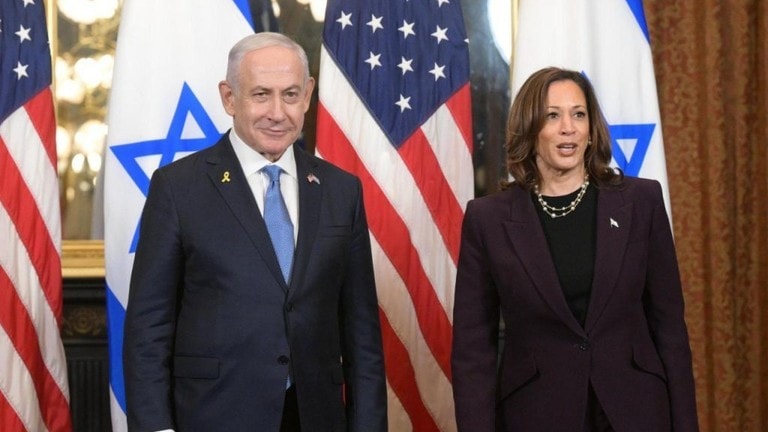
In an interview on CBS News' "60 Minutes" program Sunday night, Harris was asked how the U.S. could provide Israel with billions of dollars in military aid while seemingly having "no influence" over Netanyahu.
After a rambling response in which she asserted that the U.S. had pushed Netanyahu closer to ending the ongoing war in Gaza and Lebanon, Harris was then asked whether the U.S. had "a truly close ally in Prime Minister Netanyahu?".
"I think, with all due respect, a better question is whether we have a vital alliance between the American people and the Israeli people," she replied. "And the answer to that question is yes."
Since Harris replaced President Joe Biden as the Democratic presidential nominee in July, her stance on Israel has drawn criticism from both pro-Israel and pro-Palestinian factions within her own party. Seemingly to appease both sides, Harris declared her support for an independent Palestinian state at the Democratic National Convention in August, before immediately promising to resume supplying weapons and ammunition to Israel.
Netanyahu, who is widely considered a supporter of Donald Trump in the upcoming US presidential election, has spoken with and met with Biden and Harris numerous times since declaring war on Hamas last October. Following these conversations, both Biden and Harris stated that the Israeli leader was moving toward a ceasefire, but Netanyahu returned to Israel and declared he would continue the war.
Most recently, US and other Western officials stated last month that Netanyahu had agreed to a ceasefire proposal put forward by the US and France, but withdrew at the last minute and ordered the assassination of Hezbollah leader Hassan Nasrallah in Beirut. Two days later, he defied US calls to de-escalate tensions by deploying ground troops to Lebanon, and on October 1st, he vowed to make Iran "pay the price" for a missile attack on Israel, despite US officials urging him to avoid any steps that could trigger a wider regional war.
"Whether he's trying to influence the election or not, I don't know," Biden told reporters on October 4. Biden reminded the Israeli leader: "No administration has ever helped Israel more than I have," he said. "And I think (Nemanjaut) should remember that."


