
Beijing ratifies the Paris Agreement on climate change.
(Baonghean.vn) – On September 3rd, the National People's Congress of China ratified the Paris Agreement, which was adopted on December 12th, 2015 at the United Nations COP21 conference on climate change.
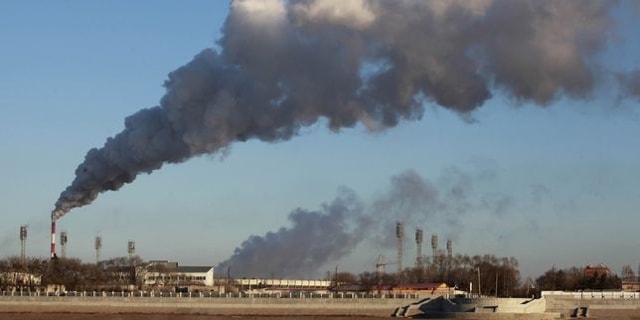 |
| China is currently the world's largest emitter of greenhouse gases. Photo: AFP |
During the closing session of China's bimonthly parliamentary meeting, the bill was presented and passed by the Standing Committee of the National People's Congress.
This can be seen as a major step forward, given that China is the world's largest emitter of greenhouse gases. This figure is estimated at around 24% of the world's total greenhouse gas emissions, more than the US at 17.9%.
The Paris Agreement on climate change is known to come into effect only after being ratified by at least 55 countries representing 55% of greenhouse gas emissions. Once this threshold is reached, the agreement will be implemented within 30 days.
However, currently only 25 countries, representing less than 2% of global emissions, have ratified the Paris Agreement. Given this situation, earlier this week, France, the host country of COP21, expressed concern about the delays in the ratification process.
Previously, on August 25th, the Hong Kong newspaper South China Morning Post revealed that Beijing and Washington planned to issue a joint statement on the ratification of the agreement on September 2nd, two days before the G20 summit in Hangzhou, China. It appears that China has "taken the lead" over the US by announcing its ratification of the agreement before the summit opens.
The Paris Agreement, adopted on December 12, 2015, aims to keep the increase in global average temperature "below 2°C" compared to pre-industrial levels and attempts to limit the increase to 1.5°C. The agreement seeks to lay the groundwork for controlling greenhouse gas emissions by establishing frameworks of political, economic, and financial commitments. It also calls for a rapid energy transition to cleaner energy sources such as solar and wind power.
Chu Thanh
(According to Le Monde)


