
White chrysanthemum treats dizziness and vertigo.
White chrysanthemum is used to treat dizziness, headaches, red eyes, blurred vision, and heaviness on one side of the head… The average dosage per decoction is 6-20g.
White chrysanthemum is also known by other names such as Tiết hoa (Bản kinh), Nữ hoa, Nữ tiết, Nữ hành, Nhật tinh, Cảnh sinh, Truyền diên niên, Âm thành, Chu doanh (Biệt lục), Mẫu cúc, Kim nhị (Bản thảo cương mục)..., scientific name Chrysanthemum morifolium Ramat (Chrysanthemum sinese Sabine), family Asteraceae.
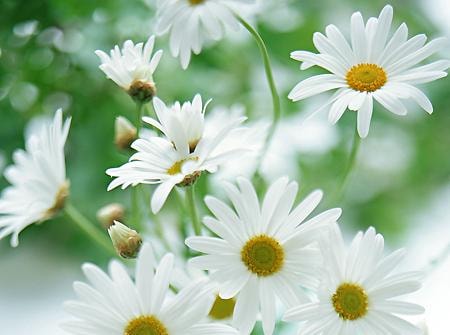
The white chrysanthemum has an erect, smooth, grooved stem. The underside of the leaves is hairy and whiter than the upper side, with 3-5 oval lobes, slightly pointed at the tip, and serrated at the edges. The petiole has auricles at the base. The flower head is large, with outer bracts that are thread-like and covered with white hairs, and inner bracts that are oblong-ovate. Inside the head are 1-2 rows of small, white, tongue-shaped flowers; the central flowers are tubular and pale yellow. There is no hairy crest. The corolla is tubular with glands, 5 lobes, 6 stamens, and short, slanted anthers. The fruit is a nearly oval achene; the flowers are often used to make tea and are rare.
It is usually harvested in autumn or early winter, around September to November each year when the flowers bloom. The entire plant is cut, dried in the cool shade, and then the flowers are picked; sometimes only the flowers are picked and dried or dehydrated at low temperatures. The part used for medicine is the dried flower (Flos Chrysanthemi). The best quality flowers are those that are intact, brightly colored, fragrant, and free from stems, stalks, and leaves. Using fresh flowers is better.
Research results show that it has antibacterial effects such as inhibiting Staphylococcus aureus, Streptococcus, beta-hemolytic bacilli, dysentery bacilli, typhoid bacilli, inhibiting various types of skin fungi, and treating high blood pressure…
Ancient medical texts state that white chrysanthemum has a bitter taste and neutral nature (Bản Kinh), a sweet taste and is non-toxic (Biệt Lục), a bitter yet sweet taste and cold nature (Thang Dịch Bản Thảo). It has a sweet and bitter taste, neutral nature, and is slightly cold (Đông dược học thiết yếu and Lâm sang thường dung Trung dược thủ sách). The medicine acts on the Lung, Spleen, Liver, and Kidney meridians.
This medicine is effective in nourishing the blood and eyes, clearing the mucous membranes, brightening the eyes, dispelling wind, clearing wind-heat, calming the liver, clearing heat, and detoxifying. It is used to treat dizziness, headaches, red eyes, blurred vision, and symptoms of wind-heat in the liver, including heaviness on one side of the head… The average dose per decoction is 6-20g.
However, it should be noted that it should not be used in cases of vaginal discharge, cold stomach, poor appetite, or diarrhea (Bản thảo hội ngôn). It should also not be used in cases of Yang deficiency or headache with fear of cold (Đông dược học thiết yếu). It should not be used in cases of spleen and stomach deficiency with cold symptoms (Lâm sàng thường dụng Trung dược thủ sách).
For your reference and application, here are some therapeutic remedies using white chrysanthemum flowers.
*Treats dizziness, long-term use enhances beauty and prevents aging.:White chrysanthemums are selected on the 9th day of the 9th lunar month. Take 2 pounds of flowers and 1 pound of Poria cocos, grind them into a powder. Take 8g with hot wine three times a day (Thai Thanh Kinh Bao Phuong).
* Treats men and women suffering from chronic headaches that do not improve, dizziness, dry and falling hair, phlegm buildup in the chest, dizziness, blurred vision, and a feeling of wanting to fall during attacks, especially when the weather changes:First, treat the two Fengchi acupoints with 14 strokes, and simultaneously drink 'White Chrysanthemum Wine'. To prepare the wine, in late spring or early summer, take the tender shoots, stems, and flowers of the chrysanthemum, dry them in the shade, and grind them into a powder. Take one spoonful on an empty stomach with wine several times a day, gradually increasing the dosage. If you cannot drink wine, mix it with rice porridge. Alternatively, in August or autumn, pick the flowers, dry them in the shade, wrap 3 pounds in silk, and soak them in 3 measures of wine for 7 days. Drink 3 times a day, until slightly intoxicated (White Chrysanthemum Wine - Tian Bao Prescription).
* Treating pterygium (a membrane covering the eye) after an illness:White chrysanthemum flower, Cicada shell, equal parts, powdered. For each dose, mix 2-12g with a little honey, decoct and drink (Emergency Remedy).
* Treatment for swollen and painful vulva:Crush the young chrysanthemum shoots, boil them to make a decoction for steaming, and use the remaining liquid for washing (The Effective Traditional Medicine Prescription).
* Treats dizziness and vertigoTake 1 pound of white or yellow chrysanthemum flowers and 240g of red pepper (remove the eyes), grind them into a powder, mix with Rehmannia glutinosa decoction, and form into pills the size of a paulownia seed. Take 50 pills with water before bedtime (Song My Hoan - Thuy Truc Duong Experience Prescription).
* Treating eye pain caused by wind-heat:Chrysanthemum, Coptis chinensis, Scutellaria baicalensis, Glycyrrhiza glabra, Rehmannia glutinosa, Mentha arvensis, Cassia obtusifolia, Forsythia suspensa, Platycodon grandiflorus, Bupleurum chinense, Ligusticum chuanxiong, Notopterygium incisum, Euphorbia pekinensis (Chinese Pharmacopoeia Dictionary).
* Treatment of boils and abscesses with pus:160g of white chrysanthemum flowers, 20g of licorice root, decocted and drunk (Clinical Handbook of Commonly Used Traditional Chinese Medicines).
According to Agriculture - NT



;)