
The Unforgettable Song
(Baonghean)During the resistance war against the American imperialists, many sons and daughters of Anh Son volunteered to join the army, fighting bravely to defend the Fatherland. Some sacrificed their lives and youth, while others perished on the battlefield… They contributed to the nation's ultimate victory. Nearly 40 years have passed since the war ended, but the heroic memories remain vivid in the hearts of these veterans…
A glorious moment
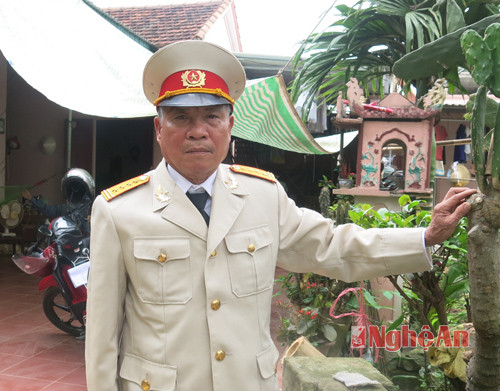
After finishing 10th grade in August 1971, 18-year-old Nguyen Dinh Vinh (Hamlet 3, Lang Son) enlisted in the army at K14, Regiment 22A, Military Region 4. After a period of training, in 1972, he and his unit went south to fight. He was transferred to Battalion 2, Regiment 48, Division 320B to carry out the mission of capturing and liberating Quang Tri province. In 1973, he was sent to study at the Army Officer School I. In early 1975, he was assigned to work at Regiment 66, Division 304 of the 2nd Army Corps. During the Spring Offensive and Uprising of 1975, he and the corps participated in the liberation campaigns of Hue and Da Nang. As he recounted the historic Ho Chi Minh Campaign, he couldn't hide his emotion: After successfully capturing and defending the Son Tra Peninsula in Da Nang, at 9:00 AM on April 7, 1975, he and his unit received orders to rapidly advance southward.
During the march, his unit had to stop and capture and destroy enemy forces at many locations such as: Ong Que rubber plantation (Dong Nai), Long Binh General Warehouse, Nuoc Trong Base, Xa Lo Bridge… shattering the enemy's last line of defense and advancing straight into Saigon's inner city to liberate Saigon - Gia Dinh. From April 24 to 29, 1975, imbued with the guiding ideology of the Campaign Command "Rapid, bold, decisive victory," the battles of the campaign from all directions of attack were carried out urgently. On the morning of April 30, when the Corps issued the order to attack, he and the soldiers of Regiment 113, Division 304, in coordination with Brigade 203, deployed a breakthrough formation across the Saigon Bridge, crushing the enemy forces protecting the bridge and advancing straight into Saigon's inner city. The roar of tanks mingled with the deafening engines of hundreds of other armored vehicles speeding forward, causing the enemy to panic, throw down their weapons, and flee in disarray. Also on the morning of April 30, 1975, upon receiving the Politburo's directive, the military regions, corps, and units continued their rapid advance on designated targets, calling on the enemy to surrender…
 |
The moment he heard the Saigon radio announce that the Saigon government had requested a ceasefire, he and all the officers and soldiers at that time understood that the hour of complete victory had arrived and resolved to quickly advance into the Independence Palace and capture all the government leaders. A convoy of tanks and armored vehicles of the 2nd Army Corps advanced to the gates of the Independence Palace. At 11:30 AM, tanks 843 and 390 rammed into the gates of the Independence Palace, at the same time that the 66th Regiment, led by Pham Xuan The, along with a number of officers and soldiers in the assault force, entered the Independence Palace and captured President Duong Van Minh, who then went to the radio station to declare his surrender.
With over 30 years in the military, he held various positions, excelling in every role and receiving numerous medals and commendations. In 2003, he retired with the rank of colonel. Returning to his hometown, he became an exemplary veteran, enthusiastically participating in local activities, his noble qualities as a soldier of Uncle Ho's army serving as an example for future generations to follow.
The lightning-fast commando soldier
We visited Colonel Nguyen Dinh Quy (Hamlet 2, Thach Son) on a sunny April afternoon. He emotionally recounted to us the days he and the soldiers of the regiment participated in the historic Ho Chi Minh Campaign to liberate the South and unify the country: “In April 1975, Regiment 113 received orders to attack the Di An Sub-district (Thu Duc), the Hoc Ba Thuc Mechanized Regiment, to destroy the eastern end of Bien Hoa airport and to destroy the Ghenh Bridge - one of the vital bridges leading to Saigon.”
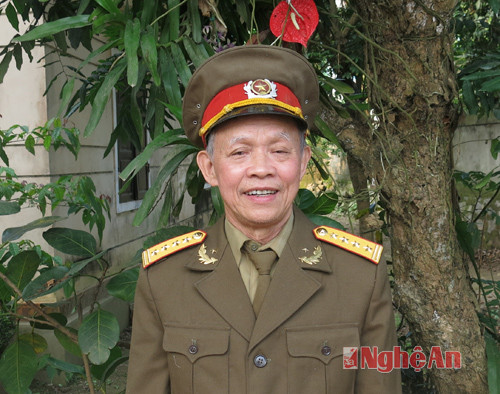 |
He himself was tasked with commanding a battalion and firepower forces to capture the tank base at Hoc Ba Thuc, holding the vital bridges into Saigon in the final days of the Ho Chi Minh Campaign, creating conditions for the five rapid-propelled army units to advance and liberate Saigon, striking directly at the enemy's headquarters.
The mission of "attacking, capturing, and holding" the bridges was truly arduous for him and his soldiers at that time. To complete the mission, the special forces soldiers had to eliminate all enemy troops on the bridges at night quickly and efficiently. Facing fierce enemy resistance, many soldiers of the 113th Special Forces Regiment bravely sacrificed their lives, successfully protecting dozens of bridges leading to Saigon. On April 30, 1975, the troops poured into the inner city of Saigon to liberate the South. The historic day of complete victory had arrived; the final moments of the campaign had come, but the blood of many special forces soldiers was still shed to ensure the bridges remained secure, so that the tank tracks, the will, and the combined strength of our five army units could march across the bridges, swiftly advancing to liberate Saigon, contributing to the great victory of the nation.
In the joyous atmosphere of the complete victory 39 years ago, he and his fellow soldiers contributed their small part to that historic victory. The old soldier emotionally shared: “I enlisted in 1963, when I was 18 years old. By 1975, participating in the historic Ho Chi Minh Campaign, I was already a 30-year-old young man. For me, the historic Ho Chi Minh Campaign will forever remain an unforgettable and heroic memory…”
A time of clinging to the river and sleeping in bunkers.
In 1969, at the age of 21, Mr. Nguyen Thanh Tung (Hamlet 3, Lang Son) volunteered to join the army. He was assigned to K18, Regiment 101, Division 325. After serving in various combat units, in 1973, he was transferred to Unit 232, Division 8, Military Region 8, stationed in the Dong Thap Muoi region. Recalling the heroic historical days of the Spring Offensive of 1975, the former soldier who clung to the river and slept in bunkers was deeply moved: During the Ho Chi Minh Campaign to liberate the South, his division was tasked with cutting Highway 4 from Saigon to Can Tho, destroying the Long Dinh bridge (Cai Lay district), My Tho province… blocking the enemy's 4th Corps troops from Dong Thap and Can Tho from reinforcing Saigon and vice versa. When the order for the general offensive on Saigon was given, in his role as company political commissar, he and his soldiers captured enemy forts and outposts, seized the Long Dinh sub-district, destroyed bridges and culverts blocking Highway 4, and surrounded and isolated Saigon. This created favorable conditions for our troops from all directions to attack the enemy's last stronghold in Saigon. In this campaign, many of his comrades bravely sacrificed their lives, and many others were seriously wounded.
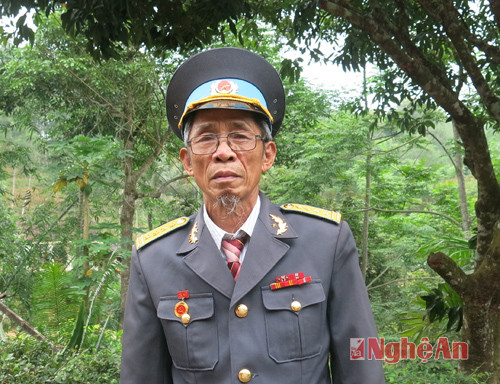 |
For a moment, the old colonel's voice slowed, his eyes welling up with tears: "On April 30th, when we heard the news that the South had been liberated, the emotions were indescribable. My comrades and I were overjoyed and ecstatic with the victory, then wept bitterly thinking of our comrades who had fallen on the battlefield to achieve that historic moment." The most memorable image from those historic April days for Mr. Tung was that of the people of the South rushing out onto both sides of the road, cheering and supplying food to the liberation army. Although he did not directly participate in the liberation of Saigon, he considered himself fortunate to have contributed a small part to the cause of liberating the South and unifying the country, participating in the historic Ho Chi Minh Campaign.
In the memories of the soldiers, April 30th is an unforgettable historical moment. Because to achieve that resounding victory, they sacrificed their youth and blood, fighting wholeheartedly for the Fatherland, for "National Independence and Unification." For them, it is an "Unforgettable Song": "The song I sang, the song I sang / For my homeland, for my friends, for my whole life"...
Diep Anh
Anh Son District Party Committee


