

Solution from the Department of Agriculture and Rural Development
Despite clarifying existing shortcomings and violations, the Department of Agriculture and Rural Development's report No. 249/BC-SNN.KL dated June 7, 2024, assesses that wood chipping activities in the province have positive aspects. These include significant economic and social benefits such as consuming a large portion of the raw timber from planted forests in the province; supplying raw materials to wood processing industries; creating more jobs for people involved in the harvesting, transportation, and processing of planted forest timber; promoting the movement of planting raw material forests, gradually improving the lives and incomes of forest planters, and contributing to the socio-economic stability and national defense and security of rural and mountainous areas. Furthermore, it maximizes the utilization of wood products (branches, scraps after the production of veneer, laminated wood, etc.); generating considerable economic resources and contributing to the overall development of the province.

According to the Department of Agriculture and Rural Development, the reasons for the existence of these facilities stem from the province's over 228,435 hectares of planted forests, the majority of which are acacia plantations. The wood processing and chipping facilities are built and operate within the province due to the local demand for a large supply of acacia wood raw materials from households, individuals involved in forest planting, and state-owned forest owners. Furthermore, the facilities are located near acacia growing areas, facilitating harvesting and transportation, minimizing costs, and thus increasing the price of raw wood; providing employment, income, and improved living standards for workers and forest planters.
Furthermore, the legal awareness of some business owners, especially household businesses, remains limited. They have borrowed capital and mortgaged assets to invest heavily in building wood chipping facilities without completing the necessary procedures. Local authorities, in some districts and communes, have not strictly fulfilled their responsibilities in state management; they have failed to promptly inspect, detect, and prevent violations as soon as they arise, allowing some organizations and individuals to invest heavily in building wood chipping facilities on agricultural and forestry land. The process of inspecting and handling violations has not been thorough or decisive, leading to situations where inspected business owners do not comply, or only partially comply, with penalty decisions, causing public dissatisfaction.

Assessing the positive aspects and identifying the causes of existing limitations, the Department of Agriculture and Rural Development recommends that the Provincial People's Committee direct relevant departments, agencies, the Southeast Economic Zone Management Board, and the People's Committees of districts and towns to strengthen state management and implement specific solutions. Of particular note is the recommendation that the Provincial People's Committee direct the Department of Planning and Investment to take the lead and coordinate with other departments and agencies to advise the Provincial People's Committee on documents approving investment policies, approving adjustments to investment policies, approving investors, and approving investment policies and investors for projects related to forest product processing, especially wood chip processing.
For the People's Committees of districts and towns with wood chipping facilities, it is recommended to strengthen state management in all areas; regularly conduct inspections to detect, prevent, correct, and promptly and decisively handle/advise on handling violations by wood processing and chipping facilities in accordance with the law; absolutely not allow violations to persist, causing difficulties in handling. It is requested that they monitor and urge facilities that have been fined for administrative violations to comply with the penalty decisions; verify and enforce compliance in cases that meet the conditions for enforcement.

At the same time, wood chipping facilities are required to fully and strictly comply with all legal regulations. They should review their operations to promptly supplement and complete any missing documents and procedures to ensure their production and business activities comply with the law. Simultaneously, they should coordinate with local authorities and competent agencies to address and remedy the consequences of any violations that have been identified.
We need to sound the alarm!
Because Mr. Nguyen Tien Lam, the Standing Vice Chairman of the Provincial Association of Wood Processing and Non-Timber Forest Products, was formerly the Deputy Director of the Department of Agriculture and Rural Development, we requested clarification on some of the points raised in Document No. 05/HHCBG&LS dated July 20, 2023.
According to Mr. Nguyen Tien Lam, the contribution of the forestry sector to the province's economic development has not changed much, and is even showing signs of stagnation. Regarding the Association's proposal to the Provincial People's Committee, it is not intended to hinder or create difficulties for organizations and individuals wishing to organize production and business in the wood industry. The reason is that the Enterprise Law does not state that the wood industry is a conditional business sector. Mr. Lam said: "The Association's intention is not to propose that the Provincial People's Committee prohibit the organization of the wood industry, but rather that wood production must comply with the Enterprise Law, meaning it must be registered. And the conditions for business registration include having land, human resources, machinery, etc. Businesses wanting to operate in the wood industry must work with the Department of Planning and Investment to obtain a business establishment license according to regulations. However, currently in the province, there are some organizations and units that have not registered for business licenses and have not fulfilled their obligations according to regulations. The Wood Association's intention is to address this issue."

Following Mr. Nguyen Tien Lam's exchange, the question was raised: Why did the Association cite the conclusion from 2011, with an implementation period until 2015, stating "no investment in the construction of new cassava, pulp, and wood chipping processing plants," to propose that the Provincial People's Committee implement it? This conclusion may not necessarily be relevant to the current state of forestry economic development. Surprisingly, Mr. Nguyen Tien Lam acknowledged that Conclusion No. 02 - KL/TU dated May 13, 2011, is no longer appropriate in the current period. Mr. Lam replied: "Conclusion No. 02 was appropriate at the time, but now it needs to be reviewed and amended because the Law on Enterprises does not prohibit wood chipping activities. The Department of Agriculture and Rural Development has proposed amending this document several times, but it has not been amended, so it must be implemented. It's unacceptable to not strictly enforce a document that is still in effect..."
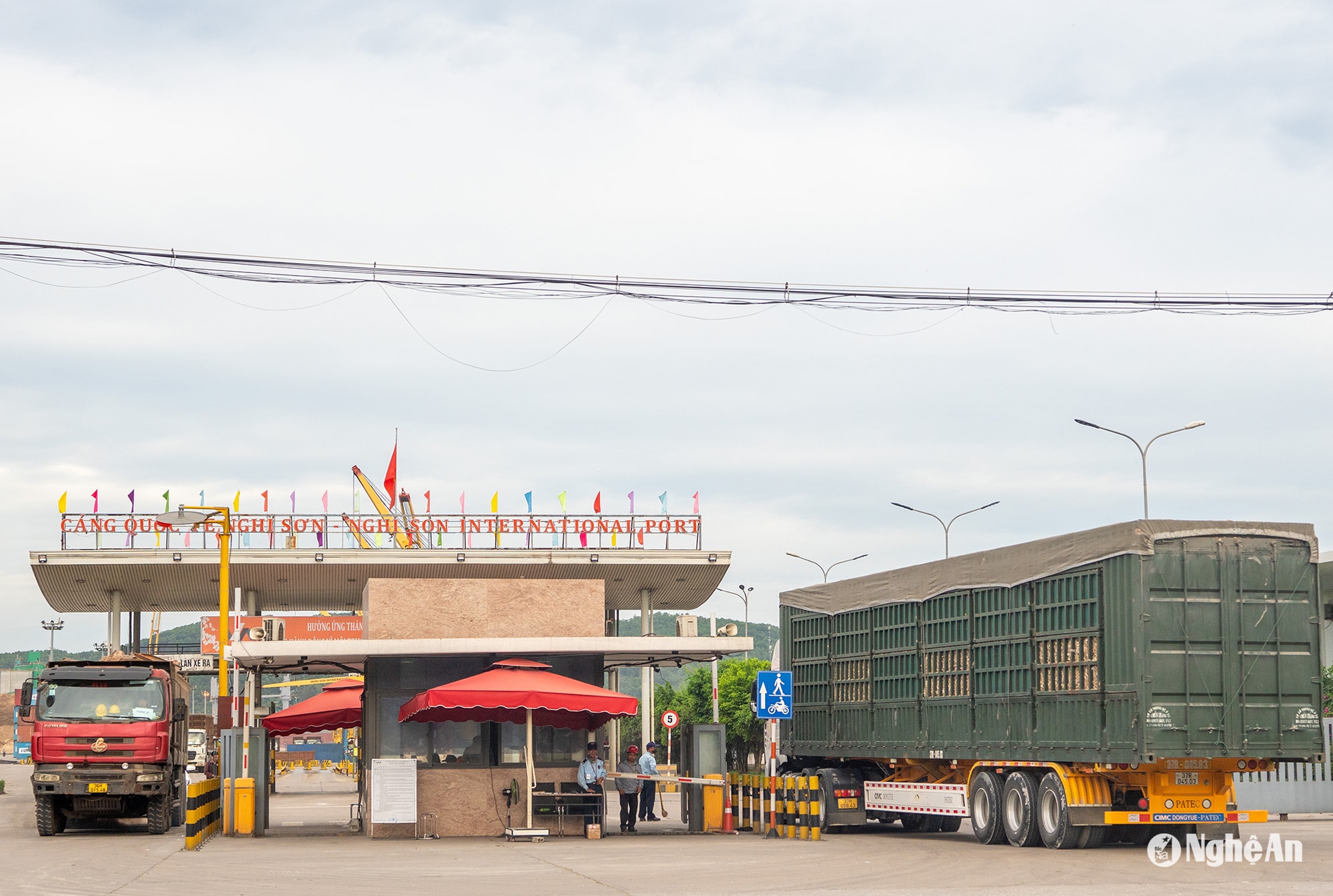
Citing observations in the Bai Tranh area and Nghi Son port of Thanh Hoa province, concerns were raised about solutions to utilize the province's abundant acacia wood resources as export products, thereby avoiding waste and increasing revenue for the budget. According to Mr. Nguyen Tien Lam, the primary responsibility for this lies with the Department of Industry and Trade. The Standing Vice Chairman of the Provincial Association of Wood Processing and Non-Timber Forest Products, Mr. Nguyen Tien Lam, stated: “The Department of Industry and Trade must answer this question for the Provincial People's Committee. Because the Department of Industry and Trade manages processing, the number of factories must be balanced with the Department of Planning and Investment. A warning bell needs to be sounded to let the Provincial People's Committee know about this matter. Without a comprehensive solution, especially a comprehensive policy, the problem will not be solved…”
"We need to sound the alarm to let the Provincial People's Committee know about this matter. Without a comprehensive solution, especially a comprehensive policy, the problem will not be solved..."
Mr. Nguyen Tien Lam


***
According to statistics from the Department of Agriculture and Rural Development, with a total planted forest area of 228,435 hectares, mostly acacia, the province has 45 wood processing enterprises, 98 enterprises producing non-timber forest products, and 3 biomass pellet factories. Export value in 2023 reached US$270.25 million, with a growth rate of 6.67% in forestry production value. While these figures may seem impressive to some, our recent survey reveals that the number of enterprises capable of consuming raw acacia wood in the province is very small. This is a major reason why the forestry sector has not yet made a contribution commensurate with its position as a locality with the largest forest area in the country.
According to Mr. Nguyen Danh Hung, Deputy Director of the Department of Agriculture and Rural Development, the demand for plantation forest products in Nghe An is very high. Therefore, the Department has advised on planning suitable raw material production areas to ensure production development. Simultaneously, it has advised on numerous documents and provided opinions on many forest product processing and production projects in the area, prioritizing projects involving deep processing and the production of high-value products. Agreeing with this discussion, as well as some of the solutions proposed by the Department of Agriculture and Rural Development in Report No. 249/BC-SNN.KL dated June 7, 2024, Mr. Nguyen Tien Lam, Standing Vice Chairman of the Provincial Association of Wood and Non-Timber Forest Products Processing, stated that a warning bell needs to be sounded. This issue requires due attention, and not only from the Department of Agriculture and Rural Development!



