
Bai Dinh, Ninh Binh: The journey to the 100m-high pagoda.
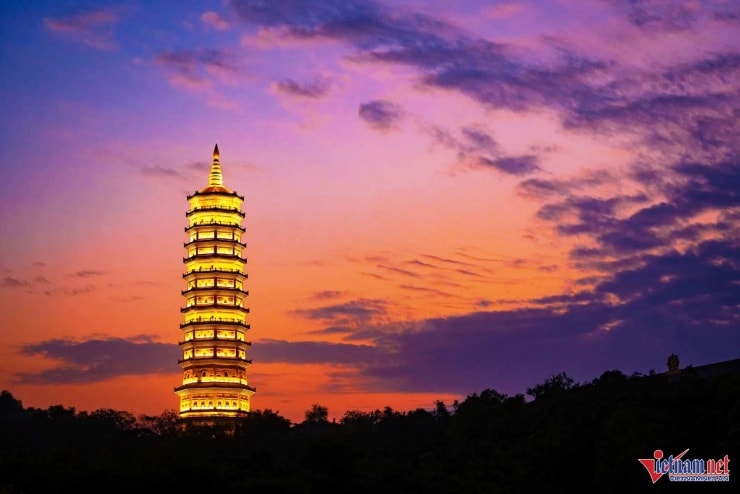
The Bao Thien Pagoda in the Bai Dinh Pagoda complex is 100m high, with 13 floors, and is recognized as the tallest pagoda in Asia. It is also the resting place of relics of Buddha Shakyamuni brought from India, Thailand, and Myanmar.
Amidst the Bai Dinh Pagoda complex in Ninh Binh, the Bao Thien Pagoda soars 100 meters high with 13 stories, recognized as the tallest pagoda in Asia. This is where the relics of Buddha Shakyamuni (ashes) brought from India, Thailand, and Myanmar are enshrined, offering a Bai Dinh trip a unique opportunity for both worship and panoramic views of the Trang An landscape from above.

Bao Thien Tower – the tallest landmark in the Bai Dinh complex.
The Bao Thien Pagoda, located within the Bai Dinh Pagoda complex, is built on a hexagonal base with a circumference of 24m, a height of 100m, and 13 floors. It has been recognized by the World Records Association (WRA) and the Asia Book of Records as the tallest pagoda in Asia.
The tower is made of reinforced concrete, with the exterior clad in Bat Trang fired bricks featuring decorative patterns in the artistic style of the Ly Dynasty. Traditional Buddhist architecture blended with ancient motifs creates a structure that is both imposing and deeply rooted in Vietnamese culture.
Outside the pagoda, along all six sides are hundreds of small stone Buddha statues arranged evenly from base to top, making each side of the pagoda appear as a continuous stream of statues reaching towards the sky. When illuminated, the entire pagoda becomes radiant amidst the temple complex, creating a landmark easily recognizable from afar.
Floor 1: space for venerating Buddha Shakyamuni
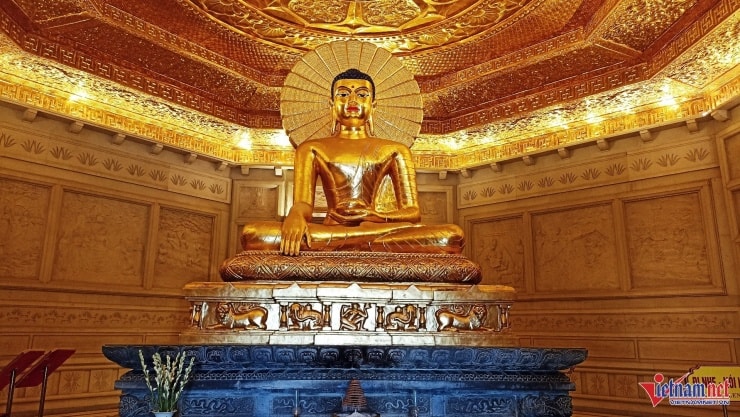
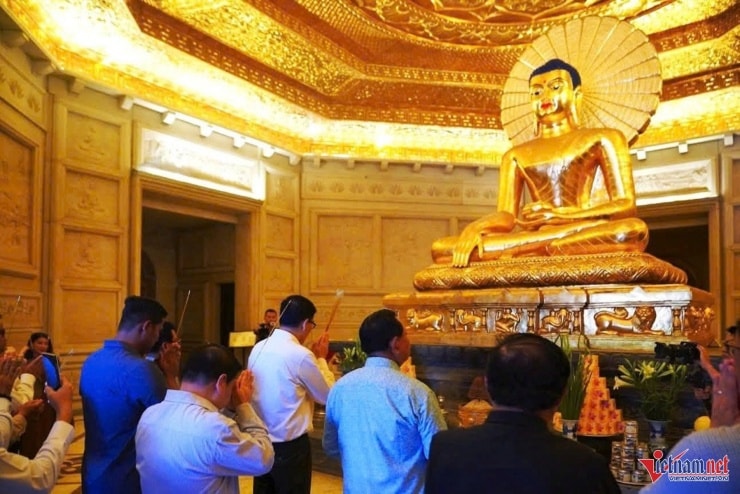
The first floor of the tower houses a solid bronze statue of Shakyamuni Buddha, gilded with gold, in the mudra of touching the earth – symbolizing "touching the earth" or "calling the earth as witness." Upon entering, the golden glow from the statue creates a sense of solemnity and tranquility.
Surrounding the worship space are reliefs vividly depicting the life of the Buddha, from his birth to his enlightenment and death. Familiar stories from the scriptures appear on the walls, following one another as pilgrims take a tour around the worship area.
Climb the 500 steps to the top of the tower.
To reach the top floor of the Bao Thien Tower, visitors can choose to climb the 500 steps or use the elevator located inside the tower from the second floor. Each step upwards is a step away from the ground, gradually separating the surrounding space from the noisy sounds.
Along the way, each level has its own worship space with a system of gold-plated Buddha statues. Stopping at each level to admire the statues and architecture transforms the journey from simply climbing a physical peak into a process of inner reflection.

Level 13: the meeting place of heaven and earth and the relics of the Buddha.
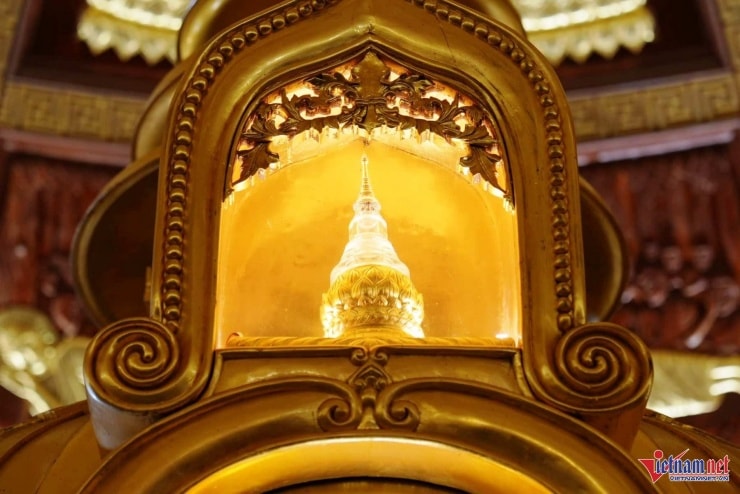
The 13th floor is considered the meeting point and intersection of heaven and earth, the most serene space of the pagoda. Here are the precious relics of Buddha Shakyamuni, brought from India, Thailand, and Myanmar to Bai Dinh Pagoda for worship and veneration.
According to representatives of Bai Dinh Pagoda, at the center of the 13th floor is a small stupa, above which are eight smaller stupas containing relics of the Buddha. These relics vary in size: some are as small as a pea, others are only the size of a grain of sand, but all are said to be extremely hard, "unbreakable, incinerate, and undissolvable in water." This phenomenon has yet to be fully explained or verified by science.
In Buddhist teachings, relics symbolize wisdom and enlightenment, sacred artifacts that guide people towards spiritual life and moral cultivation. Standing before the small stupas containing relics, the tranquil atmosphere of the 13th floor intensifies the feeling of reverence.

Dome ceilings, reliefs, and the imprint of Indian and Vietnamese artisans.
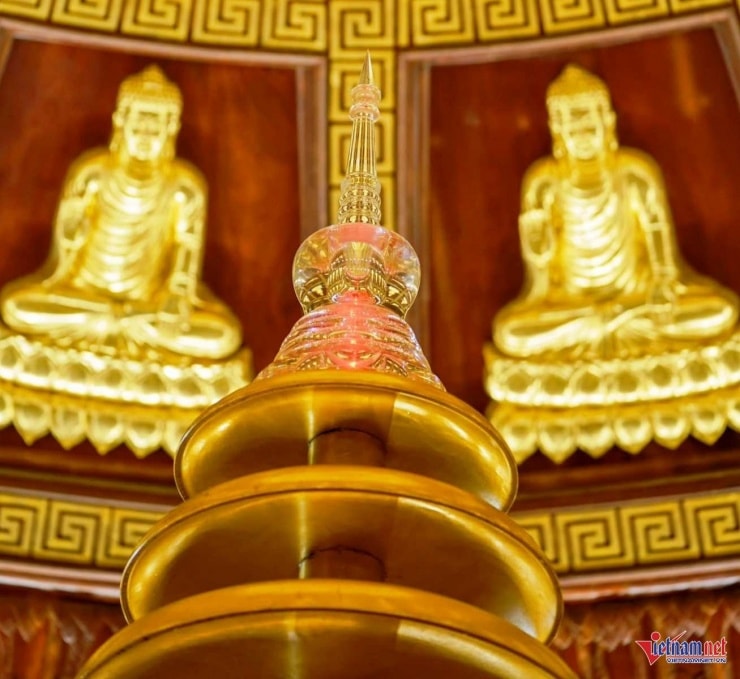
The 13th floor is decorated with a vaulted ceiling system that evokes the sky in Buddhist philosophy. Looking up, the focal point is the lotus flower with its seed and pistil, signifying "cause and effect." Surrounding it are 13 Buddhas guiding beings in the first circle, 13 Buddhas in Nirvana in the second circle, followed by lotus petals, fiery cradles, gourds, and cranes, creating a space that is both sacred and rich in symbolism.
The ceiling of the pagoda also features mystical Indian-style details, with images of Buddha, lotus flowers, and mythical birds attached to the wooden walls. These carvings give those standing beneath the vaulted ceiling the feeling of looking at a large mural that covers the entire space.
The interior walls of the stupa are sculpted by Indian artisans into bas-reliefs depicting the life of Buddha. Completing such a large-scale project required the efforts of hundreds of Indian sculptors along with skilled local architects and artisans, creating a fusion of international and local craftsmanship.

A pilgrimage destination and panoramic view of Trang An.
The Bao Thien Tower is not only notable for its architecture and religious significance, but also a pilgrimage site that attracts a large number of Buddhists and tourists every year when visiting Bai Dinh Pagoda. From the base to the top, the worship space, Buddha statues, and layers of reliefs make the visit a constant experience of reverence.
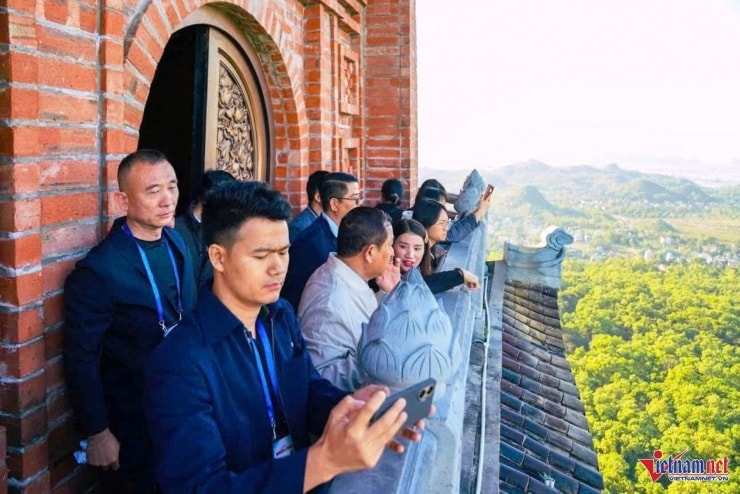
Standing on the 12th floor of the pagoda, visitors can admire the panoramic view of the Bai Dinh Pagoda complex and gaze upon the majestic Trang An landscape from above. The expansive view outside contrasts with the tranquility inside the pagoda, creating a complete experience: both introspective and expansive, overlooking mountain ranges and waterways stretching to the horizon.
Climbing the steps, admiring the intricate carvings, pausing before the Buddha's relics, or gazing out at Trang An from the high vantage point, the journey to Bao Thien Tower is a deeply spiritual experience in Ninh Binh.


