
A remedy for heatstroke.
Dizziness, lightheadedness, and unsteadiness are symptoms of heatstroke. In severe cases, the patient may faint.
Heatstroke is a common illness in the summer, particularly affecting people who work outdoors without protective clothing, and those who travel long distances by train or car. The heat, thirst, and excessive sweating lead to fluid depletion and electrolyte imbalance.
Symptoms of heatstroke include: dizziness, lightheadedness, nausea or vomiting, extreme fatigue, shallow breathing, rapid heartbeat, and lower-than-normal blood pressure. In severe cases, the patient may faint. The principle of treatment is to restore the body's vital energy, strengthen the body's defenses, relieve heatstroke, and supplement the body with essential vitamins and micronutrients.
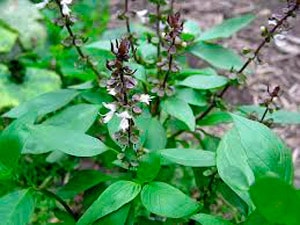
Basil
Here are some remedies:
Recipe 1: Astragalus membranaceus 16g, Atractylodes macrocephala 14g, Phaseolus vulgaris 16g, Ocimum basilicum 14g, Cynomorium songaricum 16g, Acanthopanax senticosus 16g, Panax pseudoginseng 16g, Panax notoginseng 16g, Cinnamomum cassia bark 8g, Zingiber officinale 6g, Glycyrrhiza glabra 12g. Decoction: Drink one dose per day, divided into 3-4 portions. If the illness is severe and immediate action is needed, boil the herbs briefly, then pour out small amounts at a time for the patient to drink gradually (drink while decocting).
Formula 2: 10g ginseng, 16g Dillenia root, 16g Pueraria root, 16g Atractylodes rhizome, 16g oyster shell, 16g Cornus fruit, 16g Dioscorea root, 12g Schisandra fruit, 16g Astragalus root, 8g cinnamon bark, 6g fresh ginger, 16g mulberry leaves, 12g licorice root, 12g Cynomorium stem. Decoction: Drink one dose per day, divided into 3-4 portions. Uses: Restores Yang energy and strengthens the exterior, relieves sunstroke. This formula is for patients with superficial deficiency, loose pores, and open skin. Ginseng and astragalus root tonify Qi; cinnamon and ginger tonify Yang energy; Pueraria root, Phaseolus vulgaris, and mulberry leaves stop sweating and prevent Yang energy loss.
Recipe 3: Atractylodes macrocephala 16g, Poria cocos 12g, Codonopsis pilosula 16g, Astragalus membranaceus 16g, Ostrea gigas 16g, Cornus officinalis 16g, Cynomorium songaricum 12g, Schisandra chinensis 12g, Cinnamomum cassia bark 6g, Aconitum carmichaelii 6g, Phaseolus vulgaris 16g, Glycyrrhiza glabra 12g, Zingiber officinale 6g, Ziziphus jujuba 10g, Pueraria lobata 10g, Morus alba leaves 16g. Decoction: Drink one dose per day, divided into three portions.
For nausea, epigastric fullness and discomfort, and general malaise: Pinellia ternata 8g, Magnolia officinalis 10g, Achyranthes bidentata 14g.
For anxiety and rapid heartbeat: Salvia miltiorrhiza 16g, Panax notoginseng 10g, and Stephania tetrandra root 12g.
For joint pain and stiffness: 16g of Kê huyết đằng (a type of vine), 10g of Đỗ trọng (another type of herb).
In addition, some dishes should be combined to enhance nutrition and support treatment:
Chicken porridge with black pepper and ginger: 1 young chicken, 100g white rice, black pepper, fresh ginger, scallions, fish sauce, salt, lime, and chili to taste. Clean the chicken, remove the internal organs, and wash the rice. Put the rice and chicken in a pot, add enough water, and simmer until it becomes porridge. Roast the black pepper until cooked and grind it into powder. When the porridge is cooked, add the seasoning, fresh ginger, black pepper, scallions, lime, and chili. Uses: Chicken porridge is highly nutritious; fresh ginger and black pepper are yang herbs that restore yang energy, strengthen the spleen and stomach, provide energy to the body, reduce sweating, consolidate the surface, and regulate the internal and external functions.
Sea bean, lotus seed, and chicken gizzard porridge: 20g sea beans, 20g lotus seeds, 2 chicken gizzards, 80g rice, seasoning to taste. Soak sea beans and lotus seeds in hot water for about 2 hours. Clean the chicken gizzards and rinse the rice. Put all ingredients into a pot, add enough water, and cook until tender. Season to taste. In this recipe, sea beans and lotus seeds strengthen the body, relieve heat, and have astringent and yang-boosting effects. Chicken gizzards nourish the spleen and middle burner, replenishing vital energy. This dish is very good for cases of heatstroke, vomiting, shallow breathing, fatigue, rapid heartbeat, dizziness, etc.
According to traditional medicine practitioner Trinh Van Sy - Health & Life - nt


