
Eggplant cake with a pot of green tea
(Baonghean) - When I was in school, around the 26th or 27th of the twelfth lunar month, schools would give students time off for Tet (Lunar New Year). My sisters and I...
(Baonghean) - When I was in school, around the 26th or 27th of the twelfth lunar month, schools would give students time off for Tet (Lunar New Year). My sisters and I would be taken back to our hometown by our parents to help our maternal grandparents prepare for Tet. There was decorating the house, going to the market, wrapping banh chung and banh tay (traditional rice cakes), cooking meat... so much cooking to do. On Tet day, everything was available, but for me, the most memorable thing was the plate of banh ca (rice cakes) and the pot of green tea that my grandmother served to guests.
In my hometown, we call it "bánh cà" (eggplant cake) because it's round and about the size of the eggplant we have back home. Some places call it "bánh nhãn" (longan cake) because it also resembles a longan fruit. Every year during Tet (Lunar New Year), my grandmother would place a plate of bánh cà alongside a pot of fragrant green tea on the guest table. She said this type of cake is suitable for both young and old. Made from glutinous rice flour, chicken eggs, fresh ginger juice, white sugar, and cooking oil, it's very nutritious. In the chill of late winter and early spring, eating a few crispy, fragrant, and rich cakes, then sipping a warm, slightly bitter cup of green tea, gradually dissolving the sweetness on the tongue, makes one feel truly warm inside.
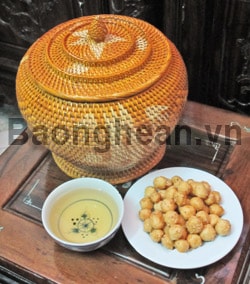
My grandmother's tea was a clear, refreshing green, with a slightly bitter and astringent taste. She said that when brewing tea, you have to choose fresh green leaves, not old ones, because the tea won't be fragrant when brewed; if the leaves are too young, the tea will be bland. My grandmother's rice cakes had a unique flavor because she added the fragrant and spicy taste of ginger. Making rice cakes wasn't as simple as I thought. To prevent the cakes from cracking or burning when fried, and to ensure they puffed up evenly, the glutinous rice flour had to be finely ground. The kneading process was an art. My grandmother didn't knead the flour with water; instead, she beat the eggs until smooth, then added the flour and kneaded it into a smooth, pliable mixture. She then shaped it into small, round, pretty balls, like marbles. It took such meticulous work to ensure the fried cakes were beautiful and uniform. My grandmother's rice cakes were always perfectly round, while mine were unevenly sized. She said you couldn't be careless or rush, otherwise customers would think you were clumsy. To ensure the dough balls are thoroughly cooked inside and golden brown outside, wait until the oil in the pan is boiling before adding the dough balls. The oil must completely cover the dough balls, and the heat should be even. Once the dough balls are evenly cooked, remove them and let them cool before coating them with sugar. Before coating, my grandmother would crush fresh ginger and extract a little juice. When the sugar melted, she would add the ginger juice and stir until the syrup became thick and runny. Then she would add the dough balls and stir quickly. When the sugar coating evenly covered the outside of the dough balls, creating a glossy, golden-brown crust, she would drain them in a basket and let them cool before eating.
My grandmother's eggplant cakes were also very impressive to the children in my village. Every time she made them, they would flock to try the first batches, each one exclaiming how delicious they were. At those times, she would smile, looking so kind and happy. And the neighbors, during the New Year's festivities, would sip green tea while enjoying her eggplant cakes, all nodding in approval and praising her skillful hands...
Text and photos: Le Hoa


