
Ensuring healthcare services during the Lunar New Year of the Horse 2014
On January 10th, the Ministry of Health issued Directive No. 01/CT-BYT to the leaders of Departments, Bureaus, the Ministry's Office, the Ministry's Inspectorate, General Departments, heads of units directly under the Ministry, Directors of Provincial and City Health Departments, and health units of various sectors regarding ensuring healthcare services during the Lunar New Year (Year of the Horse) 2014.
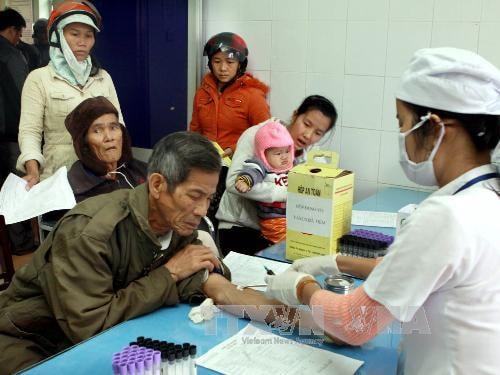 |
| Illustrative image. (Source: VNA) |
The Department of Preventive Medicine directs localities to strengthen disease prevention and control, especially against influenza A(H7N9) and influenza A(H5N1), hand, foot and mouth disease, dengue fever, etc., which are at risk of outbreaks during the winter-spring season, especially during the Lunar New Year and festival seasons.
In addition, it is necessary to strengthen epidemiological surveillance at the commune, district, and border gate levels to detect and promptly handle the first cases of the disease, preventing its spread and outbreaks; and to communicate the risks of disease prevention and control so that people can proactively prevent and control the disease and avoid panic and anxiety.
The Departments of Health, Centers for Preventive Medicine, and Centers for International Health Quarantine in provinces and centrally-administered cities shall develop and implement plans to strengthen the monitoring, early detection, and timely handling of infectious disease cases.
For localities with international border gates, it is necessary to strictly check incoming travelers from areas with outbreaks or areas with previous outbreaks to detect, isolate, and promptly handle suspected cases of infectious diseases, preventing the disease from entering and spreading in Vietnam.
Quarantine agencies work closely with specialized agencies in inspecting and monitoring imported poultry, animals, and food transported across borders.
The Food Safety Department directs and guides localities to strengthen food safety assurance, prevent food poisoning and foodborne diseases in their areas of management; and to organize a standing team ready to investigate, handle, and mitigate the consequences when food poisoning incidents occur.
The Department of Medical Examination and Treatment Management developed and submitted to the Ministry's leadership for approval a plan to establish inspection teams to visit hospitals during the Lunar New Year holiday of the Year of the Horse 2014.
Central hospitals and hospitals assigned to provide guidance to lower-level facilities must ensure 24/7 on-call duty, paying attention to personnel and resources to promptly handle emergency cases transferred from lower-level facilities, and be ready to provide timely technical support to lower-level facilities when requested.
The Departments of Health in provinces and centrally-administered cities are directing hospitals to operate 24/7, ensuring sufficient personnel, medicines, equipment, and facilities to promptly handle emergency cases such as traffic accidents and childbirth during the Tet holiday. Hospitals are not allowed to refuse or delay treatment in emergency situations.
Even if a patient is admitted to a hospital outside their designated referral pathway or specialty, initial emergency treatment must still be provided. Only after the critical phase has passed should the patient be transferred to a medical facility appropriate to their level of care.
Healthcare facilities must have contingency plans in place, stockpiling essential medicines, intravenous fluids, supplies, and chemicals, and allocate sufficient hospital beds and available emergency equipment to be ready to respond when an outbreak occurs. They must also ensure effective patient admission, emergency care, treatment, and isolation in accordance with current guidelines on epidemic prevention and control.
The Drug Administration directs hospitals and pharmaceutical companies in provinces and centrally-administered cities (including state-owned enterprises and state-owned enterprises after privatization) to develop and implement plans for stockpiling medicines for disease prevention and treatment to ensure sufficient supply of quality medicines at reasonable prices; and to prevent sudden or widespread price increases.
Emphasis should be placed on ensuring the availability of sufficient medicines when required for emergency response or disease prevention and control, especially for hand, foot and mouth disease, dengue fever, influenza, etc.
According to VNA


