
Alarming increase in child abuse in the world's safest country.
The murder of a Vietnamese girl with ligature marks on her neck and genital wounds has once again raised alarm about pedophilia in Japan.
According to Nippon News, crimes targeting children under 13 decreased between 2004 and 2012, but this trend reversed in 2013, with 26,939 reported cases, a significant increase compared to 2014.
Tragic cases
The case of 9-year-old Le Thi Nhat L., a Vietnamese national, in Chiba Prefecture has shocked public opinion in Japan. The tragic end of a young life has once again led the public to question whether society has done enough to protect children and combat crimes against them.
Prior to the case involving child L., Japanese public opinion had been repeatedly outraged by cases of child abuse with tragic consequences.
In late 2004, the body of a 7-year-old girl who had been reported missing in Nara Prefecture was discovered. A 36-year-old journalist was accused of kidnapping, sexually abusing, and drowning her in a bathtub. The perpetrator was later executed.
2014 saw a series of child rape cases. On January 27th, a third-grade girl in Sapporo, Hokkaido, was abducted by a 26-year-old unemployed man and held captive in his apartment for a week.
 |
| A father whose child was kidnapped and murdered speaks to the press in 2004. Photo: Jiji. |
In September 2014, the case of Ikuta Mirei, a first-grade student in Kobe City, shocked Japanese society. She disappeared on September 11th, and just days later, her dismembered body parts, contained in plastic bags, were found dumped in a forest near her home.
Subsequent DNA testing confirmed the body was that of the 6-year-old girl. The perpetrator, a 47-year-old man, was arrested and convicted of murder.
Many incidents in Chiba
A few days before the Kobe incident, a seventh-grade girl in Yachimata, Chiba Prefecture, was kidnapped on her way home from school. The perpetrator was a 25-year-old unemployed man. He forced the girl into his car and drove her to a place near Tomisato. Fortunately, the victim managed to escape, and even more fortunately, she remembered the license plate number of the kidnapper, allowing the police to arrest him. The police discovered that he intended to kidnap, detain, and sexually assault the young girl.
In a similar incident on July 14, 2014, a fifth-grade girl in Kurashiki, Okayama Prefecture, was kidnapped after school. Four days later, police arrested a 49-year-old unemployed man and charged him with holding an 11-year-old hostage at his home. Police were able to quickly solve the kidnapping thanks to a suspicious license plate number the victim's mother saw near the scene, as well as GPS signals from the girl's cell phone.
In the Nara case, child pornography and children's underwear found at the attacker's residence indicated that he suffered from pedophilia, which was the cause of the crime.
Experts are concerned about the potential consequences of easy internet access to a large amount of child pornography.
Another reason is that in Japan, producing and distributing child pornography is a crime, but possessing such materials is not. Recently, new regulations have been introduced stating that possessing such materials in any form is punishable by up to one year in prison and a fine of up to 1 million yen (approximately 200 million Vietnamese dong).
Child abuse is on the rise mysteriously.
Japan is often considered somewhat unusual compared to other countries. Its economic success, distinct culture, and high level of discipline have made Japan unique and one of the countries with the lowest crime rates in the world.
Japan has a population of 127 million, yet street crime is virtually nonexistent. Its murder rate is lower than even in smaller countries like Monaco and Palau, and drug use is among the lowest of any industrialized nation.
However, according to Nationmaster, this is also a carefully maintained image that overlooks many darker aspects of Japanese society. The superficial image of Japan often fails to take into account societal attitudes towards women in a male-dominated culture.
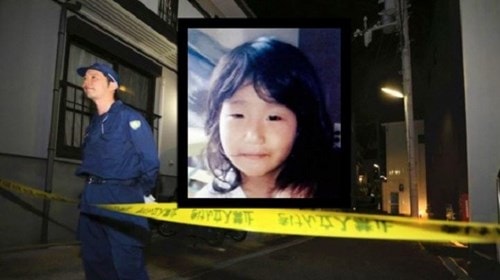 |
| Ikuta Mirei, a first-grade student, was kidnapped and murdered in Kobe. Photo: AsiaonlineNews. |
While violent assault crimes are considered rare, sexual assaults are believed to be common and serious, yet often go unreported.
The existence of chikan (sexual predators) is a major problem, evidenced by the "women-only" train cars in large cities. Japanese police have also been criticized for not taking victims of sexual crimes seriously: they are either biased or incapable of investigating such crimes.
The most dangerous aspect stems from a police culture obsessed with keeping crime statistics low. Former investigators have stated that police are unwilling to investigate murders unless there is a clear suspect and often implicitly assume unnatural deaths are suicides without conducting autopsies.
Coincidentally, Japan has the highest suicide rate in the world!
According to Kienthuc.net.vn


