
Alarming situation regarding the indiscriminate dumping of plastic into the ocean.
(Baonghean) - According to a recent scientific report, researchers estimate that without preventative measures, the amount of household waste and plastic released into the environment could increase tenfold in the next decade.
In the journal Science, published on Friday, February 13th, scientists pointed out that countries are the main contributors to ocean pollution through plastic products. Biologist Jenna Jambeck of the University of Georgia in Athens, USA, and her colleagues estimate that approximately 192 coastal countries worldwide release around 275 million tons of plastic waste into the environment, with 8 million tons dumped into the oceans in 2010 alone. According to Jenna, the amount of waste dumped into the oceans is increasing annually, and at this rate, it will reach approximately 9.1 million tons by 2015.
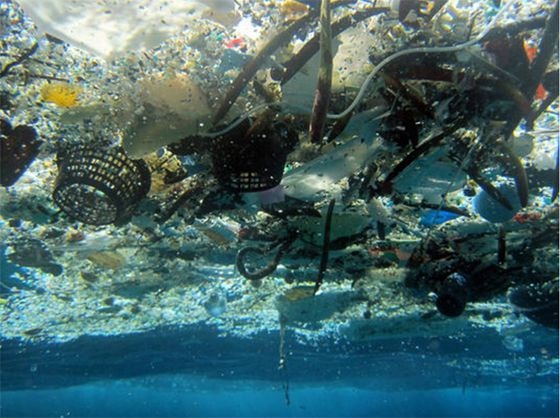 |
| Plastic waste is becoming increasingly common in the oceans. Photo: AP |
According to a report by researchers, the country contributing the most to marine pollution in the world is China. In 2010 alone, China discharged nearly 2.8 million tons of plastic products into the ocean. Following closely behind are a number of Asian countries such as the Philippines, Vietnam, and Sri Lanka. Notably, the United States is also among the top 20 countries contributing to marine pollution. Meanwhile, no member of the European Union is on this list.
Richard Thompson of Plymouth University, England, hopes the research team's report will be a revolutionary product for addressing the issue of ocean littering in a new context. During their ocean surveys, Jenna Jambeck and her colleagues observed trash everywhere. By comparing data on the amount of waste released each year and waste treatment methods, the researchers were able to estimate the amount of plastic released into the oceans. Accordingly, if waste treatment systems in countries do not improve, or if the amount of plastic waste does not decrease, the amount of plastic waste dumped into the oceans could reach 80 million tons by 2025.
This is not the first time researchers have presented alarming figures about the amount of plastic waste dumped into the ocean by humans. A study published in the summer of 2014 by biologist Andrés Cózar of the University of Cadiz reported that between 7,000 and 35,000 tons of plastic had been found in all the oceans. Another study published in December 2014 indicated that approximately 269,000 tons of plastic were floating in the sea. Although both studies presented different figures, they both showed an alarming situation regarding the amount of plastic waste in the oceans.
Notably, researchers discovered numerous pieces of plastic measuring approximately 1 mm, roughly the same size as plankton in many oceans. Other scientific reports indicate an increasing number of fish species ingesting microplastic particles. According to Richard Thompson's calculations, around 700 species of marine life, including fish, shellfish, and snails, have been and are being contaminated by these microplastic particles. Thompson stated: “Researchers have found small amounts of microplastic particles in many marine organisms. Currently, no health effects have been found, but this is clearly a warning for the future.”
Chu Thanh
(According to LeMonde, February 13)


