
Health insurance - easing the financial burden for people with HIV.
(Baonghean) - From August 15th, Circular No. 15/2015/TT-BYT officially came into effect, meaning that people living with HIV who have health insurance will have their medication and related services covered when they receive medical examination and treatment. This is good news for people living with HIV nationwide, as the medications and medical services provided to them by aid projects are about to end.
We were present at the HIV counseling and medication dispensing clinic at the Tropical Diseases Center, Nghe An Friendship General Hospital on the afternoon of September 1st. Many HIV-infected patients were there to register for examinations, treatment, and receive ARV medication. Mr. Nguyen Quang T, a patient from Vinh City, shared that he learned he was infected in 2001 after reckless behavior. In 2006, he was one of the first to receive ARV medication. Thanks to the medication and regular free medical check-ups and testing, his health is quite good. Furthermore, due to his enthusiasm in helping others in similar situations, he was hired by the project as a staff member with a monthly allowance and participated in training courses to improve his skills and knowledge about the disease. Since then, he has become a special counselor at the clinic, ready to answer questions and help infected individuals with treatment and prevention of transmission.
Upon receiving the news on August 15, 2015, that medications and related medical services would be covered by the Health Insurance Fund, he and everyone else were delighted: “As a project staff member, I am well aware of the timeline for the completion of aid projects. In Nghe An, by 2017, people infected with HIV will no longer receive free treatment as they do now, so the fact that insurance will cover medication for HIV patients is truly welcome news. Those infected will have a solid support system and no longer have to worry…”
Sharing the same sentiment, Mr. H.H.H.H., from Quynh Luu district, a family member of an HIV-infected patient being treated at the Tropical Diseases Center, shared that the Health Insurance Fund's coverage of medication for HIV-infected patients will greatly reduce the burden on families like his. ARV medication and other related tests must be maintained monthly and regularly. When the project ends, poor families will not be able to afford the medication. "My child has had health insurance for a long time and will continue to do so in the future. This new regulation makes my family feel much more secure," Mr. H. said.
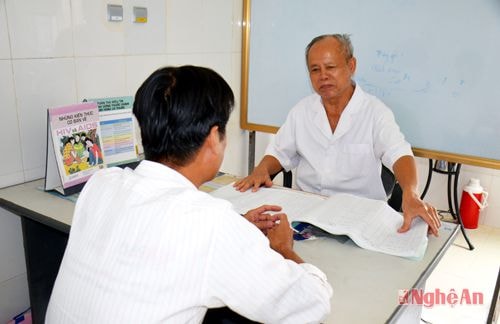 |
| Providing HIV treatment counseling to patients at the Center for Tropical Diseases, Provincial Friendship General Hospital. |
For a long time, ARV drugs and healthcare services for people living with HIV have been completely free of charge, funded by projects and non-governmental organizations such as the Global Fund, PEPFAR, the World Bank, VAAC-US.CDC, etc. Currently, many of these free healthcare services for people living with HIV have been reduced. According to the plan, by April 2016, projects will stop accepting new patients for ARV treatment from these funding sources, and in 2017, the projects will end, and people undergoing HIV treatment will no longer receive free drugs and healthcare services.
According to Dr. Hoang Van Nham, former Director of the Provincial Preventive Medicine Center and currently a consultant for the Vietnam AIDS Prevention and Control Support Project (VAAC-US.CDC), the new health insurance regulations are truly a "lifesaver" for HIV-infected patients. HIV-infected individuals not only need ARV medication and regular testing services but also face the risk of opportunistic infections and are highly susceptible to other diseases. If the Health Insurance Fund does not cover ARV medication and other testing services, patients cannot afford them. In that case, the interruption of ARV treatment would make further treatment very difficult...
The main content of Circular 15 stipulates that people living with HIV who have health insurance will have their HIV/AIDS-related services covered by the Health Insurance Fund when receiving medical examination and treatment, including: reimbursement for medications (including ARV drugs), chemicals, medical supplies, and technical services within the fund's coverage; reimbursement for HIV testing for pregnant women and those giving birth as required by medical professionals if not covered by other funding sources; reimbursement for abortion procedures for pregnant women infected with HIV; reimbursement for medical examinations; HIV testing; ARV drugs and other HIV/AIDS examination and treatment services for children born to mothers infected with HIV.
According to Dr. Trinh Hung Tien, Deputy Director of the Provincial HIV/AIDS Prevention and Control Center, there are currently over 5,000 people living with HIV in Nghe An province, of which more than 3,000 are receiving treatment. These individuals are regularly examined, monitored, and provided with medication at clinics located in local health centers: Vinh City, Hung Nguyen, Dien Chau, Thai Hoa Town, Que Phong, Quy Chau, Tuong Duong, Do Luong, and Nghe An Children's Hospital, as well as prisons No. 3 and No. 6, and the Provincial Friendship General Hospital. The clinic at the Tropical Diseases Center of the Provincial Friendship General Hospital has the highest number of patients, with 1,180 people regularly visiting for examinations, consultations, and ARV medication.
At other clinics, hundreds of patients visit monthly for consultations, testing, and free medication. When these projects end, HIV-infected patients in Nghe An will no longer receive free medication and other medical services. Without this support, treatment and risk reduction will undoubtedly face significant difficulties, leading to unforeseen social consequences. Therefore, advising and encouraging HIV-infected individuals to purchase annual health insurance is the most urgent task at this time. The majority of HIV-infected individuals are poor, drug addicts, and lack stable and sustainable livelihoods. Maintaining ARV medication and monthly medical services is a real burden. Furthermore, HIV-infected individuals are highly susceptible to other diseases due to their weakened immune systems.
For a long time, some HIV-infected patients have disregarded health insurance cards because they receive free medication; others remain hesitant and apprehensive about participating in health insurance for fear of having their identities publicly disclosed. Furthermore, the requirement to purchase voluntary health insurance on a household basis also creates difficulties for HIV-infected patients who are already very poor. On the other hand, some worry that having a health insurance card will necessitate mandatory examinations, treatments, and testing at designated facilities, causing further difficulties for HIV-infected individuals, as the entire province currently only has about 10 outpatient clinics specializing in examinations, treatment, and ARV medication...
Addressing patients' concerns and anxieties, Dr. Le Thi Hoa stated that health insurance cards are equally available to all individuals, with no specific card reserved for HIV-infected patients. There is no need to declare HIV information, thus maintaining the confidentiality of the patient's identity. Current regulations under the Insurance Law also facilitate the purchase of family health insurance, moving towards universal health insurance. Furthermore, implementing the integrated health insurance system means that all HIV-infected patients covered by insurance can receive examinations, treatment, and medication at all medical facilities authorized to treat HIV patients, allowing patients to proactively choose clinics and medical facilities according to their preferences. “During examinations and consultations, we always advise patients to purchase health insurance because for a cost of over 600,000 VND per year, patients will benefit greatly, even saving tens of millions of VND on ARV medication, testing, and hospitalization each year. This is also the most sustainable support for HIV-infected patients when other projects expire,” Dr. Le Thi Hoa advised.
Nguyen Khoa
| RELATED NEWS |
|---|


