
Indian elections - Prime Minister Modi's party remains 'invincible'
(Baonghean) - The 17th Indian Parliament elections have finally concluded after more than a month and seven rounds of voting. Although the official results will not be announced until May 23rd, opinion polls indicate no surprises, and Prime Minister Narendra Modi's Bharatiya Janata Party (BJP) is expected to repeat its five-year success.
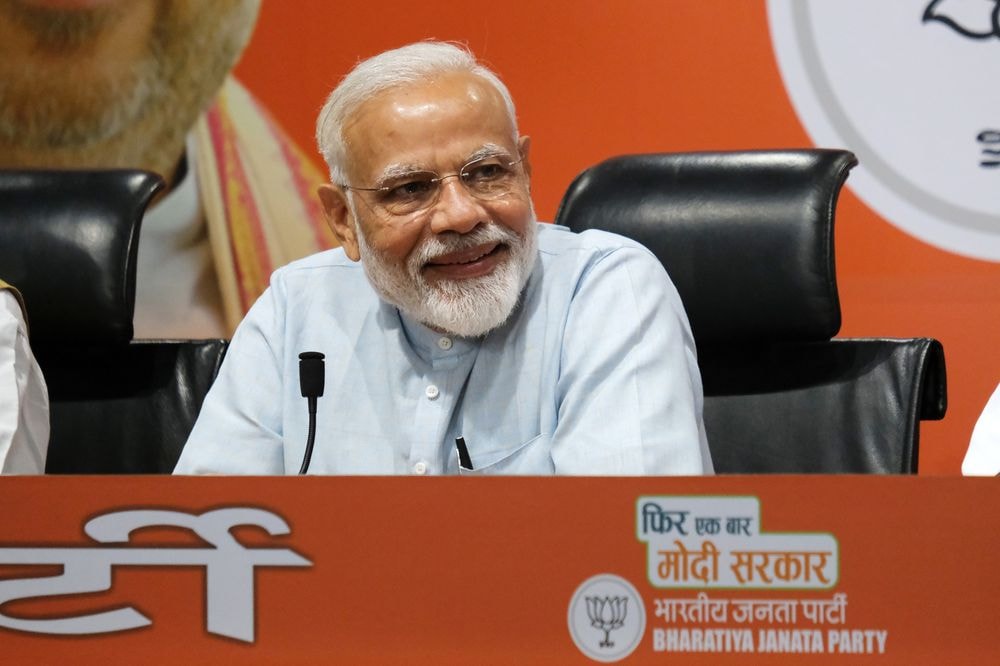 |
| Prime Minister Narendra Modi's BJP party is projected to win overwhelmingly in the House of Representatives elections (Bloomberg). |
Narendra Modi's "fortress"
From the outset, the Indian parliamentary elections were seen as a "test" for Prime Minister Narendra Modi, as the ruling National Democratic Alliance, led by the Bharatiya Janata Party (BJP), faced fierce competition from the opposition United Progressive Alliance, led by the Congress Party.
In this election, approximately 900 million Indian voters will elect 543 parliamentary seats. The political party or coalition that wins at least 272 seats will have the right to form a government. Exit polls after the completion of seven election phases predicted an overwhelming victory for the BJP, with the party expected to win between 282 and 306 seats – exceeding the minimum number needed to form a government by at least 10 seats. Meanwhile, the Congress Party is expected to win between 118 and 142 seats.
Thus, the BJP party, under the leadership of Prime Minister Narendra Modi, has once again "re-established its glory" after its resounding victory in the 2014 elections. This is also considered a personal victory for Narendra Modi over Congress Party leader Rahul Gandhi – the fourth generation of the Gandhi family who led India for five decades.
Analysts believe that Prime Minister Narendra Modi's clean personal image and decisive policies during his first term earned him the trust of Indian voters. His most significant achievement was his 2016 effort to eliminate "black money"—illegal funds used in corruption—at a time when India was experiencing widespread public outrage following the uncovering of numerous corruption cases.
Economically, over the past five years, the Indian economy has achieved an average growth rate of 7.3%, becoming the 6th largest economy in the world. Notably, Prime Minister Narendra Modi has strongly promoted the "Make in India" initiative to strengthen the capacity of manufacturing industries, while attracting foreign direct investment and retaining domestic labor.
This initiative has created a huge buzz, giving India a new position in the global market and is often compared to China's "Made in China" plan. In fact, India has come to be seen as the world's "second factory" after China.
In the World Bank's ranking of countries improving their business performance, India has made significant progress, climbing from 142nd to 77th place in the past four years. Therefore, by voting for the BJP party, Indian voters also want to give Prime Minister Narendra Modi more time to implement his unfinished reform policies.
The "security" card
Although India has achieved many domestic and foreign successes during Prime Minister Narendra Modi's first five-year term, there are still some "grey areas" that leave voters not entirely satisfied, most notably the high unemployment rate and the lack of improvement in incomes for people in rural areas.
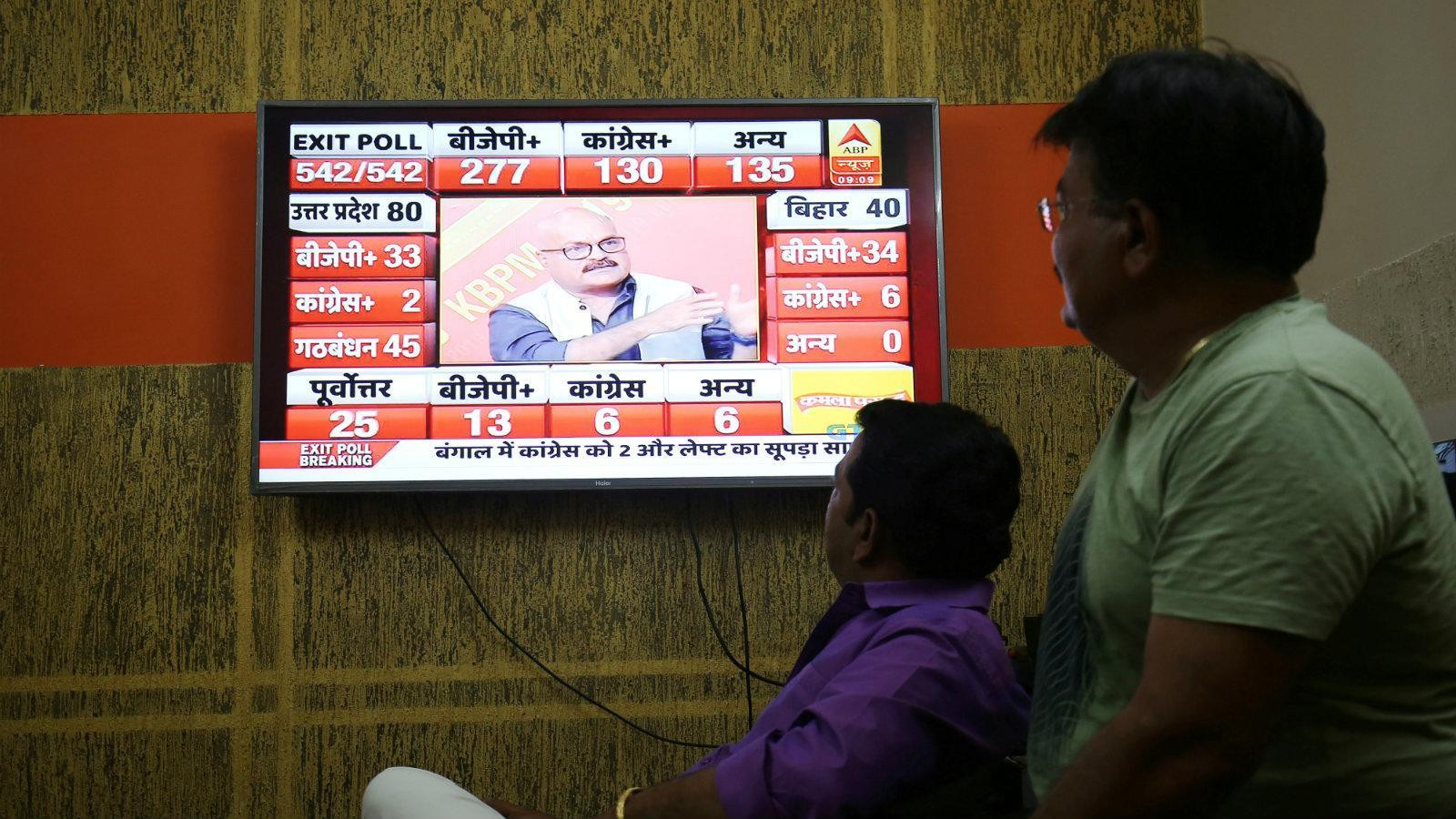 |
| Indian citizens follow updates on election results. Photo: India Times |
Despite India's annual GDP growth remaining above 7%, the country is still struggling to provide jobs for the 1 million young people entering the labor market each month. Economists estimate that India needs to achieve economic growth of 8.5-10% per year to meet the demand for employment.
Data released by the Centre for Monitoring Indian Economic Data shows that the unemployment rate in India rose to 7.2% in February. Between mid-2016 and 2018, at least 5 million Indians lost their jobs, with urban youth being the hardest hit. Meanwhile, statistics show that Indian farmers' incomes last year fell to their lowest level in 18 years. This is why, during the election campaign, the Congress Party focused on the government's poor economic management and inability to create jobs to attract voters.
However, Narendra Modi's campaign team was shrewd in making strategic shifts during the campaign.
While in 2014 the BJP focused primarily on addressing unemployment, this time that goal has been relegated to a secondary position. Instead, the BJP has prioritized two other priorities: national security and counter-terrorism. The attack in Kashmir, just before the elections, which killed 40 Indian soldiers, helped build voter confidence in Prime Minister Narendra Modi and the BJP's commitments to counter-terrorism and national security, igniting patriotic fervor in this nation of 1.3 billion people.
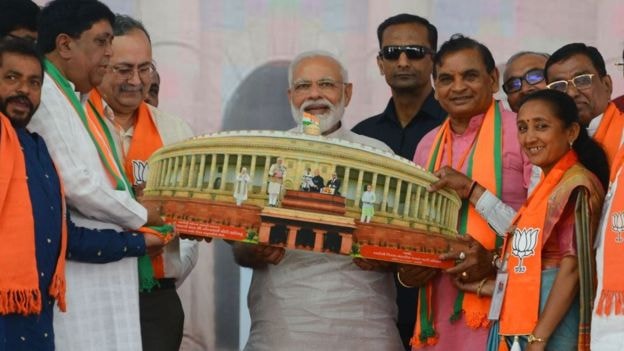 |
| The election is seen as a test for Narendra Modi personally. Photo: Getty |
Polls show that, following the clash with Pakistan, Narendra Modi's approval rating is significantly higher than that of his rivals. Many Indian voters say they voted for Narendra Modi for the first time simply because they liked how he handled the situation with Pakistan after the attack that killed 40 Indian soldiers.
But beyond exploiting voters' anxieties about the territorial dispute in Kashmir with Pakistan, Modi's campaign team had meticulously prepared a focus on "security" throughout the campaign period with a series of moves such as signing a contract to purchase Rafale fighter jets from France, and earlier this year, buying nearly 500 armored vehicles from Russia, including nearly $2 billion to equip them with new T-90MS tanks. And as if to "add icing to the cake," just two weeks before the election, Modi solemnly announced to the Indian nation the successful shooting down of a satellite in low Earth orbit, placing India on the list of space powers.
Analysts believe that Prime Minister Narendra Modi's personal prestige and government policies over the past five years will help him and the BJP party remain in power for another five years, carrying with them the people's expectations of transforming India into a major economic and military power, establishing its position as a leading nation in the region and the world.


