
Tips for driving cars and motorbikes through flooded areas.
Maintaining a steady speed, accurately assessing the water level, and shifting to a lower gear are key things to remember when driving through flooded areas.
Driving in stormy weather conditions, especially on heavily flooded roads like those in Hanoi on the evening of August 26th, always presents dangers: reduced visibility, slippery roads, ineffective braking, loss of control, vehicles getting submerged, and unpredictable situations.
To avoid these dangers, you need to understand the basics and maintain your vehicle in good working condition.
Here are some ways to prevent or deal with cars and motorcycles that have been submerged in water.
With cars
When driving through flooded areas, maintain a high engine speed (RPM) to prevent water from entering the exhaust pipe and causing the engine to stall. For manual transmissions, use first gear, and for automatic transmissions with gears D1, D2, etc., shift to D1 and try to keep the engine RPM as high as possible.
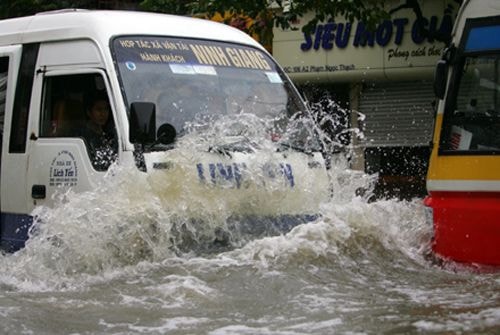 |
| Avoid entering areas with excessively high floodwaters. |
When the water level reaches half the height of the tires – that's the limit you shouldn't cross; with high-clearance vehicles, you can cross but don't let water flood over the front of the car into the air intakes and engine.
When driving through flooded areas, try to avoid times when there are oncoming vehicles. Two vehicles traveling in opposite directions will create waves or splash water onto your car's hood, increasing the risk of water entering the air intake and engine compartment.
Avoid driving at high speeds through puddles, as this can easily cause water to be sucked into the air intake, creating "waves" that are dangerous for other vehicles.
When your car enters a flooded area and suddenly stalls, absolutely do not attempt to restart the engine. This will prevent it from restarting and could damage the connecting rods, crack the cylinder walls, and other parts of the engine.
When driving through flooded areas, you should turn off all unnecessary electrical devices such as the air conditioning and sound system to reduce the load on the engine.
When your car stalls, check if the water level has exceeded the edge of the car floor. If it's higher, absolutely do not open the doors, as water will flood inside, damaging electronic systems and interior materials such as fabric, leather, and wood...
With motorbikes
If possible, try to observe the path of the vehicle in front so that you can proactively avoid any problems that the vehicle ahead may have encountered.
If your vehicle gets submerged in water while driving, simply cleaning the spark plugs and draining the water from the exhaust pipe should allow it to operate normally. However, this is only a temporary solution. For safety, the engine oil should be changed immediately afterward.
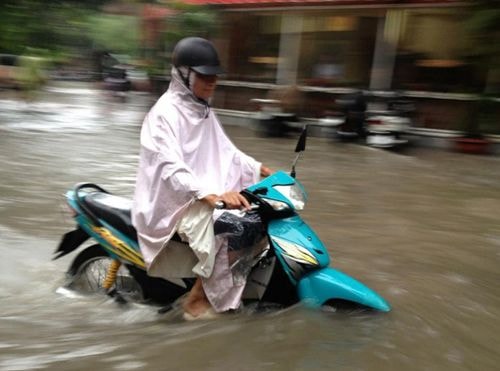 |
| Going slowly and shifting to a lower gear will help your motorbike get through the flooded area. |
For scooters, in addition to changing the oil, you need to check the air filter. Because it's located low, it's easily susceptible to water ingress, leading to difficulty starting the engine. If the vehicle is completely submerged or has been submerged in water for a long time, the electrical system is the first thing to check, especially for vehicles equipped with electronic fuel injection technology.
Vehicles that have been submerged in water definitely need a new oil change, carburetor inspection, complete fuel draining (including the carburetor), and cleaning or replacing the spark plug if necessary. Replace the air filter, and for scooters, dry the drivetrain. Pay attention to the wheel bearings and consider taking them to a garage to have them removed, dried, and lubricated.
According to Vietnamnet


