
The biomechanical secret behind Matheus Cunha's thunderous shot at Man Utd.
An in-depth analysis of the Brazilian striker's finishing technique, from his hip range to the art of positioning his supporting foot, transforms him into a formidable weapon for the Red Devils.
Matheus Cunha's goals against Arsenal or Fulham at Old Trafford were not simply moments of brilliance. Behind those spectacular shots ripped through the net lay a complex biomechanical process, where power was generated from a perfect combination of physics, anatomy, and the killer instinct of a modern-day Samba dancer.

The intersection of art and science
Cunha's ability to generate powerful shots with minimal run-up has immediately reminded experts of Neymar. According to Osamah, a listener of Talk of the Devils, it is precisely this full swing and incredible power of the ball, even without much run-up, that makes the 26-year-old striker different.
After a somewhat slow start, Cunha is gradually establishing himself at Manchester United not only through his creative contributions but also with his spectacular long-range goals. To decipher this power, we need to look through the lens of biomechanics experts.
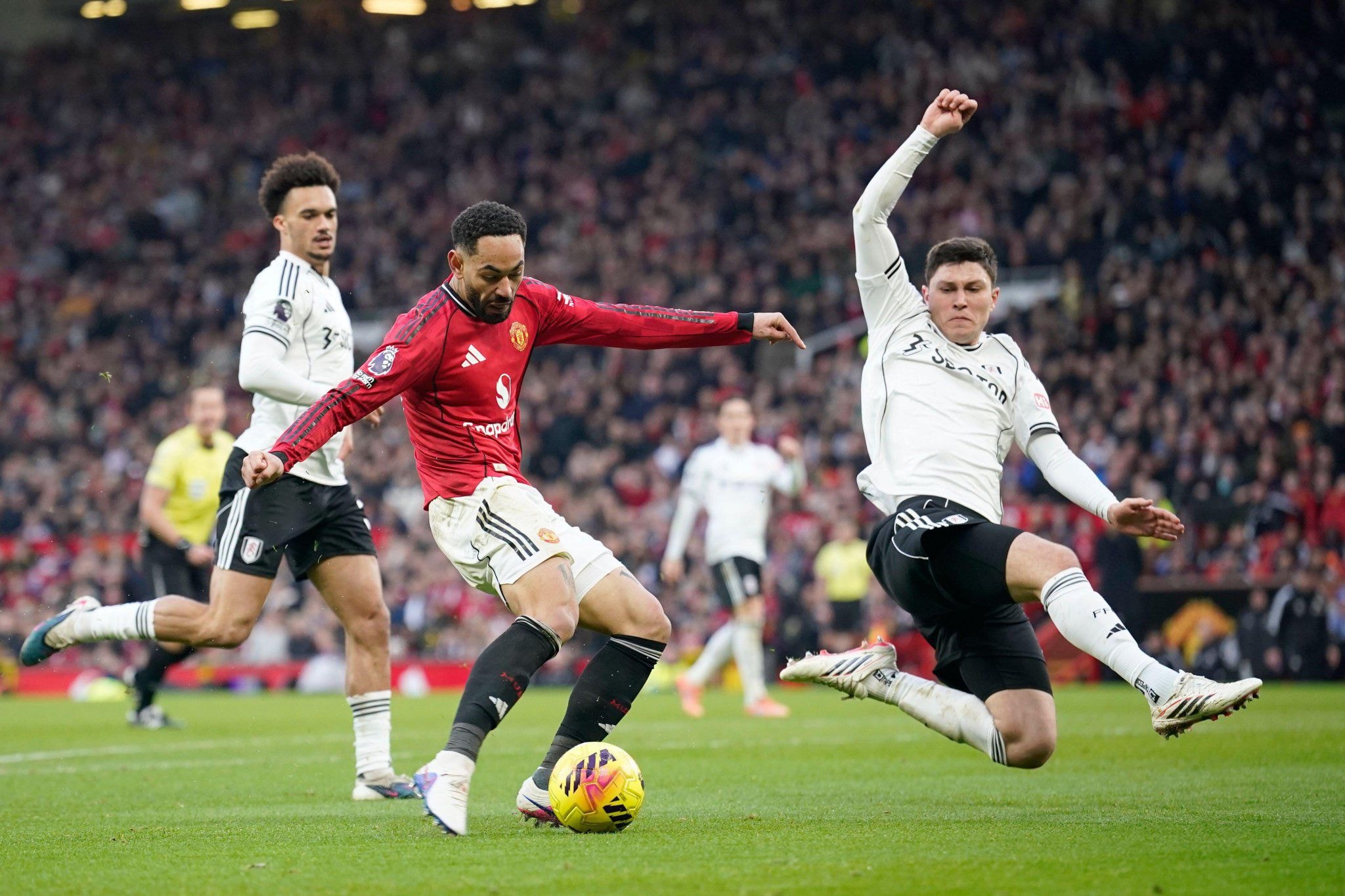
Secrets from hip range of motion
Archit Nabandar, associate professor of biomechanics at the Polytechnic University of Madrid, points out that the secret lies in the phase before the foot makes contact with the ball. In technical terms, a standard shot consists of four phases: backswing, cocking, acceleration, and follow-through.
"What you don't see before scoring is that he's accelerating his sprint. Right before his supporting foot lands, his hips are stretched very wide," Nabandar explained. Cunha's magic lies in his ability to simplify the first two phases but maximize efficiency in the latter two.
By utilizing an extremely wide range of hip flexion and extension, Cunha transforms his right hip into a powerful pivot point. Instead of relying heavily on knee strength, he harnesses power from his core, gluteal, and hamstring muscles. This is why his shots may appear gentle, but the ball travels at the speed of an arrow.
The art of positioning the supporting foot and the subtlety of the ankle.
Another key factor is the placement of the supporting foot. In the goal against Arsenal, Cunha's left foot was positioned slightly in front of the ball. According to the principles of physics, this position allows for maximum momentum transfer to the ball while maintaining body axis stability.

If the power comes from his hips, then the precision lies in his flexible ankles. Cunha has the ability to adjust the contact surface of his shoe with the ball at the last split second. He can lock his ankle for a thunderous shot with the outside of his foot, or loosen his ankle for a technically skillful curling shot.

This ability to change direction makes it almost impossible for opposing goalkeepers to predict the ball's trajectory based on their run-up. This makes Cunha a real nightmare in one-on-one situations or for long-range shots.
When science combines with strategic thinking
Individual skill only truly comes into play when placed within a tactical system. Support from teammates, such as Benjamin Sesko's off-ball movements, helped create the necessary space for the biomechanical machine that is Cunha to operate at maximum capacity.

Despite minor errors due to a shift in focus, the Brazilian forward's progress is bringing great hope to the Red Devils' squad. Matheus Cunha isn't just scoring goals; he's redefining how Manchester United attack with a solid foundation in sports science.

Every swing of his leg now demonstrates the perfect combination of instinct and precise mechanical calculations, promising to create many more masterpieces in the Premier League in the future.


