
Pumpkin as a remedy
Every part of the pumpkin plant, from the fruit, leaves, flowers, and seeds, can be processed into delicious dishes and has a wide range of medicinal uses.

Pumpkins are rich in micronutrients.
Pumpkins have yellow flesh; 100g of pumpkin flesh contains 0.9g of protein, 5-6g of carbohydrates, and many vitamins such as B1, B2, PP, B6, especially 400g of vitamin B5, as well as valuable fatty acids like linoleic and linolenic acids, and 28mg of beta-carotene. Pumpkins also contain many trace elements and amino acids such as alanine, valine, leucine, cystine, and lysine. Pumpkin seeds contain a lot of fatty oil and are very effective in eliminating worms and parasites. For a long time, people have used pumpkin seeds, eaten raw or roasted, to effectively eliminate worms and parasites. 100g of the red membrane surrounding the seeds contains up to 250mg of beta-carotene, and even 100g of fresh pumpkin leaves contain 1mg of beta-carotene.
According to traditional medicine, pumpkin has a sweet taste and warm nature, and is effective in nourishing the body, strengthening the spleen and stomach, and aiding digestion. Here are some medicinal recipes using pumpkin.
Treating diabetes:
Peel and slice 100g of pumpkin and 50g of yam, then simmer in 500ml of water until tender. Add salt and MSG to taste. Eat this for breakfast every day like porridge.
Treating high blood pressure:
100g of pumpkin, sliced and peeled, 50g of young mulberry leaves, washed and finely chopped. Add 500ml of water to a pot, then add the pumpkin and young mulberry leaves and cook into a soup. Season with salt and MSG to taste. This soup helps lower blood pressure and is beneficial for people with hypertension.
Treatment for mastitis and breast fibroids:
30g pumpkin flowers, 20g tangerine peel, 20g honeysuckle flowers. Boil these ingredients together and drink one dose per day, divided into 2-3 servings. Continue this treatment for several days.
Treating sore throat and tonsillitis:
Boil 30g of pumpkin flowers, strain out the solids, and drink the liquid to treat sore throat and tonsillitis. Drink for 7 consecutive days. To treat chronic bronchitis and bronchial cough: take one small pumpkin (about 500g), 50ml of honey, and 30g of rock sugar. Make a hole in the stem of the pumpkin. Remove some of the pumpkin's pulp, fill it with honey and rock sugar, and seal it again (with the removed pumpkin piece). Add water to a pot, then add the pumpkin and cook for 45 minutes. Remove when the pumpkin is tender and eat in two portions, morning and evening. Eat continuously for 5 days.
Pumpkin flowers and leaves are cool in nature, sweet in taste, and act on the heart and stomach meridians. They have the effect of clearing damp heat, reducing swelling, treating jaundice, dysentery, cough, cancer, and toxic swelling.
Medicinal dishes made from pumpkin
The entire pumpkin plant can be processed into delicious, nutritious dishes with medicinal properties. It can be prepared in the following ways:
Stir-fried pumpkin with shrimp:
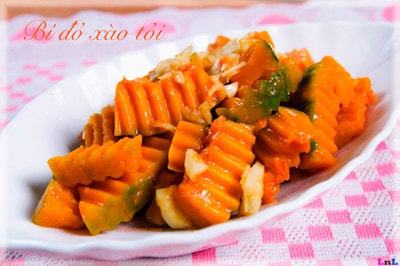
Ingredients: 500g pumpkin, 100g fresh shrimp, 1 clove of garlic, scallions, 50ml cooking oil, fish sauce, and MSG to taste. Peel and wash the pumpkin, cut it lengthwise, then slice it horizontally into 0.5cm pieces. Peel and remove the heads and veins from the shrimp. Heat oil in a pan, add the crushed garlic and sauté until fragrant. Add the shrimp and stir-fry, season with spices, and stir well. Add the pumpkin and stir-fry together. Add a little water, cover, and cook until tender.
Peel and crush the garlic, chop the scallions finely, and just before removing from the heat, add the chopped scallions and stir well. Serve hot with rice. This dish is delicious and has nourishing effects on the body, helps relieve headaches, and improves memory.
Pumpkin and mung bean sweet soup:
500g pumpkin, 100g peeled mung beans, 300g granulated sugar, vanilla. Peel and cut the pumpkin into pieces. Wash the mung beans and soak them in cold water until they swell. Add 2 liters of water to a pot, add the pumpkin and mung beans, and simmer until tender like porridge. Mash the pumpkin and mung beans, add the sugar, and boil for 5 minutes until dissolved. Then add the vanilla and stir well. Serve in a bowl. This dessert is both nutritious and helps relieve headaches and poor memory.
Note: Pumpkin is not suitable for people with pain caused by dampness (dampness) or those suffering from malaria.
According to Amthuc.com.vn-NT


